Andrew Moravcsik discusses democracy and the EU at a CEU conference
Democracy in the European Union

Democracy and the European Union
The EU’s alleged democratic deficit is subject to much debate. Arguments against the democratic shortcomings of the Union are varied and come from many quarters, but there is general agreement among many observers that the EU’s ruling elites have become increasingly out of touch with its citizens. We will present a synthesis of the main arguments that have been advanced. Having analysed some of the apparent problems of legitimacy and democracy within the EU, we then explore possible ways of overcoming them. The word ‘democracy’ derives from two Greek terms: ‘demos’ meaning people and ‘kratia’ signifying rule of or by. Many people therefore see democracy as meaning ‘people power’, with government resting on the consent of the governed. A democratic political system is one in which public policies are made, on a majority basis, by representatives subject to effective popular control at periodic elections which are conducted on the principle of political equality and under conditions of political freedom.
The European Union has often been criticised for its lack of democratic institutions and for the way in which they operate. In a speech in 1994, Sir Leon Brittan, a former British commissioner, identified ‘a widespread sense of unease about Brussels and what it stands for’.
He drew attention to:
- • The feeling that Brussels was interfering where it should not do so
- • The absence of knowledge of what was going on in the central decision-making bodies
- • The belief that Brussels lacked sufficient democratic legitimacy.
By way of a solution, Brittan urged devolution of decision-making (subsidiarity), transparency (more open and accessible decision-making) and more democracy (to overcome the democratic deficit). Former French president Valéry Giscard d’Estaing has gone as far as to suggest that ‘if the EU itself applied to join the EU as a member, it would be rejected for being insufficiently democratic . . . The Community cannot continue to be governed according to procedures which are contrary to the imperative requirements it formulates itself in relation to countries which are candidates for membership’.
A draft document prepared for the Laeken Summit (December 2001) also suggested that the European Union was out of touch with its citizens and had failed to placate its critics. It argued that the Union was facing an identity crisis, with a serious gulf opening up between the people and Brussels. The Laeken Declaration implicitly recognized these concerns. In launching the constitution drafting process, it observed that ‘citizens are calling for a clear, open, effective, democratically controlled Community approach, developing a Europe which points the way ahead for the world’.
Democratic deficit
The term ‘democratic deficit’ has been attributed to a British MEP, Bill Newton-Dunn, who used the phrase in a pamphlet back in the 1980s. He was referring to the widely held belief that there was a lack of democratic control and accountability within the European Union. These deficiencies were said to prevent its institutions from acquiring political legitimacy and widespread recognition and acceptance.
Such a democratic deficit is not unique to EU machinery, for in many countries there are problems with establishing effective democratic control, associated with:
- • Falling turnouts in elections
- • Declining membership of political parties
- • A lack of interest in and a distrust of politics and politicians
- • A feeling of disengagement and alienation from the political process.
In other words, there is a developing gap between those who are governed and those who seek to govern them.
Academic debate surrounding the democratic deficit
In recent decades, there has been a plethora of books and articles on the democratic deficit. However, the contributions of two major academics, Majone and Moravcsik, have opposed the general trend and argued in effect that the EU is as democratic as it can or should be. This has sparked off a scholarly controversy. The broad line of argument of both writers is to suggest that because of the nature of its functions, there is no reason to force democratic mechanisms upon the Union. The Italian academic Giandomenico Majone argues that as the EU is primarily a regulatory body – in this respect not unlike an independent central bank – it should be insulated from democratic pressures. In his view, it is unreasonable to apply the same democratic criteria to, say, the Bank of England as we would to any national system of government. He also suggests that the absence of any real sense of European identity, in which people feel themselves to be citizens of Europe, does in any case make a democratic system difficult to operate.
Andrew Moravcsik has expressed similar views, again arguing that concern about the ‘deficit’ is misplaced. He suggests that ‘when judged by the practices of existing nation states, there is little evidence that the EU suffers from a fundamental democratic deficit’. He makes the point that most critics compare the Union to an ideal plebiscitary or parliamentary democracy, standing alone, rather than to the actual functioning of national democracies adjusted for its multilevel context.
In an interesting rejoinder, Andreas Follesdal and Simon Hix accept a number of the points made by Majone and Moravcsik, but disagree over a key element. They take the view that in a truly democratic polity, there must be a contest for political leadership and public argument over the direction of the policy agenda. They suggest that it is these criteria that distinguish democracies from enlightened authoritarian regimes. They find the EU wanting and did not see the contents of the Constitutional Treaty, as proposed, as providing an adequate answer to the problem they detected. They saw some benefits in what it included, but felt that an opportunity was missed to allow the majority in the European Parliament to nominate the Commission president instead of the European Council. This, in their view, would have established a clearer link between the outcome of European elections and the formation of government at the EU level.
Fundamental to their critique is the belief that although EU policy might be in the interests of the citizens of Europe when first agreed, without electoral competition there are few incentives for the Commission or national governments to change their policies in response to changes in citizen preferences: ‘Political competition is an essential vehicle for opinion formation. It fosters political debate which in turn promotes the formation of public opinion on different policy options’. This could help bring about the informed demos or citizenry the absence of which Majone laments.
How the Union evolved
In the case of the European Union, the gap between those who are governed and those who seek to govern them is much concerned with the way in which the Community and then the Union emerged. Jean Monnet and his co-founders of the ECSC and the EEC were not primarily concerned with the issue of democratic legitimacy. Their urgent desire was to create the Communities at the earliest opportunity and to ensure that effective supranational practices were in place. Some commentators have spoken of ‘rule by technocracy’ in the early days. Today, this approach is reinforced by the way in which decisions are agreed in a secretive Council, in the search for agreement and compromise. In his Memoirs, Monnet claimed that he did always envisage a move towards democratization. He wrote of how ‘the pragmatic method we had adopted would also lead to a federation validated by the people’s vote’. But Monnet and others like him had a tendency towards elitism, a belief that they understood best what was good for the continent and its inhabitants. Martin Holland has shown how ‘Europe was being constructed by a cohesive and remarkably small elite; while public support was welcomed, it was never a prerequisite for Monnet’s Europe’.
Europe has developed in a rather open-ended way. The original pioneers were federalists, some being advocates of an immediate federal solution, others being incrementalists who felt that federalism would be achieved by an onwards, step by-step march towards ever closer integration. No clear boundaries or limits have been set down to this notion of an ‘ever closer union’, the term having more far-reaching implications than federalism itself, for it implies a never-ending journey in which member states ultimately seek to merge their identities. Whatever the vision, some national politicians have been less than frank in explaining the journey on which the pioneers were embarking. In the United Kingdom, many of those who voted in the 1975 referendum had good reason to be unclear about the nature of the Community, the joining of which was then portrayed as an issue of primarily economic debate.
Shortcomings related to EU elections
The transformation of Parliament into an elected assembly in 1979 was an undoubted step forward in making the EU more democratic. It remains the only elected body within the Union. However, the five-yearly European elections are frequently criticized, some casting doubt on whether they really are a meaningful way of allowing European voters to register their preferences.
Among the common criticisms:
1. A study conducted by Karlheinz Reif and Hermann Schmitt in 1980 concluded that they vote primarily on national issues and do not use the mechanism to make a judgment on the performance of the EU and its players.
2. Many studies since then have suggested that the elections are of the ‘second order’ category, with voters opting for smaller and sometimes extremist parties as a means of registering a protest against their domestic governments, safe in the knowledge that such voting will not precipitate the downfall of the administration and bring about another general election.
3. Average turnout figures across the Union have declined over the six elections held.
4. The lack of genuine transnational political parties competing across the EU raises issues about the representativeness of elections.
In offering support to these observations, Max Kohnstamm argues that the 2004 elections were an example of ‘the illness which threatens the progress, and if not looked after, the existence of the Union itself . . . they widened the deficit.
Not because the participation in general was low, but because there was nothing European about them’.
We have seen that the alleged lack of democracy within the Union has many causes, some of which we have identified: the limitations of elections as a means of registering popular opinion about the EU; the way in which an elite imposed its vision of a united Europe upon the people and the way it evolved; the lack of knowledge about and low public interest in European developments; and poor levels of popular participation. Yet the criticism is deeper. It is much concerned with:
- • The way in which institutions operate
- • The lack of democratic control over those who have the power to make decisions.
A Union detached from its citizens
EU institutions are frequently criticised for their remoteness from ordinary citizens. This is in part a matter of geography. The transfer of competences to Brussels means that many issues are taken further away from inhabitants of the member states. Just as the Scots and Welsh used remoteness from the location of decision-making as part of their arguments for greater control over their own affairs, so too it is unsurprising that many European voters – particularly those on the periphery of the core six states who founded the ECSC/EEC – EU institutions as distant and lacking in knowledge or understanding of what matters to them.
The criticism is not just about geographical distance. The suggestion has often been advanced that complex EU legislative procedures and policies are technical and difficult to understand, factors which discourage popular interest or engagement. More seriously, decision-making machinery operates in a secretive way, out of the public gaze. This is said to cause further resentment and alienation among European citizens. In this respect, the main target has been the Council of Ministers.
Attempts have been made to open up EU decision-making and to make information about procedures and policies more widely available to those who wish to access it. At Maastricht, it was agreed that the new Union should act transparently and in a way that people can understand. Since the TEU was signed, the Council has changed its rules of procedure, so that although debates and votes are held in secret, there is now more information available about the way member states reacted, along with some explanation of the events leading to the final outcome. Some open debates have been held in countries occupying the presidency, and the Commission has produced more consultative White and Green Papers, establishing areas for reflection and discussion. In addition, there has been some attempt to open up access to European documentation. Complaints are still made about the seclusion in which the Council (and COREPER in particular) makes its decisions, it being one of the few legislative bodies in the democratic world to do so. This may facilitate the process of reaching a consensual agreement, but it does nothing to reassure commentators and members of the public who are sometimes suspicious of the way in which deals are done.
Lack of democratic control over decision-makers
Executive dominance
Whatever the limitations of parliamentary control in the domestic politics of member states, legislatures can scrutinize the behavior of government ministers and ultimately hire and fire the cabinet. However, the transfer of several competences to the European Union enhances executive power at the expense of that of legislatures. As the EU has increased the areas of policy in which it has a say and as the EU’s institutions are disproportionately controlled by national governments (directly in the Council and indirectly through the nomination of Commission members), there has been a shift in power away from national parliaments.
The shift has not been adequately compensated for by the European Parliament because of its limited powers. So too, serious difficulties are experienced by national parliamentary bodies in exercising any real controls on decisions it makes.
In the words of Ronald Holzhacker: The national parliaments of the member states of the European Union (EU) have been losing power. Decisions that parliaments traditionally had the right and power to decide are increasingly being made either within the institutions of the
EU or by the national executives of the member states. Increasingly, the lawmaking powers of national parliaments in important areas of policy are tightly circumscribed by the EU.
In his rejoinder to criticism concerning the lack of democracy in the EU Moravcsik argues that the EU has actually made executives more accountable to their citizens. He notes that the actions of government ministers are no longer scrutinized simply at home but in a wider European context, and that ministers are now held to account not solely for their domestic record but for their performance in Brussels. He cites the volume of domestic criticism received by Tony Blair after concessions made over the UK rebate in 2005.
Lack of popular control
Moravcsik’s opinion is not widely shared. It is more common to lament the lack of democratic legitimacy of EU institutions, the third point made in Brittan’s 1994 contribution to the debate. Philip Norton12 too has referred to the democratic deficit as ‘the limited input into the law-making processes of the European Community by directly elected representatives of the people’. To these and other analysts, it is a worrying feature that there is still no very credible system of democratic control within the Union. There is no effective accountability of the Council or Commission to either the national Parliament or the European one. It has been suggested that in addition to electing the Parliament every five years, voters might elect the national commissioner in each country or the president.
Choice of the Commission and its president: possible changes The Commission could be democratised by making it more responsible to Parliament. A start was made at Maastricht, in the provision that the Commission’s appointment should be subject to Parliamentary approval. This was a useful step, but more could be done to enhance its credibility and popular support. There are two ways in which this could be achieved:
1. Parliament could be responsible for the initial choice of the Commission, so that it would no longer comprise nominees of the individual states. Instead, it would be an executive chosen to reflect the particular balance of the assembly. In this way, elections to the Parliament would also, in effect, become elections to choose the body which initiates legislation.
2. A different route to the one just outlined would be to allow the public to vote for the Union’s commissioners rather than allowing them to be appointed by the national governments subject to the Parliament’s approval, perhaps on the same day as the European elections. Such direct election would provide the Commission with a powerful popular base and enable it to share power with the Council. Under this scheme, the Commission and Parliament would then represent the European electorate, whilst the Council would represent the electorate via the elections organized in the member states.
3. A variation would be to allow Parliament to choose the Commission but for the public to vote for its president, on the basis of the transnational party groupings.
The point of these options is that there would be a contest for the election of key players in the EU, enabling the public to determine the makeup of government and to have a direct impact on policy outcomes. They would introduce an element of accountability in Union proceedings.
Strengthening control by the legislatures
Norton has suggested three possible approaches to the problem:
1. Strengthening the powers of the European Parliament
2. Creating a new EU institution comprising elected representatives from national parliaments
3. Strengthening the role of national parliaments in the law-making process.
At different times, all three suggestions have been contemplated and they each have their advocates and detractors.
Strengthening the European Parliament
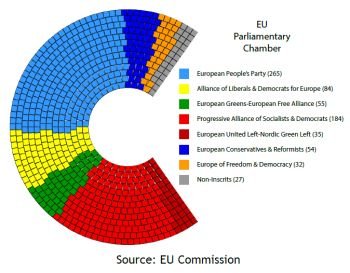
As regards the European Parliament, the key step forward was taken in 1979, with the onset of direct elections. We have examined their alleged shortcomings. There is a case to be made in favour of equipping Parliament with more powers, given its status as the only directly elected institution. Indeed in the SEA, at Maastricht and subsequently, it is a body whose power and influence have grown. No longer is it a mere talking shop, although, in Norton’s phrase, it is ‘still only on the edge of constituting a legislature’. It does have limited powers to exercise supervision or control over the Council, so that – for instance – its assent is required before the Council can approve the accession of new members. It has more powers over the Commission, having to approve the Council’s nominee for the presidency, appoint (or not) the whole Commission and sack the entire body in a vote of censure. (It played a role in bringing about the resignation of the Santer Commission in 1999 and used its power to veto the Commission line-up proposed by Barroso.) But it has relatively little control over areas of policy such as the CAP, justice and home affairs, and security policy. Those who strongly criticise the democratic deficit are often the very same people who are most reluctant to make Parliament a more effective watchdog, British governments often being particularly keen to ensure that control is firmly maintained in Westminster hands. Any extension of its current role is therefore highly contentious.
Creating a new EU institution
The creation of a new institution comprising elected representatives from national parliaments is an approach that was urged by Brittan, who believed that ‘if voters felt their local MPs were lending a hand to the process of Euro legislation, it would greatly strengthen the EU’s democracy and enhance its credibility’. One way of achieving this goal would be the creation of an upper house or senate, made up of people from either chamber in their national state. One of the problems is that this would create a rival body to the existing European Parliament, which is still seeking to establish a greater role for itself. Any such move might be seen as diluting the position and importance of the existing body. The outcome might be two relatively weak bodies, instead of an increasingly effective single one.
As British foreign secretary until 2003, Robin Cook was concerned about the separation of European institutions from the people they are meant to represent: ‘Our Parliament needs to be part of the project rather than outside of it . . . The European Parliament does a very useful job, but the missing link is tying the national parliaments with the work of Europe’. He advanced an idea to remedy the problem, by involving MPs directly in the running of the Union. He proposed the creation of a second chamber in Europe, made up of MPs from national parliaments, to curb the power of Brussels. The chamber would sift through decisions made in Brussels and block any that meddle in the minutiae of British life.
As we have seen, others take a different view, claiming that the body that should hold this European executive to account is the European Parliament. If directly elected MEPs had genuine powers of scrutiny, this would erase the democratic deficit at an instant. But Cook felt that the problem was that the European Parliament lacks public esteem, that it is national parliaments that are respected. This may be true, but of course if MEPs were given political muscle, voters might then learn to take them more seriously.
Control via national parliaments
Norton notes the view taken by the Danish government a few years ago: ‘It must be recognised that a considerable part of what is known as the democratic shortfall is attributable to the fact that apparently not all national parliaments have an adequate say in the decisions at community level’. The Danish chamber, the Folketing, is better placed than others in this respect. It has the reputation of keeping a watchful eye over any European initiatives. In general, the Nordic states have been successful in devising effective scrutiny and control of the Union, via their domestic legislatures.
From the 1980s onwards, most legislatures have made greater provision for dealing with European legislation and have given their MPs or deputies more opportunities to acquire specialized information. In Britain, apart from the committees which have been established in the two chambers of Parliament (e.g. the House of Lords European Union Committee), there are rare occasions when MEPs are invited to meet with their national colleagues in party committee meetings and informally. Yet keeping up with the burden of work coming from Brussels is a difficult task for the British Parliament, and one that has grown with the preparation for and implementation of the single market. If eventually much foreign and security policy – as well as immigration and policing – are handled in Brussels, the task will be even more daunting.
Alternative means of dealing with the deficit
In most democracies, it is of course via political parties that effective links are established between citizens and their governments. Single-party or coalition governments are formed from political parties that compete with one another in periodic general elections. These parties provide a channel of communication through which voters are kept in touch with those who make decisions, for ultimately the electorate has the power to ‘throw the rascals out’. Governments have an incentive to carry popular opinion with them, for fear of losing the next election if they become remote from popular aspirations and out of touch.
As yet, there is no developed European party system with Europe-wide parties contesting elections, and it is unlikely that any genuinely European parties will emerge in the foreseeable future. If they existed, and had truly transnational membership and programmes, then this would encourage debate on European issues by an EU-wide electorate and provide a clearer link between individuals and those who make decisions. But there is little likelihood that the decision-making machinery of the Union will have cause to respond directly to voters’ needs and wishes on an EU basis in the foreseeable future.
One other channel of communication is via the use of referendums. These have been employed in some countries as a means of claiming popular backing for treaty developments. The problem here is that they only allow the voters to express their views about isolated constitutional issues. Even then, the outcome of any vote on a single issue may owe more to the standing of the government than to the merits of the case. The issue can become blurred with other factors. In any case, as some countries make little use of referendums under any circumstances or have no provision for them, it is unlikely that we shall see anything like a Europe-wide referendum as a means of ascertaining popular feeling. Hence the view expressed by Follesdal and Hix: ‘Referendums are . . . ineffective mechanisms for promoting day-to-day competition, contestation among policy platforms, articulation and opposition in the EU policy processes’.
The Reform (Lisbon) Treaty and the democratic deficit: rival claims
Supporters claim that it would have helped to reduce the democratic deficit, in that it would have:
- • Extended the power of co-decision to virtually all policy areas, effectively making Parliament an equal legislative partner with the Council in most EU decision-making
- • Required the Council to meet in public when legislating
- • Ensured that national parliaments receive information about EU legislative proposals in sufficient time to mandate ministers on how to vote in the Council
- • Given national parliaments a new power to refer back to the Commission any proposal thought to lie outside EU competence
- • Confirmed the principle of subsidiarity, keeping decision-making at the lowest level possible
- • Created a new right of citizens’ initiative, obliging the Commission to consider any proposal for legislation that had the backing of 1m EU citizens.
Opponents argue that:
- • The appointed Commission would have remained the sole initiator of legislative proposals, with Parliament, the Council and EU citizens only being able to require it to consider ideas for a proposal
- • Similarly, national parliaments would have acquired the right to refer a proposal back to the Commission for further thought, but there was no requirement for the Commission to make changes as a result
- • The idea that EU laws (‘and the Constitution itself’) supersede national laws would not have been amended, so that directives and regulations from Brussels could still have been imposed on member states.
Some EU policy-making institutions are rather more open than their national counterparts in their mode of operation, not least the Commission, which has been very willing to consult with lobbyists in recent years. But they are not perceived in that way. People detect a large gap between the elites who live in Brussels and elsewhere, and the peoples whose interests they purport to represent. The more they see it this way, the less likely they are to feel inspired to vote. Bomberg points out that ‘supranational systems of governance like the EU pose a dilemma for their citizens, as gains in performance may be at the cost of losses in democratic legitimacy’.
She quotes the theorist of democracy, Robert Dahl, who notes a problem affecting large organizations: In very small political systems, a citizen may be able to participate extensively in decisions that do not matter much, but cannot participate much in decisions that really matter a great deal; whereas very large systems may be able to cope with problems that matter more to a citizen, but the opportunities for the citizen to participate in and greatly influence decisions are vastly reduced.
The comment fairly describes a problem with large organisations. But it is worth reflecting on the alternative, for the implication appears to be that if there were no European Union the distance problem and the lack of effective democratic controls would be overcome; competences would be returned to national level and decisions made closer to the citizenry. But if Britain and other states were not members of the EU, there would still be pressures to create or belong to some international body or make ad hoc agreements, at the very least for the better coordination of trade. Decisions taken in this way would also be taken under circumstances where they are removed from and not subject to popular control.
There is a difficulty. Some issues are too big for individual countries to resolve on their own. European integration may be considered necessary to enable effective solutions to be applied to common problems. On the other hand, the problems of remoteness of decision-making and lack of accountability are greater in vast international bodies.
Term:
Second-order elections – Second-order elections are contests other than general elections. Local and regional elections are almost always considered second-order elections. As voters take the view that second-order elections are less important than first-order ones, they may take the opportunity to punish the current governing parties. Their protest may be registered by abstention or voting for different (often minor) parties. In the EU, elections to the European Parliament are considered to be second order national elections, in that voters use their choices for representatives to the supranational body to send signals to their national governments