European Union – 50 years in 5 minutes!
Moves to enlarge the EEC: the British position
By the late 1950s, serious practical considerations were beginning to persuade a number of British politicians to amend their outlook on European developments. The British approach to European affairs was pragmatic rather than idealistic. It was based firmly upon a perception of British interests and was not easily swayed by the rhetoric of continental pioneers of unity such as Monnet and Schuman.
However, seriously practical considerations were to persuade a number of British politicians to amend their view. For several years, Britain had been slow to adjust to a decline in world status, and only in the late 1950s did attitudes begin to change. In world terms, the enforced withdrawal from the Suez zone in 1956, the loosening of commonwealth ties as countries achieved independence and increasing doubts about the ‘special relationship’ with the United States highlighted a loss of British power and influence. At home, there were balance of payments difficulties and a lackluster ‘stop-go’ economy, whilst on the continent the Six benefited from their expanded market.
As the new decade loomed on the horizon, many of the reasons for British skepticism about the EEC seemed less important. Its early success helped to promote new thinking in London, for ministers could see obvious advantages in sharing in the industrial development of Europe, with its large market of over 180m people and its impressive rate of economic growth. With Britain inside the Community, there would be a population comparable in size to that of the USSR and larger than the United States. In such an arena, Britain would have a greater say in world affairs, and would deal with the USA more as a partner than as an increasingly poor relation.
Abortive British attempts to join the EEC: 1961–3 and 1967 In July 1961, the Macmillan (Conservative) government announced that Britain would pursue an application for membership of the EEC. This was a major departure in policy, signifying a change of direction in Britain’s external relations.
Handled in a deliberately low-key manner, the initiative was presented as purely a trading matter, without political complications. There was no attempt to persuade the electorate of the merits of the European Idea. Indeed, the prime minister’s rhetoric still included references to the country’s important world role and its key relationship with the United States.
Similar applications were made in July 1961 by Denmark, Ireland, and Norway. In October 1961, negotiations got underway. Edward Heath (the lord privy seal) led the British team. In January 1963, General de Gaulle used a press conference at Rambouillet to announce the effective ending of enlargement talks, thereby vetoing the British application. Strong nationalist that he was, he wanted the Community to have a powerful voice, preferably one with a French accent. As a member, Britain might become a rival for Community leadership.
De Gaulle claimed that Britain was not yet ready to be admitted. It was distracted by its Commonwealth interests, and was too much of an Atlantic power to be truly committed to a European destiny. Certainly, there were many ‘reluctant Europeans’ in Britain for whom the driving force of our application was a fear of being left behind in a highly competitive economic race. There was little sign of a desire to think in genuine European terms. In 1967, under the Wilson (Labour) government, Britain tried again, along with Denmark, Norway, and the Irish Republic. Ministers were attracted by the potential of a large single market, arguing also that joint research and shared development costs in high-technology industries would prove beneficial to British manufacturers. It was suggested that British entry would give the Community a new dynamism and that Britain’s capacity for technological innovation would be an asset.
The attempt was nonetheless again frustrated by de Gaulle, though – as previously – the application was not withdrawn. This time the French veto came before negotiations even began. No longer could Britain be said to be more concerned about Commonwealth interests and this time other members wanted Britain to join. Rather, he argued that Britain was still too subservient to the USA. Moreover, its ailing economy would be a drag on the rest of the Community. Britain had moved some considerable way from its earlier postwar stance of detachment from Europe. Even Labour ministers (some of whom had previously been cool or even hostile to the EEC) now tended to see the Community less as a threat and more as a means of national salvation. But there was little enthusiasm within the party for European entanglements.
Third application, 1970 De Gaulle’s resignation, and death boosted Britain’s chances of successful negotiations. The pro-European Conservative Edward Heath was prime minister, and the French president, Georges Pompidou, was personally and politically sympathetic to him. Pompidou did not have any rooted objection to British membership. Moreover, fears of growing German power and independence were developing in France. Pompidou understood that Britain might prove to be a useful counterweight within the Community.
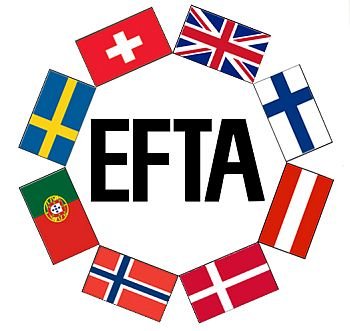
This change of disposition across the Channel eased what were sometimes difficult discussions. In October 1971, the House of Commons accepted the principle of entry into the EEC and thereby accession to the Rome treaties. The Treaty of Accession was signed in January 1972, and Britain joined a year later, along with Denmark and Ireland as part of the First Enlargement. In a referendum, the Norwegians rejected the opportunity to join. The British attitude to developments on the continent had been reassessed. In a Europe of ‘sixes’ and ‘sevens’, it found itself in the outer, less influential tier. Against a background of EEC success and diminishing British influence, many politicians perceived – or came to be convinced – that Britain’s future was to be increasingly based on the European circle, even if the Commonwealth and Atlantic ties remained strong.
Important strides had been taken in the early postwar years. Six nations had cooperated to launch the ECSC. They had gone on to form the EEC, an extensive free-trade area covering six and later nine countries. The Common Agricultural Policy had been devised, the institutions of three communities (the ECSC, Euratom and the EEC) had been merged and national heads of government were beginning to develop the practice of meeting together to try and harmonise their approaches to political problems.
The unfolding story was not without division and disagreement. The failure to achieve a defense community, France’s stand which eventually resulted in the Luxembourg Compromise, the French veto on enlargement, and the failed negotiations to bring about political union were all indications of friction and periodic crises. But there was no difference between the six member states in the central position they attached to the EEC in the conduct of their national affairs. By 1973, de Gaulle was no longer in power. He resigned in 1969 and was dead a year later. His successor seemed to be more in touch with the mood of the times. Along with the arrival of a new British prime minister and a new German chancellor (Willy Brandt), the scene seemed to be set for a new departure. As yet, the bonds between the countries of the EEC were economically strong, but still politically weak. A fresh injection of political will might be expected to move forward the process of integration.
Glossary
Benelux is an economic union in Western Europe comprising three neighboring monarchies: Belgium, the Netherlands, and Luxembourg. The name was created for the Benelux Customs Union signed in 1944, but is now used in a more generic way.
Cold War In 1947 the term was introduced by Americans Bernard Baruch and Walter Lippmann to describe emerging tensions between the two former wartime allies: the United States and the Soviet Union. It describes a hostile relationship characterized by mutual suspicion between countries or power blocs, but short of outright war. The Cold War was a period of conflict, tension and competition between the United States (and its allies in Western Europe, Japan and Canada) and the Soviet Union and its allies in Eastern Europe. It lasted from the mid-1940s until the early 1990s. There was never a direct military engagement, but there was a massive military build-up, espionage, and political battles for support around the world.
Europe des Patries A Europe made upon of independent nation states which cooperate for purposes of mutual benefit: the Gaullist/Thatcherite vision of how Europe should develop.
European Idea The idea of a continent united by peaceful means, free, prosperous, and untainted by the enmities and rivalries of the past – the dream of postwar pioneers of European unity.
Federalism/Federalists Federalism is a political system in which power and sovereignty are divided between different levels of government, usually between a central (federal) level and a sub-state (regional or provincial) level. Seen on the continent as a system in which power is decentralized, it is commonly viewed in Britain as one in which there is strong central control. The British tend to portray any accretion of power in Brussels as a step towards the creation of a federal monster superstate.
Postwar federalists wanted to see a swift movement to complete political unification in Western Europe. They were inspired by Churchill’s notion of a United States of Europe. Their vision enthused the post-1945 generation of political leaders on the continent. Functionalists Supporters of one of several theories of integration (along with federalism, neofunctionalism and intergovernmentalism), they believe that cooperation is best conducted through a sectoral approach. Nations cooperate in a limited area, perhaps agriculture, with decisions being taken by supranational high authorities under the direction of technocrats. As the habit of working together develops, so nations may begin to cooperate in further areas.
Integration The process of making a community into a whole, by strengthening the bonds between its component parts. In this case, building unity between nations on the basis that they pool their resources and take many decisions jointly, leading to a deepening of the ties that bind the EU. Nations relinquish or pool their national sovereignty, in order to maximise their collective strength.
Intergovernmentalists Those who favour cooperation between governments for their mutual advantage. They want to retain as much national sovereignty as possible, hence the Gaullist belief in a Europe des Patries. Theirs is an essentially practical rather than a visionary approach.
National sovereignty means ‘complete power’. National sovereignty refers to the ability of a country to maintain complete control over its people and territory. In other words, nations retain their total independence.
Nationalism The desire of a nation to be recognised as a state. In the case of a country that has already achieved independent statehood, a nationalist approach is one that is super-patriotic, the primary concern being to advance national interests.
Organization for European Economic Cooperation (OEEC) The OEEC was formed in 1948 to help administer the Marshall Plan for the reconstruction of Europe after World War Two. Later its membership was extended to non-European states. In 1961, the OEEC was replaced by a new body with a much greater geographical scope: the Organization for Economic Cooperation and Development (OECD). All the major industrial countries of what used to be known as the ‘free world’ are now members, including the United States and Japan. The OECD groups thirty member countries sharing a commitment to democratic government and the market economy in a unique forum to discuss, develop and refine economic and social policies.
Suez Crisis In 1956, the Egyptian president, Colonel Nasser, nationalized the Suez Canal, which was an important shipping route for Britain. British forces intervened, but under threat of economic pressure by the United States the armed action was quickly halted. Suez shattered many illusions that Britain was still a Great Power and seriously divided the nation. Belief in the American Alliance took a hammering, for the British government felt exasperated and utterly disillusioned with what ministers saw as American indifference when backing for their deployment of troops was needed.Neither was the Commonwealth a strong ally; it was divided, with only Australia strong in its support. Many Commonwealth countries felt that British policy smacked of imperialism. Given the lack of international approval, British troops were soon withdrawn. This did nothing for national morale. To embark on a military adventure of the Suez type and then not carry it through was the worst of all possible policies. The whole episode indicated weakness and relative isolation.
Superpowers States of the first rank in the international system, possessing the ability to project power and exert major influence because of their industrial and military might. They are categorized as one step up from the ranking of ‘Great Power’.
Supranationalism Literally meaning ‘above states’, the term refers to the transfer of some national sovereignty to a multinational organization which acts on behalf of all the countries involved – e.g. from the United Kingdom to the EU. Supranational bodies, largely independent of national governments, make key decisions.
United States of Europe Churchill envisaged the re-creation of the ‘European family’ which would ‘unify this Continent in a manner never known since the fall of the Roman Empire’. He was referring to a regional organization within the United Nations that ‘could give a sense of enlarged patriotism and common citizenship to the distracted peoples of this turbulent and mighty continent . . . the structure . . . if well and truly built, will be such as to make the material strength of a single state less important.
Small nations will count as much as large ones and gain their honour by their contribution to the common cause’ (Zurich speech; see below).
Zurich Speech Speaking at the University of Zurich on 19 September 1946, Churchill returned to a theme that he had placed before the Belgian Parliament back in 1945.
He wanted to see the creation of a ‘United States of Europe’, believing that through a re-creation of the ‘European family’ Western Europe could remain secure from the threat behind the ‘Iron Curtain’, of which he had spoken in Fulton, Missouri in March 1946. He made it clear that his own country would heartily cheer from the sidelines if the nations of continental Europe adopted and implemented his proposal for European unity, but would not itself be part of that ‘bold and noble’ undertaking .