An Imperfect Union: Understanding European Integration
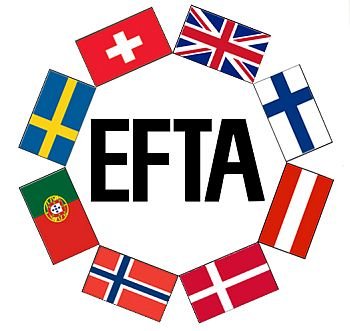
Formation of EFTA: the Inner Six v. the Outer Seven
Britain played no active part in the Messina talks and therefore had no input into the early evolution of the Community. If it had done so, the EEC and other bodies would have assumed a different character, for in the bargaining involved Britain would have stressed the importance of intergovernmentalism and sought to achieve greater safeguards for national interests.
British ministers were surprised at the pace of developments on the continent in 1955–7. They did not wish to see a trade split in Europe and had hoped to persuade the Six to join them in a wider association of countries which could then work towards customs-free trade in industrial goods. But once the details of the EEC were agreed, the British government concentrated on pressing a scheme involving all OECC members. In 1960, Britain was instrumental in forming EFTA (European Free Trade Area), a loose free-trade association but one much demanded by industrialists in the seven OEEC countries involved. The seven nations involved in EFTA were peripheral to the continental mainland: Austria, Denmark, Norway, Portugal, Sweden, Switzerland, and the United Kingdom. They agreed that over ten years (to 1970) they would remove duties on industrial goods, though there was to be no free trade in agriculture and no common external tariff.
This meant that Britain could continue to import Commonwealth goods without there being any duty upon them. Those involved in the new organization believed that although it was a body totally distinctive from the EEC, nonetheless it could work easily alongside it. But hopes of such ‘bridge-building’ were a delusion, the aims, and practices of the two bodies being very divergent. As Monnet pointed out: ‘The Community is a way of uniting peoples, and the Free Trade Area simply a commercial agreement’. EFTA was an organization which had none of the built-in Supranationalism which was a key feature of the Treaty of Rome. It was purely intergovernmental in character.
To many continental politicians, the formation of EFTA seemed to be part of an attempt to undermine the Six in their bold venture. When serious talks got underway between leaders of the two countries in 1958, they soon ran into difficulties. The coming to power of General de Gaulle in June of that year had an important impact, for he was unsympathetic to any dilution of the Community’s negotiating position. The French announced to the press in November 1958 that no agreement was possible and the other five member nations acquiesced. The British attempt to secure a wider, looser agreement
had failed. In the architecture of the new Europe, there were thus two rival bodies: the Inner Six and the Outer Seven. It was soon apparent that the likelihood of any agreement between them was small and that it was the now well-established and larger Common Market which was achieving such impressive results. Progress within the EEC Significant economic strides was quickly made within the Community which soon showed that it was a great success for its members. ‘Big business’ and especially large, multinational corporations benefited, and many mergers took place. In the first five years, the GNP of the Community rose 27 per cent, as compared with 15 per cent for the USA and 14 per cent for Britain. Statistics for industrial production were similarly impressive. American investment in Europe, especially in technology, soon developed, and trade within the Community was considerably expanded.
In fact, the years up until the early 1970s were good ones for the Six. During that time, industrialists benefited from the large market of about 170m people, and Germany especially prospered via its membership. The Franco-German bond was strong and their high degree of cooperation made progress possible in some other areas. The creation of a Common Agricultural Policy (CAP) was agreed in l962 and all customs duties between the Six were eliminated in I968, by which time a common external tariff was being applied to goods from outside the Community. In transport, industrial and social policies, progress was less impressive. But by the late 1960s/early 1970s, discussions began on ways of moving towards political and monetary union, although they were at this stage inconclusive. In 1965, a Fusion (Merger) Treaty was signed in Brussels. As a result, the institutions of the three independent organizations (the ECSC, EEC, and Euratom) were merged in 1967, with the Commission based in Brussels, the Parliament in Strasbourg and the Court of Justice in Luxembourg. The treaties and communities remained technically separate, but from then onwards it was common to speak of one entity: the European Community (EC). By this time, France was led by a statesman who was to dominate the Community, General de Gaulle, the first president of the recently created Fifth Republic. In fact, his return to power following the collapse of the Fourth Republic probably had more of an impact at the time than did the creation of the EEC. De Gaulle’s thinking on the role of member states was in some respects more akin to that of Britain than that of his EC partners, but until his retirement in 1969 he successfully blocked British attempts to join with them in an enlarged body. De Gaulle’s attitude to European cooperation In a world which was moving towards internationalism and interdependence, de Gaulle clung to a belief that France could fulfill its destiny as a great nation by exercising fully the traditional freedom of a nation state. He viewed moves to integration in Europe as a danger to France and disapproved of any loss of sovereignty to supranational organizations. Indeed, his record in opposition before 1958 had shown considerable antagonism to any idea of a European community, for he had opposed both the ECSC and the abortive EDC. Yet when he assumed office in 1958, his freedom of manoeuvre was restricted, for France had already signed up to the Treaty of Rome. Although he had spoken caustically in the past, now was the time for France to honor its word – and he regarded himself as a man of honor.
Stanley Henig25 has noted that in ‘the pantheon of European heroes and villains, de Gaulle is frequently condemned for rejecting Supranationalism and the nascent “Community method”. [He] seemed to embody a resurgence of nationalism – a counter-pose to Jean Monnet and integration’. Yet at this time France was committed to a Europe of the Six. Even if the General was unenthusiastic about schemes for closer political cooperation, he could tolerate an EEC which provided France with substantial economic opportunities. Within the Community, de Gaulle’s views soon became apparent. He believed in Europe, but his faith was grounded in the view that its only underlying realities were its states and peoples. Any plan for closer political cooperation was
regarded as impractical as well as undesirable, the stuff of ‘myths, fictions and Pageants’.26 Indeed, over several years in power, he was to exploit every opportunity to thwart any moves to federalism, and instead sought to move the Community along more intergovernmental lines. Having no liking for Monnet’s vision, he began to espouse his own idea of a ‘union of states’. His conception was of a ‘Europe des Patries’, a Europe of sovereign states who came together for their mutual advantage but who were free to act as they wished in pursuit of their own interests.
In the 1960s, de Gaulle was sympathetic to ‘rapprochement’ (a restoration of good relations) with West Germany, even though the Gaullist movement had never been very well disposed towards its neighbor in the past. Like Adenauer, he believed in national interests but he also saw that it was necessary to set aside the ‘German problem’. Moreover, neither man had much liking for the superpowers, the USA and the USSR, and both were suspicious of the motives and behavior of Great Britain. For the moment, it was convenient for the General to share the limelight with the German chancellor, who was a much older than he and was unlikely to be around for many years more. France would then have its chance to assume the leadership of Europe and to speak for the Six.
In January 1963 France and Germany signed a Treaty of Friendship. This was a momentous step, for the leaders of the two countries publicly stated that they renounced armed conflict as a means of resolving any disputes between them. This initiative formally signified the ending of the bitter rivalry of two historic enemies who had fought each other three times in seventy-five years.
Defence of national interests
De Gaulle was unwilling to make any concessions which would have allowed an extension of the powers of EEC institutions. He opposed any development of the European Parliament which would have given it increased powers over the EC budget. He was also markedly hostile to a strengthening of the Commission and to many of its attempts to extend its supranational powers into areas of French policy-making. The only constitutional development which he was prepared to support was the Merger Agreement.
His approach to European issues was very different from that of the other five members, even more so after the retirement of Adenauer in 1963. The rest wanted to strengthen the links between them and move towards majority voting. This was a departure from existing practice, for it had been agreed that for eight years after the Treaty of Rome the Common Market would proceed only on the basis of unanimity. In January 1966, it was due to move to a system of weighted voting, under which the three larger nations would have had more impact on the outcome of decisions than the Benelux countries. France refused to go along with majority voting and was prepared to call a halt to Community cooperation over the issue of how the EC would operate in the future. In the second half of 1965, de Gaulle prohibited his ministers from attending Council meetings (the ‘empty chair’ crisis).
For a while, there was a threat to the continued existence of the Six as an entity. Yet, faced by some hostility to his stance from within his own country, the General backed down and was willing for France to be represented at a meeting of foreign ministers in Luxembourg in January 1966. The outcome was a compromise, one which was to have significant results for the future course of events. Spaak drafted the Luxembourg Compromise, as it became known. Its words are worth quoting: Where in the case of decisions which may be taken by a majority vote on a proposal of the Commission very important interests of one or more partners are at stake, the Members of the Council will endeavour, within a reasonable time, to reach solutions which can be adopted by all the Members of the Council, while respecting their mutual interests and those of the Communities [. . .] The French delegation considers that where very important interests are at stake, the discussion must be continued until unanimous agreement is reached.
The Compromise was not produced as a formal amendment to the Rome Treaty but rather as a convention. However, the French had successfully asserted the idea of national sovereignty in decision-making. This was to be a key weapon in the armory of negotiators for many years. They could act, except where there were explicit objections by a state or group of states to what was being proposed. Ultimately, there was a blocking mechanism which was a barrier to further progress to integration.
If integration was opposed by the French, so was enlargement of the Community. De Gaulle was determined to block its further expansion, particularly the admission of the United Kingdom.