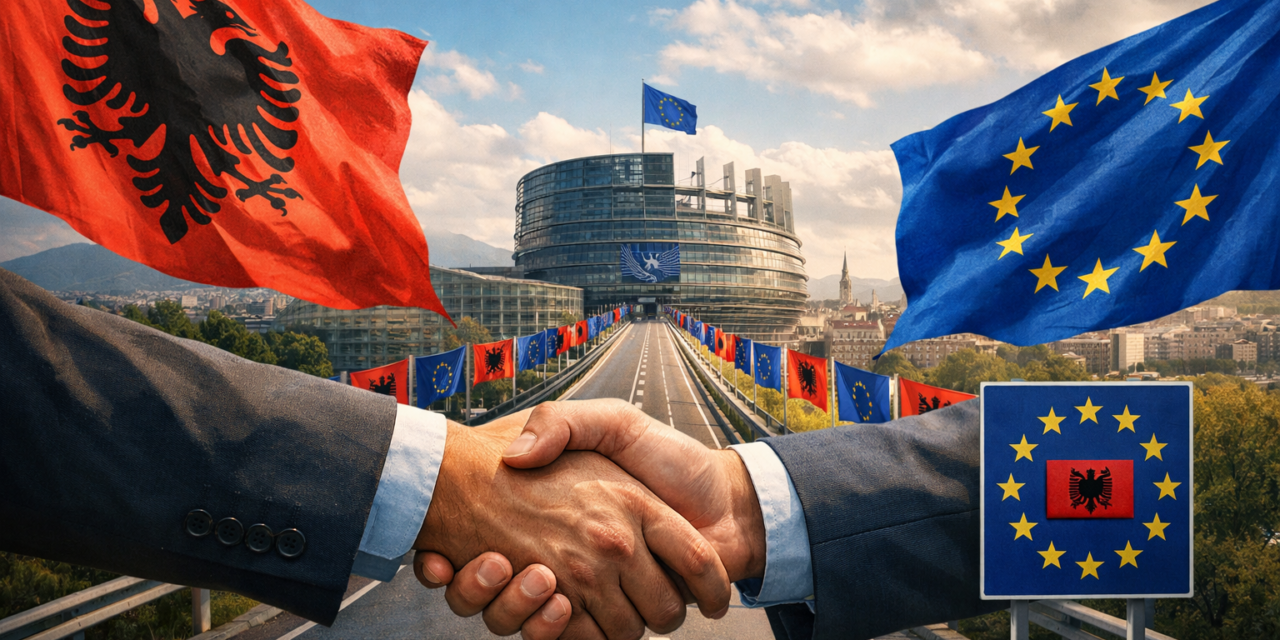
Albania’s journey towards European integration is a multifaceted narrative of transformation, marked by a determined pursuit of democratic reforms, economic modernization, and institutional strengthening. Since the fall of communism in the early 1990s, the nation has embarked on an ambitious path to align its legal, political, and economic frameworks with the standards of the European Union. This endeavor, driven by a desire for greater stability, economic prosperity, and democratic governance, has seen Albania progress from a state of relative isolation to becoming a candidate country for EU membership. The process of integration is not merely a political aspiration but a profound societal undertaking, requiring deep-seated reforms across various sectors. These reforms encompass the rule of law, the fight against corruption and organized crime, the development of a functional market economy, and the consolidation of democratic institutions. The period leading up to May 2026 represents a critical juncture in this trajectory, a timeframe within which significant advancements are expected, and existing challenges will continue to be addressed. This essay will explore Albania’s progress towards European integration, focusing on the key reforms undertaken, the assessments made by EU institutions, and the ongoing efforts in institutional consolidation, with a particular emphasis on the anticipated developments and benchmarks by May 2026.
The Winds of Change: Post-Communist Reforms and Early Aspirations
Following decades of totalitarian rule, Albania found itself in a precarious position at the dawn of the 1990s. The transition to a democratic and market-oriented society was fraught with difficulties, including economic collapse, political instability, and widespread societal disruption. In this context, the aspiration for European integration emerged as a beacon of hope, offering a framework for modernization and a pathway to a more stable and prosperous future. Early reforms were necessarily broad, aiming to establish fundamental democratic principles and the rule of law. This included the adoption of a new constitution, the establishment of a multi-party political system, and the initiation of market liberalization policies. However, these initial steps were often hampered by a lack of institutional capacity, pervasive corruption, and the lingering effects of the past. Despite these challenges, Albania formally expressed its desire to join the EU in 2002, submitting its application for membership in 2009. This marked a significant milestone, initiating a more structured engagement with the EU and setting the stage for a more rigorous reform process.
Pivotal Reforms: The Pillars of European Integration
Albania’s path to EU membership is contingent upon its ability to meet the stringent requirements of the acquis communautaire, the body of EU law. This necessitates reforms across a wide spectrum of policy areas, with particular emphasis on the so-called ‘fundamental chapters’ related to the rule of law, fundamental rights, and justice.
One of the most significant areas of reform has been the judiciary. Recognizing the critical importance of an independent, impartial, and efficient justice system, Albania embarked on a comprehensive judicial reform in 2016, often referred to as the ‘Vetting Law’. This law mandated a rigorous screening process for all judges and prosecutors, assessing their integrity, professionalism, and wealth. The aim was to purge the system of corrupt or incompetent officials and rebuild public trust in the judiciary. While the vetting process has been arduous and has faced its share of challenges, it has undeniably led to significant changes within the judicial ranks, with a number of high-profile dismissals. The consolidation of this reform, ensuring that the vetted judges operate effectively and that the remaining judicial institutions function with integrity, is crucial for Albania’s integration prospects. By May 2026, the EU will be closely observing the continued functionality and independence of the judiciary, as well as the progress in establishing specialized anti-corruption courts.
Another cornerstone of Albania’s reform agenda has been the fight against organized crime and corruption. These twin evils have historically plagued the country, undermining economic development and the rule of law. The EU has consistently highlighted the need for decisive action in these areas. Reforms have included strengthening the capacity of law enforcement agencies, improving legislative frameworks to combat money laundering and illicit trafficking, and fostering greater inter-agency cooperation. The establishment of the Special Anti-Corruption and Organized Crime Prosecution Office (SPAK) and the National Bureau of Investigation (NBI) in recent years represents a significant institutional step forward. These bodies are tasked with investigating and prosecuting high-level corruption and organized crime cases. By May 2026, the effectiveness of these new institutions in delivering tangible results, including successful prosecutions and asset confiscation, will be a key indicator of Albania’s progress. The perception of reduced corruption and increased public safety will be vital for demonstrating genuine progress.
Economic reforms have also been central to Albania’s integration efforts. This includes creating a more favorable business environment, promoting foreign investment, and aligning economic policies with EU standards. Efforts have been made to improve the ease of doing business, reduce bureaucratic hurdles, and strengthen property rights. The country has also been working to modernize its infrastructure, particularly in the areas of transport and energy, which are crucial for economic growth and regional connectivity. The harmonization of Albanian legislation with EU environmental standards, consumer protection laws, and competition policies are ongoing processes. By May 2026, the EU will be looking for sustained economic growth, a reduction in unemployment, and increased foreign direct investment as indicators of a more robust and integrated economy. The continued implementation of reforms aimed at tackling the informal economy and improving tax collection will also be important.
EU Assessment and the Road Ahead: Benchmarks and Expectations
The European Union employs a rigorous assessment mechanism to gauge the progress of candidate countries. This process involves regular reports from the European Commission, which evaluate Albania’s performance against the established criteria for membership. These reports, often referred to as ‘progress reports’, provide a detailed analysis of reforms, highlighting achievements as well as areas requiring further attention. Albania was granted candidate status in June 2014, and in March 2020, the Council of the EU agreed to open accession negotiations. The opening of these negotiations marked a significant advancement, but it also signaled a period of intensified reforms and scrutiny.
The process of opening and closing negotiation chapters is a key feature of accession. Each chapter represents a specific policy area that must be fully aligned with EU law. For Albania, the ‘screening’ process for each chapter has been completed, and accession talks have officially commenced. However, the actual opening of chapters is contingent upon meeting specific benchmarks, particularly in the areas of rule of law. The EU has established a roadmap for Albania, outlining key priorities and reforms that need to be addressed before substantive progress can be made in the negotiation process.
By May 2026, the EU will be looking for concrete and sustainable results across all reform areas. In the judiciary, this means demonstrating a consistent track record of independent decision-making, the effective implementation of the vetting process’s outcomes, and a reduction in case backlogs. In the fight against corruption and organized crime, tangible evidence of successful investigations and prosecutions of high-level offenders, alongside measures to prevent and tackle money laundering and illicit financial flows, will be paramount. For economic reforms, sustained progress in structural adjustments, fiscal consolidation, and the implementation of sound macroeconomic policies will be crucial.
Furthermore, Albania is expected to demonstrate strengthening of its administrative capacity to implement and enforce EU legislation. This involves building robust institutions that can effectively manage the complexities of EU membership. The consolidation of democratic institutions, including strengthening parliamentary oversight, protecting media freedom, and ensuring the rights of minorities, are also critical. The EU’s assessment by May 2026 will be a comprehensive evaluation of Albania’s readiness to take on the rights and obligations of membership, not just in terms of legislative alignment but also in terms of effective implementation and demonstrable results on the ground.
Institutional Consolidation: Building the Foundations for Membership
Institutional consolidation is the bedrock upon which Albania’s European integration rests. It goes beyond adopting laws; it requires building resilient and accountable institutions capable of upholding the rule of law, ensuring good governance, and effectively managing the integration process. This involves strengthening public administration, enhancing transparency and accountability mechanisms, and fostering a culture of meritocracy.
The development of a professional and depoliticized civil service is a key aspect of institutional consolidation. Reforms in this area aim to ensure that appointments and promotions are based on merit and that civil servants are equipped with the skills and knowledge necessary to implement complex EU policies. The ongoing decentralization of power and strengthening of local governance are also important, ensuring that public services are delivered effectively at the regional and municipal levels.
Moreover, institutional consolidation entails fostering a robust civil society and an independent media landscape. These elements are essential for democratic accountability and for ensuring that citizens are informed and engaged in the integration process. Support for independent media outlets and civil society organizations plays a vital role in monitoring government performance and advocating for public interests.
By May 2026, Albania is expected to demonstrate significant progress in creating administrative structures that are not only compliant with EU standards but are also capable of efficient and effective operation. This includes strengthening the capacity of ministries to draft and implement legislation, as well as improving the coordination between different state institutions. The ongoing efforts to combat corruption within public administration and to ensure that public funds are managed transparently and efficiently are integral to this consolidation process.
Conclusion
Albania’s trajectory towards European integration is a dynamic and ongoing process, characterized by a sustained commitment to reform and institutional development. The path has been arduous, marked by significant challenges but also by notable achievements. The reforms undertaken, particularly in the areas of the judiciary, the fight against corruption and organized crime, and economic modernization, have laid the groundwork for deeper engagement with the European Union. The EU’s assessment mechanisms, through regular progress reports and the structured accession negotiation process, provide crucial benchmarks and drive the reform agenda.
As Albania approaches May 2026, the focus remains on consolidating these reforms and demonstrating tangible, sustainable results. The effectiveness of newly established institutions like SPAK and NBI, the continued independence and integrity of the judiciary, and the overall improvement in the business and investment climate will be critical indicators of progress. The consolidation of democratic institutions, the strengthening of public administration, and the commitment to the rule of law are not merely prerequisites for EU membership but are fundamental to Albania’s own development and prosperity. The journey is far from over, but the momentum generated by the aspiration for European integration continues to propel Albania towards a future of greater stability, democracy, and economic opportunity within the European family. The coming years will be crucial in solidifying these gains and demonstrating Albania’s readiness to embrace the responsibilities and benefits of full EU membership.
Bibliography
- European Commission 2023 Report on Albania – European Commission. “Albania 2023 Report.” Brussels: European Commission, 2023.
- European Commission Enlargement Package 2022 – European Commission. “2022 Communication on EU Enlargement Policy.” Brussels: European Commission, 2022.
- Council of the European Union Conclusions 2022 – Council of the EU. “Council Conclusions on Enlargement and Stabilisation and Association Process.” Brussels: Council of the EU, 2022.
- European Parliament Resolution on Albania 2023 – European Parliament. “Resolution on the 2023 Commission Report on Albania.” Strasbourg: European Parliament, 2023.
- OECD Governance Review Albania – “Albania: Public Governance Review.” Paris: OECD Publishing, 2021.
- Freedom House Nations in Transit Albania – Freedom House. “Nations in Transit: Albania.” Washington, DC: Freedom House, 2024.
- World Bank Rule of Law Indicators Albania – World Bank. “Worldwide Governance Indicators: Albania.” Washington, DC: World Bank, 2024.
- Balkan Barometer 2024 – Regional Cooperation Council. “Balkan Barometer 2024.” Sarajevo: RCC, 2024.
- European Court of Auditors Enlargement Report – European Court of Auditors. “EU Pre‑Accession Assistance to the Western Balkans.” Luxembourg: ECA, 2022.
- International Crisis Group Albania Analysis – International Crisis Group. “Albania: Reform, Governance and EU Integration.” Brussels: ICG, 2023.
References:
https://dgap.org/en/research/publications/albanias-eu-accession-sprint
https://www.preprints.org/manuscript/202601.0844
https://link.springer.com/article/10.1007/s40803-020-00148-w
https://eera-ecer.de/ecer-programmes/conference/30/contribution/62697
https://www.journal-uamd.org/index.php/IJRD/article/view/548
https://www.elibrary.imf.org/view/journals/002/2025/020/article-A001-en.xml
https://www.frontiersin.org/journals/political-science/articles/10.3389/fpos.2023.1197359/full
https://europeanwesternbalkans.com/2025/11/06/albanias-eu-path-navigating-momentum-and-stagnation/
https://link.springer.com/article/10.1007/s40803-020-00148-w