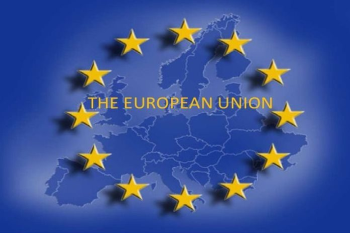
The European Union (EU) is one of the most significant and influential political and economic entities in the world. With 27 member countries and a population of over 450 million people, the EU plays a crucial role in shaping global politics and economics. However, despite its importance, there are many myths and misconceptions surrounding the EU that often cloud people’s understanding of its functioning and impact.
We will debunk 10 common myths of the European Union.
Myth 1: The EU is a single country
One of the most prevalent myths about the EU is that it is a single country. In reality, the EU is a political and economic union of 27 independent countries that have come together to cooperate on a range of issues, such as trade, security, and environmental protection. Each member state retains its sovereignty and autonomy, and decisions within the EU are made collectively through a complex system of governance that involves both national governments and EU institutions.
Myth 2: The EU is undemocratic
Another common misconception about the EU is that it is undemocratic. While it is true that the EU’s decision-making process can be complex and bureaucratic, it is far from being undemocratic. The EU has a number of democratic institutions, including the European Parliament, which is directly elected by EU citizens, and the European Council, which is composed of the leaders of the member states. In addition, EU citizens have the right to petition the European Parliament, and the EU is bound by the principles of the rule of law and respect for human rights.
Myth 3: The EU is a drain on national economies
Many people believe that the EU is a drain on national economies, siphoning off money from member states to fund its various programs and policies. In reality, the EU’s budget is relatively modest compared to the national budgets of its member states, accounting for around 1% of the EU’s gross national income. Moreover, the EU’s funding is used to support a wide range of programs that benefit member states, such as infrastructure projects, research and development initiatives, and agricultural subsidies.
Myth 4: The EU is a superstate
Some critics of the EU argue that it aspires to become a superstate, with a centralized government that overrides national sovereignty. While the EU does have its own set of laws and regulations that member states must abide by, it is important to remember that the EU is a union of sovereign states that have voluntarily chosen to cooperate on certain issues. The EU’s powers are limited and are largely confined to areas where cooperation at the European level is necessary, such as trade and competition policy.
Myth 5: The EU imposes unwanted regulations on member states
Another common myth about the EU is that it imposes unwanted regulations on member states, stifling innovation and growth. While it is true that the EU does have a regulatory role, its regulations are often aimed at harmonizing rules across member states to facilitate trade and ensure a level playing field. In many cases, EU regulations are also intended to protect consumers and the environment, and they are often the result of extensive consultations with stakeholders and experts.
Myth 6: The EU is responsible for mass immigration
One of the most controversial issues surrounding the EU in recent years has been its handling of the refugee and migrant crisis. Many people believe that the EU is responsible for mass immigration, as it has policies that allow for the free movement of people within the Schengen Area. While it is true that the EU has struggled to find a common approach to managing migration, it is important to remember that the EU’s response to the refugee crisis has been based on principles of solidarity and humanitarianism, and that member states have a shared responsibility to address the root causes of migration.
Myth 7: The EU is to blame for the economic crisis
During the global financial crisis of 2008, the EU came under intense scrutiny for its handling of the economic turmoil in the Eurozone. Many people blamed the EU for the crisis, arguing that its policies had exacerbated the situation and prolonged the economic downturn. While it is true that the EU’s response to the crisis was not perfect, it is important to remember that the EU also played a key role in stabilizing the Eurozone and preventing a further escalation of the crisis. The EU’s financial assistance programs and regulatory reforms have helped to restore confidence in the European economy and promote sustainable growth.
Myth 8: The EU is a bureaucratic nightmare
Critics of the EU often paint it as a bureaucratic nightmare, with endless red tape and inefficiencies that hamper its ability to deliver results. While it is true that the EU’s decision-making process can be slow and cumbersome, it is important to recognize that this is a trade-off for ensuring that all member states have a say in the decision-making process. The EU also has a number of mechanisms in place to streamline its operations and reduce bureaucracy, such as the Better Regulation agenda, which aims to improve the quality of EU legislation and make it more user-friendly.
Myth 9: The EU is anti-British
Following the United Kingdom’s decision to leave the EU in 2016, there have been widespread accusations that the EU is anti-British and seeks to punish the UK for its decision to leave. While there have certainly been contentious negotiations between the UK and the EU over Brexit, it is important to remember that the EU’s priority has always been to protect its interests and uphold the integrity of the single market. The EU’s relationship with the UK has been shaped by mutual interests and shared values, and the two parties continue to cooperate on a range of issues, such as security and trade.
Myth 10: The EU is irrelevant in a globalized world
Finally, one of the most persistent myths about the EU is that it is irrelevant in a globalized world, where power is increasingly shifting away from traditional institutions and towards emerging economies and global players. While it is true that the EU faces many challenges in a fast-changing world, such as the rise of populism and protectionism, it is important to remember that the EU still wields considerable influence on the global stage. The EU remains the world’s largest single market, accounting for a significant share of global trade and investment, and it plays a key role in promoting international cooperation and upholding multilateralism.
In conclusion, the European Union is a complex and multifaceted entity that is often misunderstood by the general public. By debunking these 10 myths of the EU, we can gain a clearer and more accurate understanding of the EU’s role in shaping Europe and the world. While the EU certainly has its flaws and shortcomings, it also has many strengths and achievements that should not be overlooked. Ultimately, the EU represents a unique experiment in multilateral cooperation and integration that continues to evolve and adapt to the challenges of the 21st century.