TSARIST RUSSIA
To understand the Russian Revolution, however, it is necessary to understand the nature of the state in which it occurred. Russia at the beginning of the twentieth century was the last great despotism in Europe and the most conservative of the Great Powers. Although some liberalizing changes had occurred in Russia, as elsewhere in Europe, since 1789, Russia remained autocratic, economically backward, and mostly isolated from the rest of Europe. Yet, it was a huge and diverse empire, covering a sixth of the land surface of the globe, dominated by the Russians but containing hundreds of other nationalities. These included other Slavic peoples, like Ukrainians and Poles, as well as non-Slavic Europeans such as Finns and Latvians, plus the largely Turkic Muslims of Central Asia.
Many of these groups had been brought into the Russian Empire by imperial expansion or warfare, and the task of controlling and integrating them plagued the empire through much of its history. A Russian state, centered in Kiev, first emerged in the ninth century; soon thereafter, Prince Vladimir accepted Eastern Orthodox Christianity from Byzantium. From then on, the state and the Orthodox Church were closely entwined. During the three hundred years of Mongol occupation from the thirteenth to the sixteenth centuries, the church kept alive Russian culture, traditions, and identity.
Russian rulers, who took the title “tsar” (the Russian version of the Latin Caesar), were the head of both the state and the Russian Orthodox Church. Moscow claimed the title of the “Third Rome” (after Constantinople), representing the center and the future of Christendom. The last dynasty of the tsars, the Romanovs, ruled from 1613 until the revolution of 1917.
Russia in 1900 was behind the other European powers, both politically and economically. The government remained a rigid and unrestrained autocracy, with the tsar at the head of both church and state. No local governments existed until the 1860s, and no national representative institutions until 1905, and even these were severely limited in their authority.
The government prohibited political parties and kept dissent in check through a rigid system of censorship, a pervasive secret police, and an internal passport system that restricted people’s movement around the country. Politically, Russia in 1900 was much like France in 1780.
Economic change was also slow to reach Russia. Until the emancipation of the serfs in 1861, Russia was still feudal economy decades after feudalism had mostly disappeared from the rest of Europe. In 1900, peasants made up almost 90 percent of the population, and two-thirds of the populations were illiterate. The Industrial Revolution and industrialization, which had begun in Britain at the end of the eighteenth century, did not take hold in Russia until the end of the nineteenth century. There was, therefore, not much of an urban working class, the group Karl Marx thought necessary for a revolution.
HINTS OF CHANGE AND REFORM
From the beginning of the nineteenth century, however, there were already hints of change and reform in Russia. The French Revolution and Napoleon’s armies spread liberal, revolutionary, and Enlightenment ideas all across Europe, including Russia. In 1825, a group of former Russian military officers, some of whom had fought in the Napoleonic wars, been exposed to Western liberalism, and grown discontented with their own country’s reactionary government, mounted an antitsarist revolt. The Decembrist revolt was crushed, but it sent a message and set a precedent for later protests and movements against the autocracy. The most important changes of the century, however, came from the top down rather than from insurrection or revolution. Tsar Alexander II (r. 1855–1881), known as the “Tsar Liberator,” launched a series of liberalizing reforms that included the creation of local self-government, modernization of the judiciary, and, most importantly, the emancipation of the serfs in 1861.
Alexander II was assassinated in 1881, and his successors returned to more autocratic and draconian rule, but the freeing of the serfs, especially, stimulated enormous social and economic changes in Russia. Many peasants were actually worse off economically after the emancipation, and many migrated to the cities in search of work. This fueled both urbanization and industrialization, which took off in Russia in the last decades of the nineteenth century. Between 1861 and 1900, pig iron production increased tenfold, and coal output increased forty-two-fold. Railroad mileage doubled between 1888 and 1913. The social fabric of the country began to change, too, with the growth of an urban working class (the proletariat), new industrial entrepreneurs (the bourgeoisie), and an emerging middle class.
All of this political and socioeconomic ferment stimulated a number of bottom-up reform movements, too, including some revolutionary ones. “Westernizers” believed that Russia’s future was tied with that of Western Europe and favored a constitutional political order and rapid economic development. Slavophiles (literally, “fond of Slavs”), in contrast, believed Russia to be culturally, morally, and politically superior to the West, so opposed Westernization and favored traditional institutions such as the Orthodox Church and the peasant commune (mir). The populists (narodniki) also focused on the peasantry and wanted to base society on the mir, which they saw as an incipient form of socialism. In the 1870s, they launched a campaign of “going to the people” to educate the peasants in revolutionary ideas. An even more radical tendency was represented by the nihilists, who rejected institutions of all kinds, including government and the church, and favored freeing individuals from all religious, political, and family obligations. While all of these movements were gaining adherents in the mid-nineteenth century, Marxism, as such, had virtually no visibility in Russia and would not for many years to come.
Europeans during the nineteenth century were increasingly paying more attention to Russia, especially to its culture. Despite Russia’s political and economic stagnation (or perhaps because of it), the country experienced a cultural renaissance in the nineteenth century. Russian novels became known throughout the world and included works of timeless and universal appeal, such as Fyodor Dostoyevsky’s Crime and Punishment, Ivan Turgenev’s Fathers and Sons, and Leo Tolstoy’s War and Peace (which some consider the greatest novel ever written). Classical music by Russian composers became familiar to people worldwide (then and now) with works such as Pyotr Ilich Tchaikovsky’s Nutcracker and Swan Lake, Modest Mussorgsky’s Pictures at an Exhibition and A Night on Bald Mountain, and Nikolay Rimsky-Korsakov’s Scheherazade.
1905: PRELUDE TO REVOLUTION
While Russian culture was flourishing in the nineteenth century and industrialization was transforming the economy, the autocracy remained rigid, backward, and increasingly ineffectual, both inside the country and in its foreign relations. Russia suffered a humiliating loss in the Russo-Japanese War of 1904–1905, the first time in modern history that a European power was defeated by an Asian one.
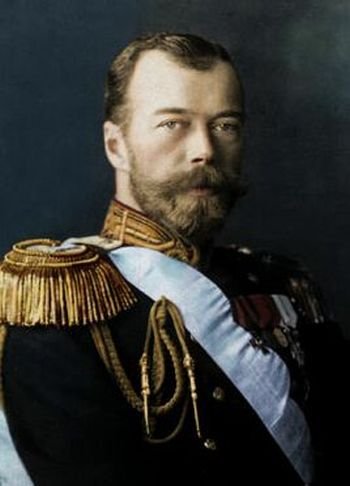
In the middle of that war, an insurrection developed against the autocracy. It began with a large but peaceful demonstration in January 1905, led by an Orthodox priest named Father Gapon, in front of the tsar’s Winter Palace in St. Petersburg. Guards fired on the protesters, killing hundreds in what became known as Bloody Sunday. The massacre precipitated nationwide strikes and demonstrations, which by the fall had paralyzed the country. The tsar, Nicholas II (r. 1894–1917), issued a conciliatory manifesto allowing the formation of an elected legislature (the Duma), and by the end of the year, the revolutionary movement petered out. The Duma was the first national representative institution in Russian history, and although it never had much power, it did allow the emergence of legal political groups and parties, including both liberals and socialists.
The reign of Nicholas II was a period of much change and development in Russian society. One historian has characterized this period as “a time of troubles” but also as a time of “self-scrutiny, experimentation with new institutions and dreams.” There were further economic reforms and advances, a growing middle class, and increasing numbers of independent farmers. After 1905, more freedom of expression was permitted in politics and the arts, and Russia became a center of the avant-garde in both music (e.g., Igor Stravinsky) and the visual arts (e.g., the abstract art of Wassily Kandinsky). But the more open environment also revealed the tensions that were so long repressed in the Russian Empire, including increasing pressures from political liberals and revolutionaries and increasingly assertive nationalism from Poles, Ukrainians, Latvians, Armenians, and the Turkic peoples of Central Asia.
The twin forces that would finally topple the empire were Marxism-Leninism and World War I.
“The First Bolshevik” in Russian Literature
In nineteenth-century Russia, tsarist censorship and the secret police prevented most forms of political opposition, so literature and the arts became the main vehicle for social criticism and political dissent. Two of the most influential literary publications of the century were written by Ivan Sergeyevich Turgenev (1818–1883), who was born and died in the same years as Karl Marx. Less known now than his contemporaries Dostoyevsky and Tolstoy, in the mid nineteenth century Turgenev was the most famous writer in Russia and the first Russian writer to gain a reputation outside the country. His Sportsman’s Sketches (1852), which depicted the miserable condition of peasants, was widely read in the country (including by Tsar Alexander II), provoked discussion and debate about the status of the peasantry, and probably contributed to the tsar’s emancipation of the serfs in 1861. His masterpiece Fathers and Sons (1862) is at once a story of romantic love, generational conflict, and the tensions between change and tradition and between reform and revolution.
Turgenev himself was an example of many of these tensions. He grew up on a prosperous estate worked by serfs, part of an educated family that spoke French at home, and he spent many years in the West. After studying in Germany, he said, “I found myself a Westernizer,” but he remained devoted to Russia and the Russian countryside. At the age of twenty-five, he fell in love with a young, but married, Spanish prima donna and spent the rest of his life following her around Europe in hopeless infatuation. He died in France, and his remains were transferred back to Russia for burial.
In Fathers and Sons, the main character is Bazarov, a young student and doctor who professes to be a nihilist, one who rejects everything that cannot be established by observation, experiment, and science. He repudiates all authority, in fact “everything,” and believes that “the ground must be cleared” for the reconstruction of society. In the novel, he confronts and rejects romanticism, conservatism, and even liberalism. His host, Nikolai, a thoughtful and kindly owner of an estate, has freed his own serfs before the Emancipation required it, but Bazarov is both unsympathetic and rude to the older man.
Bazarov’s revolutionary rhetoric, uncompromising ideology, and commitment to science have led some critics of the novel to label him “the first Bolshevik,” although Lenin’s Bolshevik party was not formed until thirty years after the appearance of the novel.