Colonization in Africa and Asia, and the trans-oceanic Empires
COLONIALISM AND NATIONALISM IN SOUTHEAST ASIA
THE SCRAMBLE FOR AFRICA
The rapid and thoroughgoing colonization of Africa in the last fifteen years of the nineteenth century is referred to as the Scramble for Africa. The African continent constitutes about one-fifth of the globe’s land area and was populated then by about one hundred million people; however, most maps of Africa at the time showed huge blank areas in the interior, thus leading to its reference as the “Dark Continent.” In fact, however, Africa contained about seven hundred autonomous societies, each with its own political structure. In many parts of Africa, there was “a high level of social, political and artistic sophistication in existence long before the coming of the Europeans.”
Before the nineteenth century, outsiders had barely penetrated the interior of Africa, and most contact between Africans and Europeans was along the coasts. Most of these early contacts were based on the slave trade: Between 1450 and 1900, some twelve million people were transported as slaves from Africa to the Americas. Slavery was outlawed in England in 1772, and trade in slaves was banned there in 1807. After that, most of that country’s trade was in products such as sugar, coffee, cocoa, and gold.
European interest in Africa, especially North Africa, expanded after the construction in 1869 of the Suez Canal, which connected the Mediterranean and Red seas (from which ships could travel to the Indian Ocean). The canal was a boon for shipping and world trade, especially between Europe and Asia. For England, especially, the Suez cut shipping time to India in half and allowed ships to avoid the long journey around Africa and the treacherous waters at the southern tip of that continent. Britain soon purchased controlling shares in the canal and, in the 1880s, established a protectorate over Egypt (through which the canal was cut), even though that country was still part of the Ottoman Empire.
The scramble for the continent really began in 1879, when the Belgian king Leopold II (r. 1865–1909) sent the British-American journalist Henry Stanley to the Congo in central Africa. Stanley returned from his assignment in 1884, with treaties signed by some five hundred local chiefs giving Leopold control over the area. In some alarm at this sudden acquisition of African territory by a European rival, the German chancellor Otto von Bismarck organized the Berlin Conference of 1884–1885 to establish some rules on how Europeans would divvy up the African continent.
The conference agreed to the establishment of the Congo Free State with Leopold II as its ruler. But it also set up guidelines for future colonization. A country could not just claim territory; it first had to establish “effective control” over an area. And, the colonizing states had mandates to provide for the welfare of the native peoples. The Berlin Conference set off a mad scramble for territory in Africa, with each European state afraid of being beaten to the punch by others. Within fifteen years, by 1900, the entire continent had been divided up by European powers. Only Ethiopia and Liberia managed to escape colonization, and Ethiopia was the only native empire to do so. Liberia, founded in 1822 as a colony for emancipated American slaves, declared its independence in 1847 but in fact remained mostly under U.S. control.
A key prize in the Scramble for Africa was South Africa, at the southern tip of the continent. The area was originally settled by the Dutch in the seventeenth century, and their descendants became known as the Boers.
The British gradually assumed control in the middle of the nineteenth century, forcing the Boers to the north, where they formed the republics of Transvaal, Natal, and the Orange Free State. The discovery of diamonds and gold in these areas in the 1860s brought many British prospectors and settlers into the Boer states. Friction between the Boers and the British mounted to a full-scale war (the Boer War), which lasted three years and to which the British committed some four hundred thousand troops. The eventual defeat of the Boers led to the creation of the British Union of South Africa in 1910. The government, including both Boers (also called Afrikaners) and British, soon established a policy of racial separation and inequality called apartheid, which suppressed and exploited the black population there until the end of the twentieth century.
THE COLONIZATION OF ASIA
Although European colonization in the nineteenth century was most frenetic in Africa, it extended all over the globe. Most of Asia was carved up by the European powers too, with only Japan remaining truly independent.
The “jewel in the crown” of the British Empire was India, a huge and populous country and a rich source of cotton, tea, and opium. The British had defeated the French in India in the eighteenth century, and after that, the country was essentially ruled by the British East India Company, a trading company that answered to the British parliament in London. After a number of native revolts against British influence, the British government took direct control over India, and Queen Victoria became empress of India.
France began colonizing Southeast Asia in the 1850s, gradually extending its control over the region. In 1887, it established the Union of Indochina, made up of what is now Vietnam and Kampuchea (Cambodia); subsequently, it added Laos. Vietnam later became a hotbed of national resistance to French rule, resulting in a war of national liberation that first drove out the French in the 1950s, then the Americans in the 1970s.
China had its own longstanding empire, so little formal European colonization occurred there. But the military and political weaknesses of nineteenth-century imperial China made it an easy target for its neighbors and for Europeans. Beginning in 1842, the European powers and the United States extracted concessions from China on over a dozen cities, including Shanghai, Canton (Guangzhou), and Hong Kong. These interlocking agreements, known as the treaty system, allowed Europeans to make their own settlements immune from Chinese law and imposed restrictions on Chinese citizens within the treaty ports. European and U.S. gunboats patrolled the Yangtze River to protect their own citizens and commercial interests.
Later in the century, the carving up of China was intensified. Japan defeated China in the Sino-Japanese War of 1894, leading to an independent Korea and to Japan’s taking control of Formosa (Taiwan), the large island just off the Chinese coast. Ten years later, Japan extended its control into Manchuria in northeast China. Russia extracted from China long-term leases over the ports at Port Arthur and Darien, thus gaining important strategic and economic outlets to the Pacific Ocean. The British compelled China to sign a one-hundred-year lease over Hong Kong, which became one of the most important commercial and trading centers in Asia. Even the new imperialist power of the United States got into the act. Not wanting to be left out of the lucrative Chinese market, in 1899, the United States declared an Open Door policy, calling for China to be open to trade with all foreign powers. All of these defeats and humiliations for the Chinese contributed to the overthrow of the Ching Dynasty in 1911 and a failed effort to establish a republic from the ashes of the oldest empire on earth.
PATTERNS OF COLONIAL RULE
The European states initially relied primarily on chartered trading companies to explore and develop colonial areas, expecting that the resulting colonies would essentially pay for themselves. Britain, France, and Holland all had East India companies that were chartered by their governments as early as the seventeenth century and which controlled the areas that they occupied. Eventually, though, administration of these areas was taken over by European governments. A similar pattern emerged during the Scramble for Africa in the late nineteenth century; in West Africa, for example, the Royal Niger Company was granted a charter from the British parliament to develop Nigeria in the 1880s. But when the company went bankrupt in 1899, the British government took over administration of the area, and Nigeria became a British colony. In their colonies, the British practiced indirect rule, relying mostly on native princes and local troops to enforce their authority. The French used more direct rule, appointing Frenchmen as colonial governors and tying the colonies more directly to France. The important North African colonies of Tunisia and Algeria, for example, just across the Mediterranean Sea from southern France, actually became a part of metropolitan France and were heavily settled by French citizens.
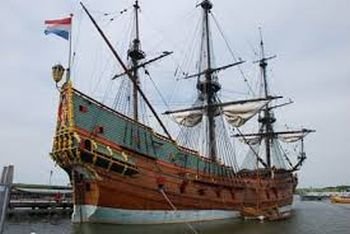
Most colonies, however, were farther away from their European colonizers, so that colonization was made possible only by naval exploration and military force. England, with the largest navy in the world, also had the most extensive empire. The importance of naval power was made clear in an influential book published in 1890 by American admiral Alfred Thayer Mahan called The Influence of Sea Power upon History, 1660–1783, in which he argues that naval power is the key to a state’s military, economic, and diplomatic influence. Mahan’s book was particularly influential in the United States, whose navy, in 1898, seized a string of colonies from Spain, including Cuba in the Caribbean and the Philippines in the South Pacific, thus bringing the United States into the imperialist club. At the same time, Germany, recently united, began a program of shipbuilding to challenge Britain’s dominance at sea, initiating a naval arms race that contributed to the outbreak of World War I.