The Genius of Charles Darwin – HD Full Length (All 3 Episodes)
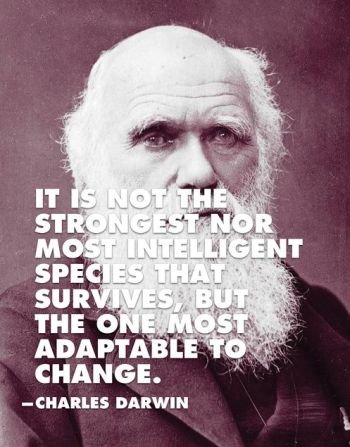
CHARLES DARWIN
Charles Darwin was born in 1809, in England, the son of a prominent and successful physician. His mother died when he was eight years old, but otherwise he had a pleasant and privileged childhood. His father sent him to university to study medicine at first, but he was repelled by surgery performed without anesthetics and moved to Cambridge University to study divinity. He was not a particularly distinguished student but graduated in 1831.
That same year, Darwin was invited to sail as an unpaid companion of the captain on the HMS Beagle, which was to survey the east and west coasts of South America and continue from there to the Pacific Islands.
The voyage was supposed to last two years but actually extended to five. During those years, Darwin kept meticulous notes and diaries and sent back to England geological and biological specimens. On board, he also read Charles Lyell’s Principles of Geology, which argued that the features of the earth changed gradually over time through the cumulative effects of earthquakes, volcanic eruptions, erosion, and the like. This was a controversial theory at the time, a sort of geological evolutionism, but in his explorations, Darwin found evidence for Lyell’s theory. He wrote three books about South American geology, based on his observations and collections, which brought him some fame even while he was still at sea.
After returning to England, he proposed to his first cousin Emma Wedgewood (after writing down a balance sheet of the pros and cons of marriage!), married her, and moved to the village of Downe, sixteen miles from London. They had ten children together, and Darwin, in comfortable circumstances from his father’s fortune, was able to read and write there for the rest of his life.
While on the Beagle, Darwin had already begun formulating ideas about the evolution of species, and he began writing privately about these ideas in the years after the voyage. He kept his ideas secret, however, because they were not only radical in scientific terms but could potentially subject him to legal action under English laws governing blasphemy and sedition. England was in a very conservative period at the time, both in religious and political terms, partly in reaction to what were seen as revolutionary excesses in France and the rest of Europe. The natural world was seen as one in which the spirit of God was involved in the creation of new species of plants and animals.
Darwin’s evidence conflicted with this interpretation. In 1838, he read Malthus’s “An Essay on the Principle of Population”, which argued that population increases geometrically, whereas food supply increases only arithmetically and that periodic famines and disease hold population growth in check. Darwin recognized from this that, in the struggle for existence, “favourable variations would tend to be preserved and unfavorable ones to be destroyed”; from that idea he derived his idea of natural selection.
Finally, in 1859, Darwin’s theory of organic evolution by natural selection was published in a book titled On the Origin of Species by Means of Natural Selection, or the Preservation of Favoured Races in the Struggle for Life.
The first edition sold out immediately. His evidence and theories were greeted at first with skepticism, even by many scientists, and met with stiff opposition from the church. In Origin of Species, Darwin did not directly address the evolution of human beings, although most people applied his theory about animals and plants to human beings, which brought the theory into conflict with a literal interpretation, at least, of the Bible, and especially of the book of Genesis. Later, Darwin confirmed these hunches with the publication, in 1871, of The Descent of Man, which directly tackled the issue of human evolution. Furthermore, this book expanded the scope of evolution theory to include the acquisition of moral and spiritual traits, as well as physical ones, and pointed out humankind’s psychological as well as physical similarities to the great apes.
THE THEORY OF EVOLUTION BY NATURAL SELECTION
From his observations of fossils and various species of plants and animals, as well as his understanding of the gradual and evolutionary change of the planet itself, Darwin first concluded that all species are mutable, that they can and do change over time. All species develop through small changes from those species that went before in a slow process of organic evolution. The changes occur through the process of natural selection, meaning that those organisms with the most useful characteristics tend to survive and pass those characteristics on to succeeding generations.
Darwin saw a competition for survival within each species, such that within a local population, an individual with favorable characteristics for that environment-say a sharper beak or a brighter color-has a better chance of reproducing than others. As these traits are passed on from one generation to the next, they become predominant in that population.
Those individuals possessing these advantageous characteristics survive and reproduce; those that do not possess them are more likely to perish and eventually to disappear from the population altogether.
Darwin’s theories challenged both contemporary science and religion. Although other biologists had pointed to competition and struggle between different species, Darwin focused on the struggle for survival and competition within a single species. It was this, of course, that accounted for the changing nature of the species. And, although the idea of organic evolution itself was not new, Darwin produced both evidence for such species changes and also the mechanism by which such changes occurred-the process of natural selection. In this way of thinking, the human being is not in a position of superiority within the animal world; humans have simply evolved in a different way than others. These were radically new ways of thinking about life (of all kinds) and constituted a genuine scientific revolution in the natural sciences, in much the same way that Copernicus and Galileo’s ideas revolutionized our thinking about the place of the Earth in the solar system.