
VIDEO
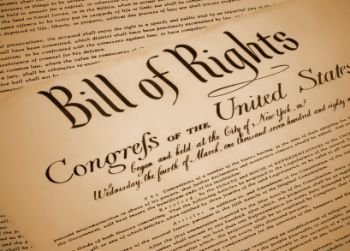
The Bill of Rights
In 1787, representatives of 12 of the original 13 American states met in Philadelphia, Pennsylvania, to begin drafting the U.S. Constitution. They crafted a document of compromise and representative democracy that has adapted well to changing circumstances for more than 200 years.
There were many who opposed the new Constitution in the beginning. Their consent to the document came only with the promise that a series of amendments would be added guaranteeing civil liberties-liberties that already were part of most state constitutions. Thus, the 10 amendments below, known collectively as the Bill of Rights, were added to the Constitution in 1791. Since the adoption of the Bill of Rights, only 17 additional amendments have been made part of the Constitution.
Amendment I – Congress shall make no law respecting an establishment of religion, or prohibiting the free exercise thereof; or abridging the freedom of speech, or of the press, or the right of the people peaceably to assemble, and to petition the Government for a redress of grievances.
Amendment II – A well regulated Militia, being necessary to the security of a Free State, the right of the people to keep and bear Arms, shall not be infringed.
Amendment III – No Soldier shall, in time of peace, be quartered in any house, without the consent of the Owner, nor in time of war, but in a manner to be prescribed by law.
Amendment IV – The right of the people to be secure in their persons, houses, papers, and effects, against unreasonable searches and seizures, shall not be violated. …
Amendment V – No person shall be held to answer for a capital, or otherwise infamous crime, unless on a presentment or indictment of a Grand Jury … nor shall any person be subject for the same offence to be twice put in jeopardy of life or limb; nor shall be compelled in any criminal case to be a witness against himself, nor be deprived of life, liberty, or property, without due process of law; nor shall private property be taken for public use, without just compensation.
Amendment VI – In all criminal prosecutions, the accused shall enjoy the right to a speedy and public trial, by an impartial jury of the State and district wherein the crime shall have been committed, which district shall have been previously ascertained by law, and to be informed of the nature and cause of the accusation; to be confronted with the witnesses against him; to have compulsory process for obtaining witnesses in his favor, and to have the Assistance of Counsel for his defense.
Amendment VII – In Suits at common law, where the value in controversy shall exceed twenty dollars, the right of trial by jury shall be preserved. …
Amendment VIII – Excessive bail shall not be required, nor excessive fines imposed, nor cruel and unusual punishments inflicted.
Amendment IX – The enumeration in the Constitution, of certain rights, shall not be construed to deny or disparage others retained by the people.
Amendment X – The powers not delegated to the United States by the Constitution, nor prohibited by it to the States, are reserved to the States respectively, or to the people.