Timeline of European History
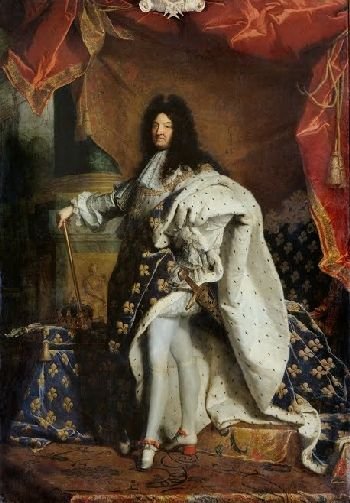
1643–1715 Reign of Louis XIV (the Sun King) in France 1688 Glorious Revolution in England replaces absolute monarchy with constitutional monarchy
1690 – John Locke’s Second Treatise of Civil Government
1711 – Newcomen invents early version of steam engine
1740 -1789 Enlightenment at its peak
1762 – 1796 Catherine II (the Great) rules in Russia
1769 – James Watt invents the modern steam engine
1774-1793 Reign of Louis XVI in France
1776 – American Declaration of Independence
1776 – Adam Smith publishes The Wealth of Nations
1776-1783 American War of Independence
1787- U.S. Constitution written
1788 – Economic problems lead Louis XVI to convoke Estates General
1789 – French Revolution begins; fall of the Bastille; Declaration of the Rights of Man
1792 – First French republic established
1793 – Louis XVI beheaded
1793-1794 – The Terror in France
1795–1799 – The Directory in France
1799 – Napoleon Bonaparte seizes power in France
1804 – Napoleon crowns himself Napoleon I, emperor of France
1812 – Napoleon invades Russia
1814-1830 – Restoration; Bourbon monarchy in France
1815 Wellington defeats Napoleon at Waterloo
1815 – Congress of Vienna
1825- First railroad runs in Britain
1825 – Decembrist revolt in Russia
1830 – Revolution in France deposes Charles X and establishes July Monarchy under Louis Philippe, who rules until 1848
1830 – Revolutions in Belgium, Poland, and elsewhere
1830 – Mazzini founds Young Italy movement
1832 – First reform bill in Britain expands voting rights
1833 – Slavery abolished in Britain
1837-1901 – Reign of Queen Victoria in Britain
1838 – People’s Charter in England demands universal suffrage; Chartist movement
1848 – Peoples’ Spring revolutions in France, Austria, Prussia, Hungary, and Italy; all repressed by 1849
1848 – Marx and Engels publish The Communist Manifesto
1848-1916 – Reign of Emperor Francis Joseph of Austria
1854-1856 -The Crimean War
1855-1881 – Reign of Alexander II (the Tsar Liberator) in Russia
1859 – Darwin’s Origin of Species
1859 – Cavour provokes war with Austria to win territory for Italy
1859-1870 -Unification of Italy under Victor Emmanuel II and Cavour
1861 – Emancipation of serfs in Russia by Tsar Alexander II
1864-1871 – Bismarck’s wars of German unification against Denmark, Austria, and France
1867 – Dual monarchy established in Austria-Hungary
1869 – Suez Canal constructed
1870s – Populist and nihilist movements in Russia
1870-1871 – Franco-Prussian War
1870-1940 – Third Republic in France
1871–1918 – The German Empire
1878 – Serbia gains independence from the Ottoman Empire
1880s – Socialist parties founded in Europe
1883–1893 -French colonization of Indochina
1885 – Berlin Conference on Africa
1885–1900 – Scramble for Africa; intensive colonization by Europeans
1888-1918 – Reign of Kaiser Wilhelm II in Germany
1894-1917 – Reign of Tsar Nicholas II in Russia
1898 – Spanish-American War; United States acquires Puerto Rico, Guam, and Philippines as colonies
1898 – Russian Social Democratic Labor Party formed; soon splits into Bolshevik and Menshevik factions
1900 – Freud publishes Interpretation of Dreams
1904-1905 – Russo-Japanese War
1905 – Bloody Sunday and revolution in Russia
1905 – Einstein publishes theory of relativity
1914 – Assassination of Austrian archduke Francis Ferdinand in Sarajevo
1914- 1918 World War I
1917 – United States enters war
1917 – Russian revolution overthrows tsar and brings Bolsheviks (communists) to power
1918 – Germany surrenders, ending World War I
1918 – Fall of German, Austro-Hungarian, and Ottoman empires
1918 – Limited suffrage for women in Britain
1919 – Treaty of Versailles
1919-1933 – Weimar Republic in Germany
1922- Union of Soviet Socialist Republics (USSR) established
1922 Mussolini seizes power in Italy
1922–1943 Fascist rule in Italy under Mussolini
1924 – Vladimir Lenin dies; soon succeeded as Soviet party leader by Joseph Stalin (rules until 1953)
1928 – Stalin launches first five-year plan of planned industrialization in USSR
1928 – Full suffrage for women in Britain
1929 – U.S. stock market crashes, leading to Great Depression of 1930s
1933 – Hitler appointed chancellor of Germany
1933-1945 – Nazi rule in Germany under Hitler
1936 – John Maynard Keynes’s General Theory of Employment, Interest, and Money
1936-1938 – Stalin’s Great Purge in Soviet Union
1936-1939 – Spanish Civil War
1937- Rome–Berlin–Tokyo axis; Hitler signs treaties with Italy and Japan
1938 – Munich Conference allows Hitler’s takeover of Sudetenland
1938 – Germany annexes Austria
1939 – Nazi-Soviet nonaggression pact
1939- Germany invades Poland, leading to British declaration of war
1939-1945 – World War II
1940 – Germans invade Norway, Denmark, Holland, Belgium, and France
1940 – Churchill becomes British prime minister; Battle of Britain
1941- Germans invade Soviet Union1941 Japanese attack Pearl Harbor; United States enters war
1942-1943 – Battle of Stalingrad; Russians turn tide against Germans
1943 – Allies invade Italy; fall of Mussolini
1944 – Allied invasion of France at Normandy
1945 – Yalta and Potsdam conferences of Allied leaders
1945 – Hitler commits suicide; Germany surrenders
1945 – United States drops atomic bombs on Hiroshima and Nagasaki; Japan surrenders
1945 – United Nations established with fifty-one members
1945 -1948 Communist regimes established by Soviet Union in Eastern Europe
1947- Truman Doctrine and Marshall Plan commit United States to Europe
1948-1949 – Berlin blockade and airlift
1949 – German Federal Republic (West Germany) and German Democratic Republic (East Germany) established
1949 – North Atlantic Treaty Organization (NATO) founded
1949 – Communists win power in China under Mao Zedong
1950-1953- Korean War
1951- European Coal and Steel Community (ECSC) formed
1953 – Death of Stalin in USSR
1954 – France pulls out of Indochina; Vietnam partitioned into North and South Vietnam
1955 – West Germany joins NATO; Warsaw Pact formed
1956 – Uprisings in Poland and Hungary crushed by Soviet Union
1957 – Soviet Union launches first orbiting satellite, Sputnik
1957 – Gold Coast (Ghana) gains independence from Britain
1957 – Treaty of Rome establishes European Economic Community (EEC)
1958 – Fifth French republic established with Charles de Gaulle as president
1961 – Berlin Wall erected
1961-1975 – U.S. involvement in Vietnam War
1962 – U.S.- Soviet Cuban missile crisis
1964-1982 – Brezhnev in power in Soviet Union
1967 – ECSC, EEC, and Euratom merge into European Community (EC)
1968 – Prague Spring in Czechoslovakia crushed by Soviet Union
1970s – East–West détente; improvement of U.S.-Soviet relations, arms-control agreements
1973 – Britain, Denmark, and Ireland join EC, which then has nine members
1974 – Revolution in Portugal ends dictatorship
1975 – Death of Franco in Spain; constitutional monarchy established
1975 – End of last European (Portuguese) empire in Africa
1975 – Helsinki Conference on European Security and Cooperation
1978 – Polish cardinal Wojtyła named Pope John Paul II
1979 – Soviet invasion of Afghanistan; end of détente
1980-1981 – Solidarity movement in Poland challenges communist rule
1982 Soviet leader Brezhnev dies
1985 – Mikhail Gorbachev chosen leader of Soviet Communist Party; begins perestroika
1989 – Hungary opens border to Austria; Solidarity wins elections in Poland; fall of Berlin Wall; fall of communist regimes in Eastern Europe
1990 – Free elections in most of European post communist countries
1990 – Germany reunified
1991 – Croatia, Slovenia, and Bosnia declare independence from Yugoslavia
1991 – USSR dissolved; Warsaw Pact dissolved
1992-1995 – Civil war in Bosnia finally ended with Dayton Accords of 1995
1993 – Czechoslovakia divided into Czech Republic and Slovakia
1993 – European Union (EU) born
2002- Euro introduced as currency of EU
2006 – Montenegro and Serbia declare independence, ending the state of Yugoslavia
2004-2007 EU membership expanded to twenty-seven with addition of twelve new members, including ten former communist countries