The drive for European unity to 1973
In the years immediately following the ending of World War Two, there was a determination among some Europeans to rebuild the continent and in so doing to ensure that it would not be plagued by war again. They felt that in unity, there would be strength. A series of international bodies was created which provided for varying levels of cooperation. However, it was the signing of the Treaty of Rome in 1957 that marked the key turning point. By creating the European Economic Community, the pioneers of postwar unification were taking a step which had the potential to reorder economic and political relations among its member states.
In this chapter, we explore how and why European states which had previously jealously guarded their national independence were willing to surrender or pool their sovereignty and join an organisation whose immediate goal was to create a common market but whose longer-term aspiration was to achieve ever closer union. We then examine how the success of the enterprise led to Britain and other countries seeking membership.
In 1914, Europe was at the centre of world affairs. Thirty years later, it was in ruins and world leadership was passing into the hands of two superpowers, the Soviet Union and the United States of America.
World War Two had resulted in millions of deaths and physical and economic destruction across the continent. The nations of Europe were virtually bankrupt and faced the prospect of a long struggle to regain the position they had attained before hostilities. Britain, which had been the world’s greatest trading nation in 1914, was now a debtor and had little chance of returning to its former glory without assistance. To get back to earlier levels of production and standards of living would need outside help from the United States’ which alone had the money and resources that Europe lacked. It would also depend upon the willingness and ability of the European nations to put their own house in order and work together in a new spirit of cooperation.
Why was unity desirable after 1945?
In the early postwar era, there had been economic, political and military cooperation between the countries of Western Europe as never before in peacetime.
It was encouraged by the United States and for many years stimulated by fear of the Soviet Union (USSR). Soon after World War Two, it became apparent that the main threat to Western Europe came not from Germany but from the USSR.
At first, not everyone recognized the danger posed by the Soviet Union, which for more than four decades was to split the continent in half and dominate the Eastern sector via its puppet governments. However, as the tension and suspicion of the Cold War era developed, so too did the feeling that unity might give more security.
Initially, however, the German problem was one which had to be addressed. Any movement in the direction of unity could not preclude German involvement. If there was close cooperation in Western Europe, then this might help to contain German strength. A later British prime minister, Harold Macmillan, (1) noted this at the time:
The most important motive behind the movement for European integration is the need to attach Germany permanently to Western Europe, but in such a manner that she cannot dominate it. This is as much a British as a continental interest. After all, we have fought two wars about this in one generation.
He realized the importance of Germany’s position in Europe, and like other forward-looking politicians of the era recognized that it was a key barrier against the potential threat posed by the Soviet Red Army.
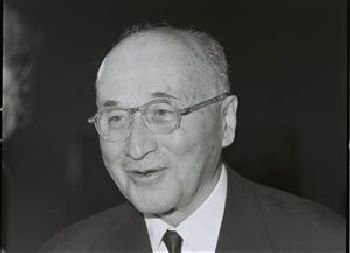
Beyond this tactical consideration, however, there were other factors. Above all, there was a desire to bring about a lasting peace in Europe. After 1945, there was a feeling that fighting could break out all over again. The Frenchman Jean Monnet, (2) one of the inspirational figures in those early postwar days, was later to describe the atmosphere as one in which there was an acceptance ‘of a war that is thought to be inevitable’. Martin Holland3 makes the point very clearly:
‘Hindsight should not make us undervalue this preoccupation; East–West relations were confrontational; the status of Berlin remained precarious, Germany was formally divided; French economic recovery was stagnating; and the proliferation of atomic weapons had begun’.
After many wars, there tends to be a mood of idealism, a feeling that the horrors of war must never be allowed to haunt the world again. This happened after World War Two and in particular it was recognized that there was a need to bind France and Germany in an alliance of friendship, support and mutual interest. For Monnet, such an axis was the key to stability in Europe. To him and others, the developments we are about to survey were not just a series of useful steps along the road towards recovery. In their thinking, Europe was more than an economic or a political concept. It was, in Monnet’s words, a moral idea. It was all about a new venture in international relations whose main objective would be peace and reconciliation.
This would end the anxiety in France which continued even when the war was over. For Frenchmen, the question on many lips was: ‘What’s to be done about Germany?’ Monnet’s instinct was to end national rivalries in Western Europe once and for all. In so doing, he believed that Western nations would be taking a step towards securing a larger peace which would prevent the continent from experiencing the century’s third major war.
A ‘European Idea’ developed the idea of a strong, independent, prosperous and above all peaceful Europe. There was certainly a need for cooperation to bring about renewed economic strength, for following the appalling destruction the continent was devastated, France, Germany and Italy reduced to chaos, their peoples often out of work, sometimes starving or homeless, always poor.
Common action, it was believed, might help industry and agriculture to recover. There were, then, good reasons for European nations to come together. A number of groups were formed in the years after 1945 to promote the European cause. In October 1948 they came together in the European Movement, a prointegrationist lobby which had national organizations in twenty-nine countries and was the principal all-party pressure group committed to European integration.
Its first honorary presidents included De Gasperi and Winston Churchill, in recognition of their strong support for unification. Monnet and other continental politicians looked to Britain for a lead. Britain’s commitment to the causes of freedom and parliamentary government was implicit in the way it had fought against the German dictatorship in World War Two. During the hostilities, exiled leaders from several nations had based their operations in London. The pronouncements of Prime Minister Churchill seemed encouraging. Just before the fall of France in 1940, he had – at Monnet’s instigation – proposed the union of Britain and France into a single state.