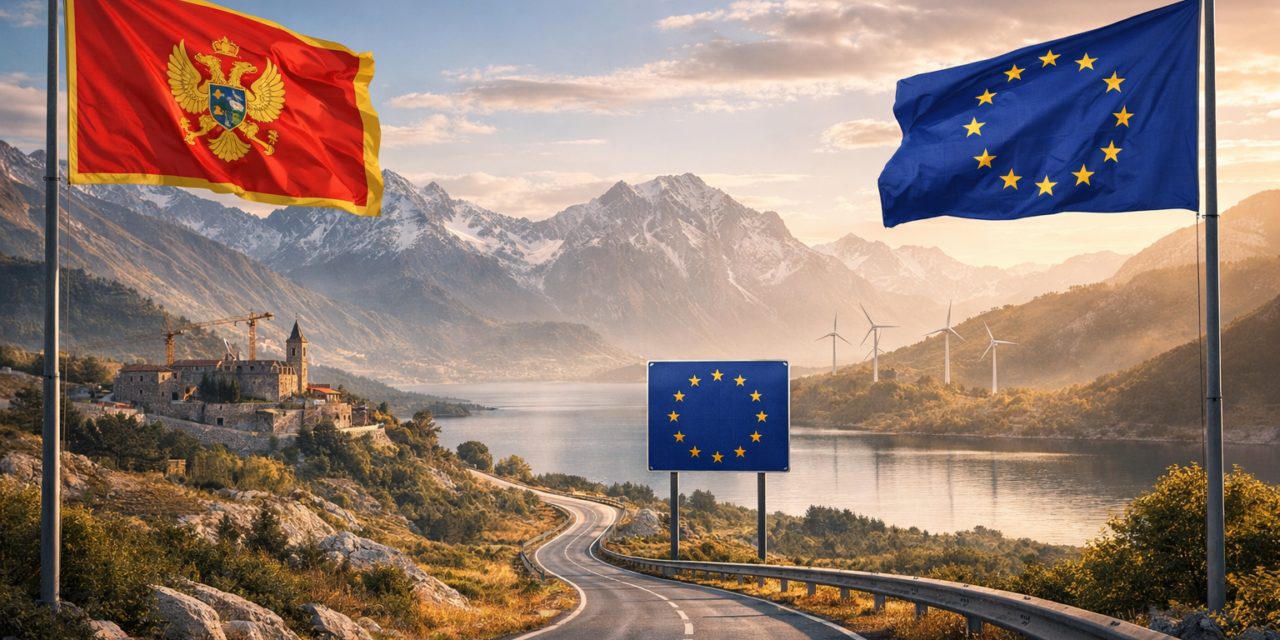
Montenegro’s journey towards European Union membership is a multifaceted narrative, deeply intertwined with its post-independence political evolution, the persistent pursuit of structural reforms, and the evolving dynamics of EU enlargement. As a small Balkan nation, Montenegro has strategically positioned EU accession as a cornerstone of its foreign policy and a catalyst for domestic transformation. The process, marked by both significant achievements and persistent challenges, has seen the country navigate complex geopolitical landscapes and the rigorous demands of EU integration criteria. The timeframe leading up to April 15, 2026, offers a crucial lens through which to examine the progress made, the obstacles that remain, and the realistic prospects for Montenegro’s eventual membership. This period is particularly significant as it falls within a broader context of renewed EU engagement with the Western Balkans, driven by a desire for stability, economic convergence, and geopolitical influence in a region historically susceptible to external pressures. Understanding Montenegro’s EU aspirations requires a deep dive into its political developments since regaining independence in 2006, the extensive reform agenda it has undertaken across various sectors, and a critical assessment of its readiness to meet the final benchmarks for accession. The European Union, in turn, faces its own internal considerations regarding enlargement, balancing the strategic imperative of integrating new members with the need to maintain internal cohesion and institutional capacity. The interplay of these domestic and external factors will ultimately shape Montenegro’s trajectory towards, or potentially away from, full EU membership by the specified date.
Historical Context of Montenegro’s EU Aspirations
Montenegro’s path to the European Union is rooted in a complex historical legacy and a strong desire for integration into Western democratic and economic structures. Following its re-establishment of independence in 2006, the country’s political leadership swiftly identified EU membership as a primary strategic objective. This aspiration was not merely a geopolitical choice but also a reflection of a long-standing historical affinity with Europe, often perceived as a source of stability, prosperity, and democratic values, especially in contrast to periods of regional turmoil. The early years of independence were characterized by a concerted effort to build state institutions and establish a stable political environment conducive to foreign investment and international cooperation. The EU, at this juncture, was actively pursuing a policy of stabilization and association for the Western Balkan countries, recognizing that offering a clear European perspective was crucial for consolidating peace and fostering democratic transitions in the post-conflict region.
Montenegro’s initial engagement with the EU followed the standard accession framework. In 2008, the country submitted its application for EU membership, a move that formally launched its integration process. This was followed by the granting of candidate status in December 2010, a significant milestone that signaled the EU’s willingness to engage formally with Montenegro. The subsequent years saw the opening of accession negotiations in June 2012, a process divided into numerous chapters, each covering a specific policy area of the acquis communautaire, the body of EU law and policy. This opened a new phase of intensive engagement, requiring Montenegro to undertake extensive legislative, institutional, and administrative reforms to align its national legislation and practices with EU standards.
The period leading up to April 15, 2026, is contextualized by broader trends in EU enlargement policy. The EU’s commitment to the Western Balkans has seen fluctuations over the years, influenced by internal challenges within the EU itself, such as economic crises and debates over the future direction of integration. However, recent years have witnessed a renewed emphasis on the region, often framed in terms of geopolitical necessity and the need to prevent external influence from undermining regional stability. The Berlin Process, launched in 2014, and subsequent initiatives like the Sofia Summit and the EU-Western Balkans Summit in Tirana, have aimed to accelerate regional cooperation and deepen integration with the EU, even in the absence of immediate accession for all.
For Montenegro, this means that the accession process is not solely a bilateral matter but is also influenced by the overall pace and direction of EU enlargement policy. The opening and closing of negotiation chapters are subject to the EU’s assessment of Montenegro’s progress, but also to the political will and absorptive capacity of the Union. The target date of April 15, 2026, while potentially ambitious, reflects a desire for concrete progress and a recognition that continued stagnation could lead to disillusionment and a loss of momentum for reform. The historical trajectory, therefore, underscores a long-term commitment to European integration, punctuated by periods of accelerated progress and moments of recalibration, all of which have shaped the current landscape of Montenegro’s accession bid.
Political Evolution and Governance Reforms
Montenegro’s political evolution since independence in 2006 has been a dynamic process, significantly shaped by its EU accession aspirations. The country’s governance system has undergone considerable reforms aimed at strengthening democratic institutions, the rule of law, and public administration. The initial years were marked by efforts to establish a functional democratic framework following the dissolution of the State Union of Serbia and Montenegro. This included developing a constitution, electoral laws, and a parliamentary system. The dominant political force during this period was the Democratic Party of Socialists (DPS), which, under various coalitions, maintained power for decades, often credited with driving the EU accession agenda but also facing criticism regarding democratic consolidation and the rule of law.
The reforms necessary for EU accession have touched upon virtually every aspect of governance. Key areas of focus have included the judiciary, the fight against corruption and organized crime, media freedom, and the professionalization of public administration. The judiciary, in particular, has been a central pillar of the reform process. Efforts have been made to enhance its independence, efficiency, and accountability. This has involved constitutional amendments to ensure judicial autonomy, the establishment of judicial councils tasked with appointments and disciplinary matters, and efforts to reduce case backlogs. However, challenges persist in ensuring the impartiality of the judiciary, combating political influence, and guaranteeing effective enforcement of judgments. The EU has consistently highlighted the need for stronger judicial track records, particularly in high-profile corruption cases, as a critical indicator of progress.
The fight against corruption and organized crime has been another litmus test for Montenegro’s EU integration. The country has adopted a comprehensive legal framework to combat these issues, including anti-corruption laws, money laundering regulations, and provisions for asset forfeiture. Special police units and prosecution offices have been established to address these complex challenges. However, the effective implementation of these laws has often been hampered by a lack of resources, political will, and a perception that impunity still exists, particularly for high-level offenses. International bodies, including the EU, have repeatedly called for more tangible results, such as convictions and confiscations of assets derived from criminal activities, to demonstrate a genuine commitment to eradicating these pervasive problems.
Media freedom and pluralism have also been central to Montenegro’s political reforms. The country has worked to liberalize its media landscape and ensure greater freedom of expression, aligning with EU standards. However, concerns have been raised about political pressure on journalists, a lack of transparency in media ownership, and challenges in ensuring the safety of media professionals. Instances of threats and attacks against journalists have been a recurring issue, undermining the vibrancy of public discourse and the ability of the media to act as a watchdog.
Public administration reform has been another critical area. The objective has been to create a professional, merit-based, and efficient public service capable of implementing EU legislation and delivering quality public services. This has involved efforts to streamline bureaucratic processes, decentralize powers, and improve transparency and accountability. However, challenges remain in terms of politicization of appointments, insufficient capacity building, and the need for greater e-governance adoption to enhance efficiency and accessibility.
The political landscape itself has seen significant shifts. The 2020 parliamentary elections marked a historic turning point, ending over three decades of DPS rule. This transition brought a new coalition government to power, which initially expressed continued commitment to EU integration. However, internal political divisions, frequent government reshuffles, and a complex parliamentary dynamic have created challenges in maintaining reform momentum and ensuring political stability. The ability of successive governments to deliver on the reform agenda, particularly in the areas of rule of law and economic development, will be crucial in the coming years. The political evolution in Montenegro is therefore a complex interplay of institutional reforms, democratic consolidation, and the persistent pursuit of European integration, with the outcome hinging on the sustained political will to address deep-seated structural issues.
Structural Reforms and Alignment with the Acquis Communautaire
Montenegro’s accession negotiations with the European Union involve a comprehensive screening and harmonization process across 35 chapters of the acquis communautaire. This entails a rigorous overhaul of national legislation, institutions, and administrative capacities to align with the vast body of EU law. The progress achieved in implementing these structural reforms is a key determinant of the pace and success of Montenegro’s accession bid. The process is not merely about transposing laws but about ensuring their effective implementation and enforcement in practice.
One of the most critical areas of reform has been Chapter 23, “Judiciary and Fundamental Rights. ” This chapter is considered a cornerstone of the accession process, as it addresses the rule of law, judicial independence, the fight against corruption, and the protection of human rights. Montenegro has adopted numerous legislative acts and strategies to meet the requirements of this chapter, including reforms to the judicial system, the prosecution service, and human rights protection mechanisms. However, significant challenges remain in achieving concrete results, particularly in the effective investigation, prosecution, and sentencing of corruption cases at all levels, as well as in ensuring the independence and efficiency of the judiciary. The implementation of recommendations from the Venice Commission and the EU’s own monitoring reports continue to highlight the need for stronger judicial independence and more robust anti-corruption measures.
Chapter 24, “Justice, Freedom, and Security,” is closely linked to Chapter 23 and focuses on areas such as border management, asylum, migration, police cooperation, and the fight against organized crime and terrorism. Montenegro has made strides in strengthening its border security, enhancing cooperation with Europol and Frontex, and developing policies on asylum and migration in line with EU standards. Efforts have also been directed towards combating trafficking in human beings and illicit drug trade. However, the region’s susceptibility to organized crime and its role as a transit route for irregular migration continue to pose significant challenges, requiring sustained efforts and improved regional cooperation.
Economic reforms, covered under various chapters such as Chapter 1, “Free Movement of Goods,” Chapter 4, “Free Movement of Capital,” and Chapter 17, “Economic and Monetary Policy,” are equally crucial. Montenegro has worked to liberalize its economy, privatize state-owned enterprises, and create a favorable business environment. The country has adopted legislation aligned with EU single market principles, including standards for product safety, competition policy, and consumer protection. However, structural weaknesses persist, including a high unemployment rate, a significant informal economy, and the need for further diversification of the economic base. Fiscal sustainability and the management of public debt are also areas of ongoing attention.
Environmental protection, addressed in Chapter 27, “Environment and Climate Change,” requires substantial investment and regulatory alignment. Montenegro has adopted a framework of laws and strategies to meet EU environmental standards, particularly concerning waste management, water quality, air pollution, and biodiversity conservation. However, the implementation of these measures is often costly and technologically demanding, requiring significant investment in infrastructure and capacity building. The impact of climate change also presents a growing challenge that requires proactive adaptation and mitigation strategies.
Another significant area is Chapter 29, “Customs Union,” and Chapter 30, “External Relations,” which deal with trade policy and customs procedures. Montenegro has been working to align its customs legislation and procedures with EU requirements to facilitate trade and ensure compliance with the acquis. This includes harmonizing tariffs, implementing common transit procedures, and strengthening customs administration.
The process of alignment is ongoing and requires continuous monitoring and adaptation. The EU’s Enlargement Strategy and reports from the European Commission provide regular assessments of Montenegro’s progress in each chapter. The ability of Montenegro to successfully implement reforms across these diverse areas, demonstrating not only legislative alignment but also effective institutional capacity and concrete results, will be paramount in determining its readiness for accession. The timeframe until April 15, 2026, necessitates a significant acceleration in the implementation and enforcement of these reforms to meet the EU’s exacting standards.
Integration Prospects and Challenges until 15 April 2026
Montenegro’s integration prospects into the European Union by April 15, 2026, are characterized by a combination of determined progress, persistent challenges, and the complex geopolitical realities that shape EU enlargement. The country has consistently been perceived as one of the frontrunners in the Western Balkan region, having opened all negotiating chapters and closed a significant number of them. This advanced stage of negotiations suggests a solid foundation for potential accession. However, the ultimate timeline for membership is not solely dependent on the technical completion of negotiations but also on political will, the capacity of both Montenegro and the EU, and the broader geopolitical context.
One of the primary drivers for Montenegro’s continued efforts is the strategic imperative for regional stability and Europeanization. The EU views the accession of the Western Balkans as a crucial geopolitical objective to foster democratic governance, economic prosperity, and security in a strategically important region. Montenegro, as a NATO member since 2017, has already demonstrated its commitment to Euro-Atlantic integration, which is often seen as a complementary path to EU membership. This membership has provided a degree of security and has further solidified its Western orientation.
However, significant challenges remain, particularly in the critical areas of the rule of law, corruption, and organized crime. As highlighted in previous sections, while Montenegro has adopted extensive legislation, the tangible results in terms of convictions, asset recovery, and the perception of justice remain areas of concern for the EU. The effectiveness of judicial reforms, the independence of the judiciary from political influence, and the fight against high-level corruption are crucial benchmarks that must be demonstrably met. The upcoming period until April 2026 will require a concerted and sustained effort to translate legal frameworks into practical impact.
Political stability and the functioning of democratic institutions are also critical factors. Frequent government changes and internal political divisions can hinder the consistent implementation of reform agendas and create an environment of uncertainty. The ability of Montenegro’s political leadership to maintain a united front on the EU accession path, foster constructive political dialogue, and ensure the effective functioning of state institutions will be essential. This includes strengthening parliamentary oversight, ensuring accountability in public administration, and promoting a vibrant civil society that can act as a check on government power.
Economic convergence is another crucial aspect. While Montenegro has made progress in liberalizing its economy and attracting foreign investment, challenges such as high unemployment, structural economic weaknesses, and the need for diversification persist. The EU accession process also involves significant fiscal commitments related to adopting EU policies and regulations, which require sound economic management and fiscal discipline. The country’s ability to sustain economic growth, improve its competitiveness, and address social disparities will be vital for its post-accession viability.
The EU’s own internal dynamics and enlargement fatigue can also influence the prospects for Montenegro’s accession. While there is a renewed political will within the EU to engage with the Western Balkans, the internal debates surrounding the future of the Union, the balance of power between member states, and the capacity to absorb new members can affect the pace of accession. The principle of “own merits” remains central, meaning that Montenegro must meet all the criteria independently of the progress of other candidate countries.
Looking specifically at the period until April 15, 2026, the focus will likely be on demonstrating concrete results in the rule of law chapters, particularly Chapter 23 and 24. The successful closure of these chapters is often considered a prerequisite for the final stages of accession. Furthermore, Montenegro needs to continue its efforts in implementing reforms across all chapters, ensuring that its legal and administrative systems are fully aligned with EU standards and are capable of functioning effectively within the Union.
The prospects for accession by April 2026, while ambitious, are not entirely out of reach if there is a strong and sustained commitment to reform from Montenegro and continued political support from the EU. However, it is more realistic to view this date as a significant milestone for demonstrating substantial progress and potentially moving closer to the final stages of negotiation, rather than a definitive accession date. The process remains demanding, and the ability of Montenegro to navigate the remaining hurdles will ultimately determine its place within the European Union.
According to recent statements reported by Euronews, the Montenegrin Government has set 2028 as the political horizon for completing the accession process. This goal, although dependent on the European Union’s assessment and on the country’s ability to fully meet the Copenhagen criteria, reflects the intention to accelerate structural reforms and strengthen Montenegro’s international credibility.
Conclusion
Montenegro’s journey towards European Union membership is a testament to its enduring commitment to integration and its strategic vision for the future. The political evolution since independence has been marked by a deliberate effort to build democratic institutions and embrace European standards, driven significantly by the accession process. The structural reforms undertaken across various sectors, from the judiciary and rule of law to economic policy and environmental protection, reflect the profound transformation required to align with the extensive acquis communautaire. While significant legislative and institutional progress has been made, the critical challenge lies in ensuring the effective implementation and tangible results of these reforms, particularly in combating corruption and organized crime, and strengthening the independence and efficiency of the judiciary.
The prospects for Montenegro’s accession by April 15, 2026, present a complex interplay of achievements, persistent challenges, and external influences. The country’s advanced stage in accession negotiations, coupled with its NATO membership, positions it favorably within the Western Balkan context. However, the final stages of accession are contingent not only on technical compliance but also on sustained political will, demonstrable progress in core reform areas, and the broader geopolitical considerations shaping EU enlargement. The ability of Montenegro to maintain political stability, ensure effective governance, and accelerate economic convergence will be crucial in navigating the remaining hurdles.
Ultimately, the timeframe leading up to April 15, 2026, serves as a critical period for Montenegro to solidify its reform achievements and demonstrate its readiness to assume the responsibilities of EU membership. While full accession by this date may be ambitious, significant progress in the coming years could pave the way for the final closure of negotiation chapters and a clearer path towards full membership. The success of Montenegro’s accession bid will not only shape its own future but will also serve as a significant indicator of the EU’s commitment to its enlargement policy and its vision for a stable, prosperous, and integrated Europe. The ongoing process underscores the demanding nature of EU integration, requiring unwavering dedication to reform and a pragmatic approach to overcoming the complexities inherent in aligning a national trajectory with the overarching goals of the European Union.
Bibliography
- European Commission. Montenegro Progress Reports. Brussels: European Commission, various years.
- Council of the European Union. Conclusions on Enlargement and the Stabilisation and Association Process. Brussels: Council of the EU.
- Bieber, F. The Rise of Authoritarianism in the Western Balkans. London: Palgrave Macmillan.
- Vachudova, M. A. Europe Undivided: Democracy, Leverage and Integration After Communism. Oxford: Oxford University Press.
- Elbasani, A. (ed.). European Integration and Transformation in the Western Balkans. London: Routledge.
- Noutcheva, G. European Foreign Policy and the Challenges of Balkan Accession. Manchester: Manchester University Press.
- Keil, S. & Arkan, Z. (eds.). The EU and Member State Building: European Foreign Policy in the Western Balkans. London: Routledge.
- Dzankic, J. Citizenship in Bosnia and Herzegovina, Macedonia and Montenegro: Effects of Statehood and Identity Challenges. London: Ashgate.
- Kmezić, M. EU Rule of Law Promotion: Judiciary Reform in the Western Balkans. London: Routledge.
- Batt, J. The Western Balkans: Moving On. Paris: Institute for Security Studies of the European Union.
References:
https://studenttheses.universiteitleiden.nl/access/item%3A3765560/view
https://dspace.cuni.cz/bitstream/handle/20.500.11956/204307/120530047.pdf?sequence=1&isAllowed=y
https://pmc.ncbi.nlm.nih.gov/articles/PMC7487265/
https://dgap.org/en/research/publications/montenegros-eu-push-imminent-opportunities-and-challenges
https://doaj.org/article/a42f7184b28642ed9dd057a6d0736b7f
https://www.epc.eu/publication/30-in-2030-making-montenegros-eu-accession-a-success-story/
https://pmc.ncbi.nlm.nih.gov/articles/PMC7672688/
https://www.state.gov/reports/2025-investment-climate-statements/montenegro
https://studenttheses.universiteitleiden.nl/access/item%3A3765560/view