Early steps in European unity, to 1950
The roots of today’s European Union date back to the resolution of postwar statesmen to create a new structure in Europe based on peace between nations, political cooperation, economic recovery and a growth in international trade.
In making this fresh start, it was hoped that progress might follow in three broad areas: military, political, and economic union.
Early military cooperation
Soon after the war ended, the Western Powers saw more danger from the USSR than from a resurgent Germany. Many statesmen saw the need to create a military framework to complement other arrangements for the rebuilding of Europe.
The Soviet Union had armed forces estimated at 4.5 million and was credited with possessing 6,000 planes. This represented a massive superiority over the military resources of the West and served to confirm fears in England and France that there was a red menace in the east of the continent. It was seen as a priority to preserve Western Europe from the danger of attack.
In March 1947, France and Britain signed the Treaty of Dunkirk, and entered into a fifty-year year alliance, each promising assistance if either was attacked by Germany. With the accession of the Benelux countries, this was expanded in the following year into a Western Union. This time, there was provision for aid against any armed attack. The Union was targeted against the USSR, with whom France and Britain still had a legally valid military alliance.
In 1948, Britain, France and the Benelux countries signed the Pact of Brussels, a vague commitment to set up a joint defensive system. No surrender of independence or sovereignty was involved, this being an essentially intergovernmental step – albeit one in which the wording did speak of the purpose of encouraging the progressive integration of Europe. Yet without assistance, these early initiatives were not sufficient to enable the member nations to resist a determined communist attack. Hence the importance of a speech made by President Truman which laid down the basis of postwar American policy. He spoke of the need for ‘containment’ of communist aggression and promised American help for ‘free peoples who are resisting attempted subjugation by armed minorities or by outside pressure’.
Formation of NATO
The military significance of the Pact of Brussels was soon overshadowed by the establishment of the North Atlantic Treaty Organization (NATO), in 1949. The governments of the USA, Canada and ten West European nations (Benelux, Denmark, France, Iceland, Italy, Norway, Portugal and the United Kingdom) agreed that ‘an armed attack against one or more of them in Europe or North America [should] be considered an attack against them all’ and consequently that they would take such action as was necessary (including the use of armed force) to cope with any such act of aggression. NATO was a mutual defence alliance, though each nation was free to decide the form of that assistance in the event of an attack.
The treaty was prompted by the urgent need to combine against the powerful Russian army which was then seeking to drive the Western allies from West Berlin. America had the vast industrial resources and a monopoly of atomic weapons which could counterbalance the military power of the Soviet Union and its satellites. Unsurprisingly, the Soviet Union interpreted developments differently. In its view, NATO was aggressive in intent, rather than defensive.
Early political cooperation
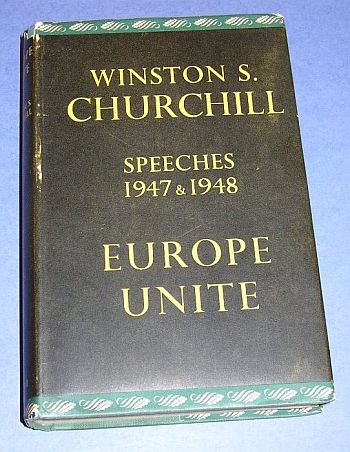
This was for a long while less marked than cooperation in the military or economic field. It was hoped that integrating countries into a closer political community would eliminate the possibility of war between member states. In 1948, supporters of the idea of a united Europe met at an unofficial congress at The Hague presided over by Winston Churchill. The Congress led to the establishment in 1949 of the Council of Europe. This served (and continues to serve) primarily as a forum for parliamentary opinion. Its purpose was ‘to achieve a greater unity between its members for the purpose of safeguarding and realizing the ideas and principles which are their common heritage’. The Council was also responsible for drawing up the ‘Convention on Human Rights and Fundamental Freedoms’, which imposes obligations on all signatory powers.
Coming into force in 1953, the Convention obliged members to respect and promote fundamental human rights and to recognise that individuals possess them under international law.
The idea was that the consultative assembly of 147 delegates from national parliaments of the Council would act as an embryonic European Parliament, but this did not prove to be the case. Individuals such as Adenauer, De Gasperi, Monnet and Spaak of Belgium were keen that the initiative should work, but Britain was unwilling to allow it to assume any real power or influence.
The British foreign secretary, Ernest Bevin, saw dangers in an effective Council: ‘Once you open that Pandora’s Box, you’ll find it full of Trojan horses’. The remark was what Hennessy10 has called a piece of ‘classic Bevanese’, but it illustrated the British fear of anything more than a body of limited power, based loosely on voluntary cooperation.
Early economic cooperation
In the search for closer economic cooperation in Europe, both of the two broad approaches, intergovernmental and integrationist, were apparent. Monnet was keen to see step-by-step progress along the road to greater union. But on the other side of the debate were many statesmen (notably in Britain) who were happy to think in terms of Europe drawing closer together but shrank from any binding commitment of the sort which he favoured.
In 1944 the governments of Belgium, the Netherlands, and Luxembourg had agreed on the desirability of forming a free-trade area between them; in July 1947, an agreement on a customs union was also concluded. Thereafter, they became known as the Benelux countries. The success of their venture encouraged further cooperation. What made it particularly significant was that this was an experiment in integration as opposed to the intergovernmentalism of some other initiatives. However, the first key developments in economic cooperation derived from the conception and implementation of the Marshall Plan for economic recovery.
The Marshall Plan
At the end of the war, the economies of Europe were shattered and in ruins. The United States was the only Power with a strong economy. It supported the idea of European integration as a means of setting aside old rivalries, promoting prosperity and strengthening the ability of Western Europe to resist communism.
Its main instrument of policy was the Marshall Plan. In June 1947 General Marshall announced that America would ‘assist in the return of normal economic health in the world’. Billions of dollars were committed to propping up the states of Western Europe, for although the aid was available to all countries on the continent the Eastern bloc was uninterested in becoming involved. Bevin thought that the Americans were giving an ‘inspiring lead’, whereas the response of the Communist Party newspaper in Russia (Pravda) was less flattering. It discerned an attempt to interfere ‘in the domestic affairs of other countries’.
American motives were mixed. Altruism played a part, but so did self-interest. It was in America’s economic interests to see Europe prosperous again, for a flourishing continent could afford to buy American goods. In addition, there was a political motive, for Washington understood that hunger and deprivation made for popular discontent and disillusion with the democratic process. If aid could promote recovery, then there was less likelihood of Europeans being tempted by the communist ideas which were becoming entrenched in Eastern Europe. The position of West Germany was especially crucial in this regard, for it was geographically adjacent to the Soviet bloc. It was easier to sell the idea of assisting German recovery and rehabilitation to Western governments if it was part of a wider programme of economic assistance.
Altogether, some $13.5b was made available. Of this sum, the largest share (over $3b) went to Britain, whilst France, Italy, and West Germany also benefited considerably. These countries were helped by the economic boom in the United States, both in the rising demand for manufactured goods and because of heavy investment in European industry by private firms. By the early fifties, the West European economies were beginning to recover, much helped by the assistance given by the United States through the Marshall Plan. It had been necessary to create an organisation to supervise the administration of this relief. Early in 1948 a number of countries joined together in the Organisation for European Economic Cooperation (OEEC). This was a classic example of intergovernmental cooperation, valuable in itself, but quite distinct from the sort of mutual commitment favoured by the more enthusiastic federalists among European politicians. No surrender of national sovereignty was involved. Monnet11 diagnosed what he saw as the ‘intrinsic weakness’ of an approach which went no further than mere cooperation between governments:
‘The idea that sixteen nations will cooperate effectively is an illusion’. It was true that in such a situation, if there was no consensus there was likely to be little effective action. But this suited those who preferred to think in terms of cooperation rather than integration.