INSTITUTIONS
The Treaty of Rome established four main institutions to give effect to the provisions of the treaty: the Commission, the Parliament, the Court of Justice and the Council of Ministers. In the 1970s, European Council meetings became a regular feature. These Community institutions continue to function in the European Union. In addition, there are a number of other bodies which have less prominence but nonetheless perform useful work. At Maastricht, some powers were acquired that are not subject to the institutions of the EC. Instead, they are dealt with on an intergovernmental basis.
Institutions can seem dull, but their activities and proposals for their reform often provoke much controversy. We will explore the composition, role and powers of these various bodies, showing how they have developed, how they interact with each other and why they are of interest and importance.
Of the five main institutions, three are more supranational in character and two more intergovernmental. In each case, we will examine their membership and formal powers, before giving consideration to any issues surrounding their workings.
We will then more briefly describe the main details associated with the other institutions. We begin our coverage with the institutions that are supranational.
The Commission
The Commission is the executive arm of the European Union. Some portray it as the ‘government’ of the Community, while others see it as the ‘civil service’. In fact, it is neither. In policy-making decisions the Commission differs from a civil service in that it formulates statements of policy but, unlike a government, it is powerless to control the vote on acceptance or rejection of that policy. In reality, the Commission is a unique institution, somewhere between an executive and an administrative machine. The very term ‘Commission’ is itself a misnomer, for the body’s organisation embraces these two distinctive aspects. The executive responsibilities are carried out by the College of Commissioners (in effect, the political arm of the Commission) and the administrative ones by the bureaucracy.
College of Commissioners
Until 2004, larger countries such as France, Germany and the United Kingdom each had two commissioners. Since the creation of the new College of Commissioners in November of that year, there has been one representative for every EU country. At Nice, it was agreed that the Commission will have a maximum of twenty-seven members, with a rotation system that is fair to all countries to be introduced once EU membership exceeds twenty-seven states.
This was confirmed in the new constitutional arrangements agreed at Brussels, as a step to ensure that the institution does not become too unwieldy. (If the Treaty establishing a Constitution for Europe had been adopted, member states would have taken it in turns to nominate commissioners, with any given state making a nomination on two out of every three occasions that a new Commission was to be appointed.)
In theory, according to the Treaty of Rome, appointment to the Commission is a collective decision of all member governments. In fact, the appointments are usually the result of nominations by individual countries. Since January 1995 commissioners have been appointed to serve for five years, instead of the original four. This five-year term now coincides with the life of the European Parliament, although the commissioners take office in January, six months after the June parliamentary elections. This delay is designed to allow time for the commissioners designate to be vetted by the new Parliament before they take office.
The people nominated to be commissioners are experienced politicians, often having held ministerial office in their home countries before going to Brussels. Because the Commission is a supranational body, those appointed must forget their national origins and serve only the Union. Newly appointed commissioners swear an oath of independence, undertaking that they shall ‘neither seek nor take instructions from any government or from any other body’. While it is only natural that commissioners maintain links with former colleagues at home and remain sympathetic to their own country’s interests, the Commission cannot function if its members are too preoccupied with national loyalties.
On the whole, commissioners are community-minded, often to the despair of the governments that appointed them. Margaret Thatcher chided her commissioners for their failure to represent the viewpoint of her administrations. As a former British commissioner, Sir Leon Brittan, said: ‘I may be a British Conservative but I do not agree with the Conservative government on many European questions’.
Commissioners are given a portfolio, placing them in charge of some aspect of the Commission’s work such as Health and Consumer Protection or Development and Humanitarian Aid. In that respect they are rather like government ministers, although with greater freedom. As Brittan is quoted as saying in the article referred to above: ‘Commissioners do have somewhat greater personal political autonomy than a cabinet minister – you do not have to clear things with the top’.
To assist them, commissioners have a small group of aides or advisers known as a cabinet. The word here is used in its French sense and would be better translated into English as ‘private office’. The members of a cabinet are mostly civil servants who have been seconded, either from the commissioner’s own national civil service or from another part of the Community’s bureaucracy. Members of the cabinet are often fellow-nationals of the commissioner, although convention expects at least one to be from another member state. As a collective body, commissioners form the powerhouse of the Commission, meeting weekly to formulate and develop proposals.
President of the Commission
Nomination
Before Maastricht the original rules stated that a new president should be chosen from the ranks of the existing commissioners. This was never a practical possibility since the office is so important that member governments need to spend a long time in consideration of the choice. It would be impossible to wait until an entirely new Commission was in place before beginning the selection process. As it is, the process of lobbying and negotiation begins well over a year in advance of appointment, the nominee traditionally being announced at the European Council held in the June prior to the January appointment.
A convention has grown up over the years under which the office of president alternates between citizens of large and small countries, and between representatives of the right and left. Normally the appointment is tacitly agreed between the member states before the European Council meets to announce the appointment, but such preliminary agreement is not always reached. Most recently, in 2004 Britain made it clear that it would not accept the preferred French and German choice, the Belgian prime minister, Guy Verhofstadt, who withdrew from the race. France responded by taking the same view of the existing British commissioner, Chris Patten, whose name had been under discussion. José Manuel Durão Barroso was proposed as a consensus candidate.
The president is appointed by the European Council, but during the process of bargaining the heads of government will be made aware of the views of the Parliament on the candidates for nomination. Since ratification of the Maastricht Treaty, Parliament has had to approve the choice of the president and the Commission en bloc. The Santer Commission was the first to be endorsed in this way and the same procedures applied when the Prodi and Barroso Commissions began their work. Parliament endorsed Barroso by 413 votes to 251.
Powers
Although possessing limited powers, the president of the Commission is the nearest thing the EU currently has to a head of government. Probably the true head is the president of the European Council but, since that post circulates on a six-monthly rota, the president of the Commission is a more clearly identifiable figurehead for the Community as a whole. Barroso occupies a prestigious and potentially influential position.
The more easily identified duties of the president of the Commission are:
* To allocate portfolios at the start of a new Commission, a process that requires all the president’s skills of negotiation and political judgment for there are fewer important portfolios than there are available personnel
* To chair weekly meetings of the College of Commissioners at which proposals are adopted, policies finalised and decisions taken
* To coordinate the work of the various commissioners, an even more arduous task than it might appear since they often have partisan interests and ideological positions at variance with those of the president
* To represent the Commission with other institutions of the EU, including giving an annual State of the Union address to the European Parliament, and attending and participating in meetings of the European Council; at these meetings the president has the same status as other heads of government
* To represent the European Union at international gatherings such as the G8 economic summits
* To give a sense of direction to the supranational development of the EU.
The definition of the president’s role is sufficiently vague as to allow a strong personality
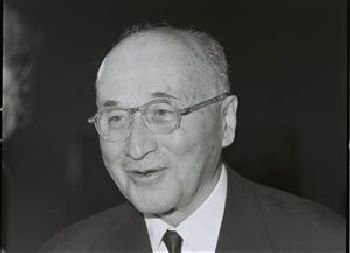
to dictate his own agenda. Delors imparted a real impetus to policy initiatives.
The Delors Plan led eventually to the implementation of the single market, monetary union and the Maastricht Treaty. When he took over, Prodi aimed to create a quasi-prime ministerial role for himself, heading a cabinet-style administration in which he had the powers to fire or reshuffle individual members of the College of Commissioners.
Five most recent presidents of the Commission:
President – Nationality – Dates in office
Jacques Delors -French -1985–1995
Jacques Santer – Luxembourgian 1995–1999
Manuel Marin -Spanish -1999 (Interim)
Romano Prodi -Italian – 1999–2005
José Barroso – Portuguese – 2005–2014
The administrative Commission: the bureaucracy
About half the staff employed by the EU serve with the Commission. Despite the public perception of a massive bureaucracy, the Commission’s staff of about 25,000 people is actually remarkably small, being no larger than the average Institutions of the European Union government ministry in one of the member states or the administrative staff of a large municipal authority such as Barcelona. Only around 4,000 personnel are involved in policy-making positions. Some 3,000 are involved in the work of translation and interpretation. Although the Commission’s working languages are French and English, there are larger meetings where interpreters are required and, of course, documents of record must be issued in all the twenty-three official languages of the Union.
The Commission is divided into twenty-three policy units, similar to government ministries, each headed by a director general. These directorates general are not known by their area of responsibility but by a Roman numeral preceded by DG: hence DGVI for agriculture, DGXVI for regional policy, and so on. Each director general is answerable to a commissioner but there is no precise match between the areas of responsibility given to the directorates general and the portfolios given to commissioners. The style and attitude of directorates can vary enormously and can change over time according to the nationality and personality of the director general. Liaison between the College of Commissioners and the directorates-general is through the officials forming each individual commissioner’s cabinet.
Apart from the directorates-general there is quite a sizeable section of Commission staff that is organised into a dozen or so specialised service units such as the translation and interpreting services mentioned above.
Tasks and duties of the Commission
The most important duty carried out by the Commission is the drafting of policy documents for discussion and decision by the Council of Ministers, its remit being to initiate and formulate those policies that will promote the aims for which the European Communities were founded. The Commission is not the only source of policy to be presented to the Council, but the majority of issues discussed in the latter can only be accepted if they have been framed by the former.
Apart from this task, the Commission:
• Has an executive role after policy decisions have been made. It issues the regulations, directives and instructions by which Community decisions are executed in the member states. The Commission issues some 5,000 of these legislative instruments each year, although most deal with relatively minor matters such as price levels for a single commodity in the CAP.
• Is responsible for preparing the Union’s annual budget and for the management of Community finances, including the various structural funds
• Monitors the actions of member states in obeying and carrying out Community law. In the event of non-compliance or deliberate law-breaking, it is up to the Commission to demand obedience or, if the offence continues, prosecute the country or organisation through the European Court of Justice.
• Has the ability to determine policies and actions in some areas. As a result of certain clauses in the Maastricht Treaty, there are areas of responsibility such as competition, agriculture and trade policy over which the Commission is autonomous and able to take decisions without consulting the Council of Ministers.
• Sends commissioners and senior Commission staff to meetings of the European Parliament and its committees. Commissioners must answer questions from MEPs as well as attending and participating in debates which deal with the subject of their portfolio.
• Is represented and participates in the work of various international bodies such as the United Nations, the Council of Europe and the OECD
• Deals on behalf of the EU with diplomatic missions from over 125 foreign countries accredited to the EU. The Commission itself maintains diplomatic relations with nearly a hundred non-member states. Via the Lomé Convention, it regulates relations between the EU and the developing countries of Africa, the Caribbean and the Pacific.
• Acts as the first check on new applications for membership of the EU, conducting an enquiry into all the implications of the bid for entry. Negotiations can only begin with the Commission’s approval.
In pursuance of its tasks, the Commission held some 44 meetings in 2001, presenting some 456 directives, regulations and decisions for adoption by the Council of Ministers. In addition, it presented 297 Communications and reports on EU activities and produced 4 White and 6 Green Papers.
The European Parliament
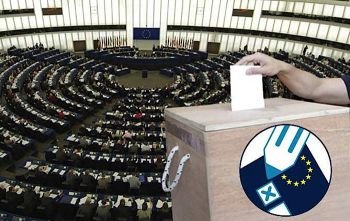
Until 1979 the European Parliament was composed of delegates nominated by their national governments in the same proportions as the various parties were represented in their national parliaments; many members had ‘dual mandate’ membership of both European and national parliaments. At the European Council in Paris (1974), it was decided to bring into force the provision for direct elections that had been written into the Treaty of Rome. The first ones were held in 1979.
Direct elections may have increased the legitimacy of the Parliament but they did not immediately produce any strengthening of its powers. Indeed, throughout its life, via discussions in the Council of Ministers and the European Council, member states have sought to hold back the powers of Parliament, because of their fear that strengthening it would weaken the sovereignty of national parliaments.
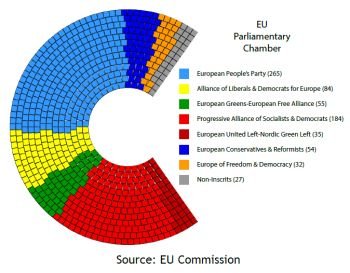
There are currently 785 MEPs. They spend one week of every month in plenary session in Strasbourg and between one and two weeks in every month on committee work in Brussels. The rest of the time is spent working within the political group to which they belong, travelling with an EP delegation on a fact-finding mission or consulting with EP officials in Luxembourg. Some MEPs, including the British, also do a certain amount of constituency work.
In the Strasbourg chamber, commissioners deliver reports, debates take place and there is also a question time; plenary sessions quite often vote, using electronic means to do so. Yet there seems to be little interest in the proceedings. The perpetual language problem means that speeches are deprived of oratory or humour, the sessions being invariably dull as a result. Much of the important work is done in committee, each MEP being assigned either to one of the twenty or so standing committees or to an ad hoc specialised committee. These have an important input into the legislative process, because committee members draft reports on proposed legislation and put forward amendments.
Powers of the European Parliament
Parliament has several functions, the powers being supervisory (control), legislative and budgetary. In all of these areas, the powers have increased, in some more than others. Key responsibilities include:
• The right to vote on the accession of new member states • the right to be consulted by the Council of Ministers on the granting of associate status to other countries
• The power to reject or amend Council decisions on matters relating to the single market, a move that can only be reversed by a unanimous vote of the Council if a proposal is rejected, or by qualified majority if it is amended
• (Most importantly) the ability to reject the Union’s budget in its entirety or to amend any part of the budget that does not relate to a provision required by treaty.
The Commission must report to the EP every month and the EP has the ultimate weapon of being able to dismiss the entire Commission (although it cannot dismiss individual commissioners) on a two-thirds majority. The TEU also gave the EP the right to pass a vote of confidence or no confidence in an incoming Commission. These rights were exercised to the full during the controversy surrounding the Santer Commission in 1999).
Parliament makes the most of its limited powers. It is much derided for its weakness, critics often being disparaging about its status as a ‘talking shop’. In comparison with many national parliaments, it is a powerless body, having originally been only a consultative assembly. But every recent treaty change has enlarged its role in EU decision-making and in several areas it shares equal power with the Council in formulating legislation. Even in the 1980s before it had the power of co-decision, it was able to employ procedural devices to exert greater influence than it actually possessed. Parliament has proved skilful in extracting maximum influence from limited formal powers.
The introduction of direct elections marked a significant step towards reducing Parliament’s democratic deficit, but an important contributory factor to that deficit remains – the apathy of the public in several member states. Europeans seem uninterested in the workings of the EP and are in most cases ignorant as to the function and identity of MEPs. Moreover, with the exception of those countries such as Belgium where voting is compulsory, turnout in European elections is pitifully small, while the issues on which people vote have more to do with national rather than with European factors: ‘This places the EP in a legitimacy bind: it claims to represent the people of Europe, but the people of Europe demonstrate little interest in its activities’.
The Santer Commission
The Santer Commission was that headed by Jacques Santer, holding office from 1995 until March 1999. During that time, there were mounting allegations of fraud and corruption within the organisation, particularly concerning the French appointed Edith Cresson. The President defended his commissioners from serious charges but eventually conceded that a culture of favouritism had prevailed and that there were cases involving conflicting interests. Cresson refused to step down, on the basis that other commissioners were involved in the same kind of favouritism that had prevailed within her area of operations.
Parliament conducted an investigation into the allegations, carried out by an independent group of ‘wise men’. Their report was scathing about the behaviour of Edith Cresson, but also highly critical of the failure of Santer to impose order on the Commission. It absolved other commissioners of direct involvement, but noted that their claims to be unaware of ‘undoubted instances of fraud and corruption’ were a serious admission of failure. On publication of the report there were immediate calls for their resignations, the more serious because the majority socialist group added its voice to the criticism.
The outcome was that the Commission decided to resign en masse, the first time a Commission had ever resigned. Parliamentary pressure had helped to bring about its downfall. Parliament has the power to censure the Commission and – on the basis of a two-thirds majority – to force the resignation of the entire Commission from office. This power has never actually been used but it was threatened to the Santer Commission, who subsequently resigned of their own accord. Manuel Martin, a vice president of the Santer Commission, became interim president, head of an interim team of commissioners.