A Brief Summary of the history of European Union enlargement
The movement to integration: a theoretical perspective
Since the ending of World War Two, several moves have been made towards unification in Europe. They have culminated in the creation of the European Union, as a result of the implementation of the Maastricht Treaty. A union can imply relatively loose cooperation between member states designed for their mutual advantage or a much closer degree of unity in which key decisions are made by supranational institutions. The term ‘integration’ refers to the process via which this unification has come about, a process in which for more than fifty years sovereign states have relinquished or ‘pooled’ some of their national sovereignty in order to maximise their collective strength. The various steps along the road to greater unity – economic, military and political – are seen as moves in the direction of closer integration.
Integration theory refers to the views advanced in a considerable amount of literature to explain the manner in which the EU has evolved and the factors involved in its evolution. As we shall see, none of them provides a complete picture. In this chapter, we examine the main perspectives that writers have adopted, in particular the key division between intergovernmentalists and supranationalists.
We referred above different theories relevant to an understanding of the development of postwar integration: federalism, functionalism and intergovernmentalism. Monnet felt that intergovernmentalism was not enough, but as to whether he was himself a federalist or a functionalist is a matter of disagreement.
The same difficulty has afflicted those commentators who have attempted to provide a theoretical explanation of the dynamics of integration, in other words to explain how and why it has come about. The difficulty is all the greater because at different periods the Union has exhibited different tendencies, sometimes seeming to progress more by intergovernmental agreement, at others because of the inspiration of those who have urged a federalist agenda.
Theories of integration: why it has come about in the postwar era, national leaders in several countries have seen the merits of closer unity in Europe. Various theories have been advanced to explain the transformation of Europe that has resulted from the steps they have taken:
- • Some writers emphasise the long-standing enterprise of articulating the ‘idea of Europe’. They see the events of the late 1940s as the fulfillment of a dream of European unity which has deep roots. Unity is therefore an expression of, or a search for, a clear identity and a distinctive set of European values. In this view, Europe is seen as the ‘cradle of civilisation’ and postwar cooperation as an attempt to restore the continent to its former importance and glory.
- • Others see postwar cooperation as the outcome of the hostilities of World War Two. War shattered the economies of the main participants and made them aware of the need first to prevent such a catastrophe from ever happening again and secondly to unite in a common bid to restore prosperity.
Such motives were particularly strong in the early years after 1945. For many writers they provided the inspiration behind postwar integration. The historian Alan Milward has argued that pursuit of economic interests was the prime motivation for integration. But in his view national governments were only willing to pool their sovereignty as far as was necessary to tackle problems that otherwise threatened to undermine their national well-being.
- • A third explanation stresses that in the postwar world there has been a growing move towards interdependence, with the progressive integration achieved by the European Union as a particularly good example of this trend. States have cooperated out of necessity, because the problems they face increasingly require a response that goes beyond traditional national boundaries. Environmental problems, for instance, do not recognise traditional frontiers. Similarly, many difficulties in the financial markets require a coordinated response.
- • Other writers have stressed the role of the United States as being the key factor in the process of integration. In the early years after 1945, the American government championed the cause of unification on the European continent, seeing it as the best means of securing reconciliation between France and Germany, the old enemies whose rivalry had been at the root of so much conflict. A peaceful and prosperous Western Europe was likely to be politically stable and provide a strong barrier against communist incursion.
The chosen instrument of American policy was initially the Marshall Plan. But over subsequent decades, several US politicians were supportive of and keen to promote greater European unity. Successive administrations wanted to see Britain join the EEC, recognising that the special relationship might offer the Americans a foothold on the continent. Britain could act as a useful bridge between the continental powers and the USA. Indeed, as we have seen, one reason for Gaullist reluctance about British membership of the EEC was the thought that its transatlantic ties were seen as its main national priority in external affairs.
If US thinking was broadly supportive of closer European cooperation, at times a motivation of continental politicians for greater unity has been their desire to see a strong Europe which would be powerful enough to resist American dominance. The Gaullists had such a vision, but more recently others have argued that only a large, strong and united EU can be to some degree independent of the leading industrial and military power in the world.
- • Sometimes it is argued that the origins and inspiration of the movement towards unity in Europe were to be found in the many now largely forgotten organisations which were active in campaigning for the unification of Europe. As individual bodies, their impact was insignificant, but when they combined to form the European Movement in 1947 they were creating a platform on which sympathetic statesmen could express their ideas. Certainly, the leading pioneers of postwar integration belonged to the Movement, but this does not prove that this outlet for their enthusiasm had a key impact on early developments on the continent. Milward is particularly unimpressed by the contribution of such ‘ill-matched movements’, concluding that ‘the European Unity Movement . . . appears to have had practically no influence on the negotiations for the Treaty of Paris’.
- • Finally, there are those who stress the importance of national interests. They feel that for all the grandiose talk of the merits of cooperation and the dreams of the founding fathers, the main reasons for cooperation have derived from individual states pursuing their own advantage. On occasion – in fact on the continent, rather often – there has been obvious value in nations working together. France and Germany had their own distinctive reasons for wanting a coal and steel community. Some French men and women still see the EU as a good means of ensuring that France’s past rival and now powerful ally is locked firmly into a European entity strong enough to contain its power. In the same way, smaller states such as Belgium, Ireland and Luxembourg have sound reasons for wishing to see closer ties in Europe, for as members of an economic and political community they carry more clout in European affairs than would otherwise be possible. For many British politicians, the perceived advantages of close union have often been less apparent – hence their wish to pursue such a degree of intergovernmental cooperation as is appropriate for the task in hand. Andrew Moravcsik is perhaps the foremost proponent of the view that national governments have controlled the timing, pace and extent of integration.
Idealism and pragmatism have both been prominent features of the postwar era. For many countries in Europe, the two impulses have gone hand in hand. Such countries have wanted to see integration develop for the reasons we have reviewed. For Britain – and at times other nations – the advantages of cooperation have often seemed less self-evident. Britain, Denmark (on occasion) and France (under de Gaulle) have detected more merit in the intergovernmental approach in which states work together as seems necessary and desirable. They favour a Europe des Patries, whereas most countries have been inspired by the early visionaries and attracted by a more federal future.
Such differing approaches have led Nugent to conclude that there has been no ‘common and coherent integrationist force at work in Western Europe. Far from the states being bound together in the pursuit of a shared visionary mission, relations between them have frequently been extremely uncomfortable and uneasy. Even in the EC, which has been at the integrationist core, the course of the integration process has varied considerably’.
How the drive towards integration has been accomplished in the years after 1945, federalists wished to see a rapid movement towards their grand design: complete political unification as implied by the term ‘a United States of Europe’. Their vision inspired some pioneers of unity in the postwar generation. But at no time was the adopted approach to unification one that would quickly implement a federal Europe. Outright federalists were relatively few, more practical advocates of unity being functionalists who wanted to see step-by-step cooperation. However, in varying degrees and at different speeds, federalists and functionalists wanted to see movement towards closer union and ultimately arrive at some form of federal outcome. Others, the intergovernmentalists, have been more wary of powers being transferred from the national to the Union level. They have sought to slow down the pace of change and limit cooperation to the search for mutual benefit.
In explaining the dynamics of integration in the postwar era, three theories are worth examining in detail: functionalism, neofunctionalism and intergovernmentalism.
Functionalism
Several of the early attempts to explain the development of the Community reflected the functionalist theories which began to flourish back in the interwar years. David Mitrany put forward an approach based on the idea of the ‘common index of need’. There are many areas where the needs of governments overlap, and for him the best way of resolving them was to act in a way that cuts across national boundaries.
In Mitrany’s words, it was ‘not a matter of surrendering sovereignty but merely of pooling so much of it as may be needed for the joint performance of the particular task’. There would be a shared agency run by technocrats which would have supranational authority over the specific policies included within its orbit. Mitrany was thinking in terms of a number of such international agencies, not because he saw supranationalism as in any way preferable to the idea of the independent state but because he thought it was the better way of running services and fulfilling needs which cut across national boundaries. He did not envisage one supranational agency which could preside over several sectors. The schemes put forward after 1945 went beyond what he was contemplating, for they were not merely a series of complementary functional agencies. They had an end goal in view, and this was a federal one – what Martin Holland has called functionalist principles with a political objective. Functional theory has recognised that once you go down the route of allowing the creation of a number of independent bodies in which several members participate, this has an effect on relations between those countries, which find they becoming increasingly dependent on each other. Mitrany saw great merit in providing the opportunity for different nations to work together, for he believed that their experience of cooperation would help to counter the dangers of nationalism. Moreover, the leaders and peoples of the nations involved become used to a situation in which cooperation extends across frontiers. As Pentland put it: ‘They are weaned away from their allegedly irrational nationalistic impulses toward a self-reinforcing ethos of cooperation’. Functionalism therefore accustoms people to a new way of thinking, and thereby helps to bring about attitudinal change.
Neofunctionalism
Later writers, who saw the way in which postwar Europe was developing, perceived deficiencies in the functionalist approach as a way of explaining what was happening on the continent. In the early stages of integration in the 1950s and early 1960s, Americans such as Ernst Haas and Leon Lindberg advanced their theory of neofunctionalism, which seemed to offer a convincing insight into the way in which the European Community was operating at the time.
Neofunctionalists accepted that there should be institutions with supranational authority over several areas of policy, particularly economic ones. But in their view, greater political unity would develop as a result of the processes involved in achieving cooperation. This closer integration would evolve as a result of ‘spillover’. The more cooperation there was in one area, so there would be a spillover effect into other areas, for few policies operates in isolation.
Decisions in one area have repercussions elsewhere. In the neofunctionalist perspective, integration would be achieved by essentially secretive means. Haas was not unduly concerned with creating a change in popular attitudes, for he believed that the move to integration would come about as a result of leadership from an elite. Popular backing would come later, when the beneficial results of the policies were widely apparent.
Haas’ theory is widely seen as having validity for the period through to the mid-1960s but for the next two decades there was little sign of spillover or steps towards integration. Indeed, what was happening was that there was an assertion of national self-interest, as was indicated by France’s ‘empty chair’ position in the dispute over voting procedures in the Council. Moreover, attempts by the Commission to extend the area of central decision-making ran into national opposition which had to be resolved by mediation between the competing states.
Harrison’s work reflected this sombre view of the prospects of step-by-step integration, suggesting that there was ‘no evidence . . . of the beguiling automaticity . . . of economic integration leading eventually to political integration’. This more cautious view reflected the experience of the period until the 1980s, but then the pace of change accelerated and new development came about. Keohane and Hoffmann have concluded that the Haas approach is about right, and that what we have now is a supranational style of decision-making in which member states ‘seek to attain agreement by means of compromises’ rather than by vetoing proposals unconditionally. In their view, such a bargaining process (as each side seeks to view its national interests in the light of the common interests of the Union) is a prerequisite to spillover. The more agreement that can be reached, the greater the chances of spillover occurring.
At the heart of this approach is intergovernmental cooperation. Keohane and Hoffman point out that change often results less from a burst of ‘heady idealism’, and more because of ‘a convergence of national interests’. Discussion at conferences where disputes are ironed out can help to promote a consensus, and as a result the process of integration can move forward. Spillover is not enough to explain the process of integration; it requires among other things what Holland calls ‘the bargaining process characteristic of intergovernmentalism’.
Neofunctionalism was a theory specifically designed to explain the evolution of the European Community. If the Haas approach seemed inadequate to explain what was happening in the 1960s and 1970s, it again had some relevance when applied to the new impetus towards integration that occurred in the two following decades. Alisdair Blair makes the point that ‘it is possible to argue that the desire to create Economic and Monetary Union was directly the result of the spillover pressure from the single market programme’. It is significant too that Keohane and Hoffman were reviving the concept in the 1980s.
Holland has concluded that neofunctionalism as an explanation for the way the Union operates is useful in that it stresses three highly relevant features:
1. It suggests that there is a connection between the processes of economic and political integration, with the former being a key factor in helping to promote the latter – ‘although the precise form of political union is left intentionally ill-defined’.
2. The process of spillover provides ‘the necessary but not automatic link between economics and politics’.
3. It acknowledges that via the institutions of the union, the individual states have an important part to play at intergovernmental level in promoting integration, when it seems conducive to their interests.
Intergovernmentalism
The main alternative to functional and neofunctional theory is provided by those who support intergovernmentalism as the means of explaining integration. This approach emphasises the role played by nation states rather than supranational actors. As we saw above, Keohane and Hoffman have stressed the role of national governments, regarding spillover alone as an inadequate explanation.
To intergovernmentalists, idealism is not enough to explain the process of integration. In their ‘realist’ perspective, national governments take a hardheaded view of the problems confronting them. Their decisions are based on their perception of their national interests. In several areas of policy, integration might be entirely acceptable, for the national interests of one country might be similar to those of other countries. This is unlikely in areas such as defence and foreign affairs, where crucial considerations of national security are at stake.
Intergovernmentalism involves keeping supranational institutions to a minimum and is therefore the opposite of federalism. Its model is more that of a confederal Europe, the Europe des Patries in which states cooperate where it is to their mutual advantage. Moravcsik has been the foremost exponent of intergovernmentalist theory. Drawing upon case studies from the 1950s onwards, he detects regular evidence of the importance of national interests. In his view, this applies even to the era usually portrayed as one in which idealism was triumphant over pragmatism. For instance, in analysing the origins of the Coal and Steel Community, he notes the high-flown rhetoric of the Schuman Declaration about the desirability of laying aside old enmities and taking the first step towards the creation of a new Europe. But he draws attention to Monnet’s concern to protect and advance French national interests. He was aware of the German wish to increase substantially its output of steel. Rather than seek to block Germany’s ambitions, he preferred to launch a European initiative. Such a plan suited Adenauer as well, for it offered his country the chance to achieve respectability on the European scene.
Most international organisations are intergovernmental. Intergovernmentalism enables nation states to decide on the extent and nature of cooperation, cooperating if and when it suits them, but defending national interests on any occasion where they are seen to be under threat. The approach is one that finds enthusiastic support from those who wish to defend national sovereignty. Within the European Union, there is plenty of evidence of intergovernmentalism at work, ranging from the ‘empty chair’ episode to the creation of the second and third pillars of the Maastricht Treaty. In many key areas of policy today, decisions are still taken at the national level; decisions on the broad direction and priorities of the EU are taken by the Council; and even where QMV is employed there is an attempt to achieve consensus. This is an approach that suits British politicians well. Within the EU, they have always been keen to retain certain sensitive EU policy areas such as immigration and national security firmly within the ambit of the Council of Ministers, where they can employ their right of veto.
The varying pace of integration
Whatever the dynamics which promote the development of the European Union, it is clear that it moves in phases. Sometimes there appears to be a period of stagnation, at others one of great movement. Suddenly the circumstances are right and the opportunity presents itself for new momentum and a drive onwards. When such opportunities arise, theory must always take second place.
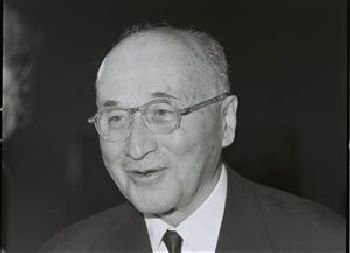
In the words of Jean Monnet: The unification of Europe, like all peaceful revolutions, takes time – time to persuade people, time to change men’s minds, time to adjust to the need for major transformations. But sometimes circumstances hasten the process and new opportunities arise. Must they be missed simply because they were not expected so soon?
Such a view expresses the pragmatism of the man often referred to as the ‘founder of modern Europe’. As we have seen, historians differ in how they label his approach to integration, for whereas some literature labels him as a federalist – because he shared the ultimate federal vision – other writings place him in the functional camp, because he preferred a gradual, sector by sector, transfer of sovereignty to Community level. The description of him as a neofunctionalist recognises the final destination which he favoured and the approach which he thought well geared to achieving that long-term aim.
Differing approaches to integration
Among the twenty-seven member states, there are differing degrees of enthusiasm for the long-term goal of closer union in Europe. Those who adopt the intergovernmental approach appreciate that there are benefits to be gained from cooperation, but wish to limit Union competence and go no further along the road to integration.
States have their own reasons for wishing to speed, delay or reverse the process, and this is related to the perceived advantages which membership brings. Those countries which have gained most out of the Union are more often willing to surrender sovereignty to it – especially if they are small countries which would count for little on their own.
- • Belgium, Holland and Luxembourg have less to lose for it is many years since they played a leading role in European affairs, even if they once had greater continental prestige. They are willing to embrace supranationalism and have not spent time in anguished debate on the question of a surrender of national independence. Such states (and indeed the majority of the others who currently make up the European Union) have been keen to see progress on several fronts. They are willing to push forward at greater speed towards an ever closer union.
- • Some large and powerful nations such as Germany and France have been strongly integrationist members. Both have found that they could reconcile national and European interests.
- • A minority, and sometimes a minority of one or two, has been anxious about the pace of development, and wishes to call a halt to further integration.
They believe in the nation state as the preferred means of protecting their national interests. They can see merit and perhaps necessity in developing cooperation of an intergovernmental type, but any loss of national sovereignty and independence is to them quite unacceptable. Britain and sometimes Denmark have adopted this approach.
Klaus-Dieter Borchardt15 has attempted to distinguish between the two camps by labelling them as the confederalists and the federalists, the former favouring interstate cooperation and the latter integration: Essentially the confederalist approach means that countries agree to cooperate with each other without ceding any of their national sovereignty . . . The . . . principle underlies what are known as the second and third pillars of the European Union . . . [this] does not rule out the possibility of progress towards closer integration in these areas at some stage in the future.
The federalist aims to dissolve the traditional distinctions between nation states . . . The result is a European federation in which the common destiny of its peoples is guided and their future assured by common (federal) authorities.
Approaches to integration: a summary
Federalists
Their bold ideas were a powerful influence upon the pioneers of European integration. Despairing of the nation state as the basis for international relations, they wished to see a new constitution for Europe which would have involved the swift transfer of power to new supranational institutions. They were inspired by the notion of a United States of Europe. Spinelli was an enthusiastic federalist.
Functionalists
More cautious in their approach, they preferred to work for unification sector by sector, as seemed necessary and appropriate. They favoured practical cooperation for the more efficient working of different economic and state functions and would hand over power to a supranational body where this was the best way forward. However, national governments would retain their traditional authority, for integrated decision-making would only apply in a limited number of sectors.
As Henig explains the difference between federalists and functionalists: ‘Federalism, if not directly aimed at the subordination of the nation state, does firmly place it in a reduced and less influential position. Functionalism is, rather the hand-maiden to the nation state: it facilitates its strengthening’. It may be a way of progressing towards a federal outcome, but it still leaves the nation states as the major international players.
Neofunctionalists
They expected integration to come about as a result of ‘spillover’, which may eventually bring it about almost by stealth. Intergovernmental meetings can sometimes provide a push towards greater cooperation, via the bargaining process. Monnet could be placed in this school, for he was always committed to a federal outcome, though he was often vague on detail – hence the description of him as an ‘incremental federalist’. He took the view that economic integration in selected areas would eventually bring about political integration.
Intergovernmentalists
They favoured cooperation between governments for their mutual advantage, an essentially pragmatic rather than visionary approach. It is reflected in the habit of member states sending representatives to participate in intergovernmental conferences (IGCs) in which all member states need to be in agreement with the final treaty or communiqué. Individual national leaders bargain amongst themselves on many of their negotiating positions, making compromises in one place in order to secure concessions in another. As Moravscsik explains the process: ‘governments first define a set of interests, and then bargain among themselves to realize those interests’. The preferences and inclinations of national government can result in important breakthroughs, such as those agreed at Maastricht.
In postwar Europe, the main arguments over political cooperation have reflected the intergovernmental–supranational debate. Most continentals, be they outright federalists, functionalists or neofunctionalists, have seen the merits of closer union. For many of them, there has been the prospect that this may in time lead to some form of federal outcome. Others, the intergovernmentalists, have been wary of powers being transferred from the national to the Union level. They have sought to preserve national interests and limit cooperation to those situations in which it serves some national purpose. Where necessary, they have slowed down the pace of change.
Whereas in the early years of the European Community, neofunctionalist ideas found favour as a means of interpreting European integration, in recent decades explanations have tended to focus on intergovernmental explanations.
Terms:
Neofunctionalism – The view that economic integration in a limited number of sectors will inevitably lead to further integration in others. Economic integration can similarly lead to political integration. As such, the term neofunctionalism describes the way in which functionalist techniques can be used to secure federalist objectives. Such movement towards integration is brought about by the process of spillover.
Special relationship – The phrase often used to characterise the generally warm political, diplomatic and cultural relations between the United States and the United Kingdom.