
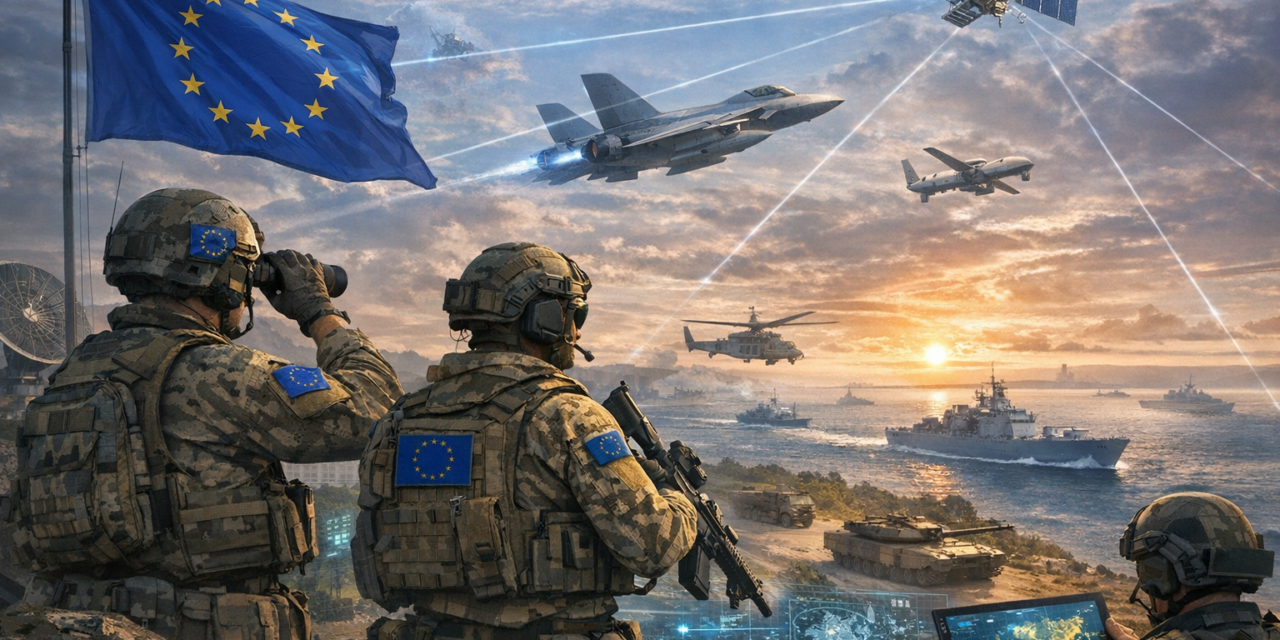
The global security environment has undergone a profound transformation in recent years, compelling the European Union to reassess its strategic autonomy and military readiness. As 2026 arrives, the geopolitical landscape is defined by heightened tensions, the resurgence of conventional threats, and the rapid evolution of warfare through technological innovation. For decades, the collective defense of Europe relied heavily on the security umbrella provided by the North Atlantic Treaty Organization and the implicit stability of the international order. However, shifts in global power dynamics and the unpredictable nature of regional conflicts have made it clear that the European Union must take greater responsibility for its own security. Strengthening defense capabilities and achieving true interoperability among member states have moved from being ambitious goals to urgent operational necessities. This transition requires a fundamental shift in how nations approach defense procurement, research, and military integration. By leveraging existing frameworks like the Permanent Structured Cooperation and the European Defence Fund, the union aims to create a more cohesive and resilient defense apparatus that can respond effectively to contemporary challenges. This essay explores the critical dimensions of this evolution, examining the obstacles to integration, the role of emerging technologies, and the strategic path forward for a unified European defense posture in 2026.
The Imperative for Strategic Autonomy
The drive toward strengthening European defense is fundamentally rooted in the concept of strategic autonomy. This is not about isolating the union from its allies but rather about ensuring that member states possess the tools and the institutional capacity to act when their vital interests are at stake. In the past, the fragmentation of the European defense market led to significant inefficiencies. Member states often operated in silos, resulting in a wide array of incompatible military systems, disparate supply chains, and duplicated research efforts. This fragmentation made it difficult to project power or sustain long term operations without heavy reliance on external partners.
By 2026, the focus has shifted toward harmonizing defense requirements. The European Union has recognized that interoperability is not merely a technical concern but a strategic one. Interoperability implies that forces from different countries can communicate, coordinate, and execute joint missions seamlessly. When soldiers from different nations cannot share data or when their communication hardware is inherently incompatible, the effectiveness of any coalition is severely diminished. To address this, the union has prioritized the standardization of equipment and the creation of shared strategic visions. This involves aligning national procurement cycles to ensure that when member states invest in new capabilities, these assets are designed with compatibility in mind from the very first phase of development.
Technological Advancements and Digital Integration
The nature of warfare in 2026 is increasingly digital and data driven. The battlefield is no longer confined to physical terrain but spans across cyber space, electromagnetic spectrums, and satellite networks. Strengthening European defense requires a massive investment in these domains. The integration of artificial intelligence and machine learning into military decision making processes has become a central pillar of reform. These technologies enable commanders to process vast amounts of battlefield information rapidly, allowing for quicker and more precise responses.
However, technological advancement brings the challenge of standardization. If each member state develops its own version of autonomous drones or AI enabled surveillance systems, the risk of technical failure during joint operations increases significantly. Therefore, the union has focused on building a common digital infrastructure. This includes secure, encrypted communication channels that allow for real time intelligence sharing across borders. By establishing a unified defense cloud, the union aims to break down the silos of information that previously hindered situational awareness. This digital transformation is supported by heavy investment in cyber defense initiatives. Recognizing that state and non state actors frequently use cyber attacks to undermine European stability, the member states have committed to a collective approach to cyber resilience. This involves regular joint exercises, the sharing of threat intelligence, and the standardization of protocols for defending critical infrastructure, such as power grids and transportation networks, against digital sabotage.
The Role of European Industry and Procurement
A significant barrier to military interoperability has historically been the protectionist nature of national defense industries. Many countries have preferred to procure equipment from their own domestic companies, even when cheaper or more advanced alternatives existed elsewhere. This approach often led to the production of niche systems that could not function alongside those of neighboring countries. By 2026, the European Union has made significant strides in incentivizing cross border industrial collaboration. The European Defence Fund acts as a catalyst for this shift by providing financial support specifically for projects that involve companies from multiple member states.
This cooperative model has several advantages. It encourages the pooling of resources, which is particularly important for smaller nations that cannot afford the high costs of developing advanced military hardware on their own. It also creates a more unified industrial base that is capable of scaling up production during times of crisis. When industry works across borders, the supply chains become more resilient and less vulnerable to disruption. For example, joint ventures in the development of next generation fighter aircraft and armored vehicles have shown that it is possible to balance national economic interests with the higher goal of collective defense. These collaborations have helped to reduce the number of redundant systems, ensuring that European forces are equipped with high quality, compatible hardware that can be maintained and supported by a shared logistical network.
Overcoming Political and Cultural Barriers
While the technical and industrial challenges are significant, the political and cultural hurdles to deeper integration are perhaps more complex. Military forces are deeply tied to national sovereignty and identity. For many member states, the ability to independently decide how and when to deploy military assets is a core aspect of statehood. Consequently, the idea of delegating authority or aligning national doctrines can meet with resistance. To navigate this, the union has focused on the concept of modular cooperation. This allows member states to join specific defense projects based on their individual interests and capabilities without requiring a total overhaul of their national military structures.
This flexible approach has been instrumental in building trust. When member states see the practical benefits of working together in specific areas, such as maritime security or medical support, they are more likely to commit to deeper integration in more sensitive areas later. Furthermore, the development of a common strategic culture is being fostered through increased cooperation between military academies and training centers. By encouraging officers to participate in exchange programs and joint exercises, the union is creating a generation of military leaders who are accustomed to thinking in terms of European interoperability. This long term investment in human capital is as important as the purchase of hardware, as it ensures that the institutional mindset evolves alongside the physical infrastructure.
Strategic Challenges and Global Competition
The move toward stronger defense capabilities is also a response to the shifting global power structure. By 2026, the influence of major powers like China and Russia has forced Europe to rethink its role in international security. The union is no longer just a soft power actor; it is developing the hard power necessary to defend its borders and protect its interests abroad. This includes a growing focus on maritime security, particularly in the Mediterranean and the Baltic Sea, where European interests are frequently challenged.
To address these regional threats, the union has enhanced its ability to deploy rapid response forces. These forces are designed to be mobile, versatile, and highly interoperable, capable of deploying to crisis zones at short notice. This represents a significant change from the Cold War era, where defense planning was largely static. Today, the focus is on agility. The ability to mobilize, deploy, and sustain a joint force requires a high degree of logistical coordination, which is why the union has invested heavily in military mobility projects. These initiatives seek to simplify the regulatory and physical infrastructure across Europe, ensuring that tanks, troops, and supplies can move quickly from one side of the continent to the other without being delayed by bureaucratic red tape or incompatible transport systems.
Conclusion
As we look back at the efforts made in 2026 to strengthen European defense, it is evident that the union has embarked on a long and necessary journey. The path toward full interoperability is marked by constant adaptation and the willingness to prioritize collective security over individual national concerns. While technical hurdles regarding hardware compatibility and digital security remain, the progress in harmonizing procurement and industrial efforts suggests a positive trajectory. The emphasis on shared research and development, supported by funding mechanisms like the European Defence Fund, has fostered a spirit of cooperation that was previously lacking in the European defense sector.
Moreover, the realization that security is inextricably linked to technological leadership has placed cyber defense and digital integration at the forefront of the agenda. By moving beyond traditional military metrics and incorporating a holistic approach to security that includes industrial, digital, and political dimensions, the European Union has successfully built a more robust and responsive defense framework. The challenges of the future will undoubtedly test the limits of this system, but the structural foundations laid by 2026 ensure that the union is better prepared to face the uncertainties of a complex world. The enduring commitment to interoperability not only enhances the military effectiveness of the member states but also reinforces the unity of the European project itself. Through continued dedication to these shared goals, Europe is securing its place as an essential actor in global stability, proving that when nations align their strategic visions, they are capable of achieving far more collectively than they ever could alone. The ongoing maturation of these defense initiatives serves as a testament to the fact that security is a dynamic process, requiring constant engagement and a collective resolve to protect the peace and prosperity of the continent for generations to come.
Bibliography
- Council of the European Union. Strategic Compass for Security and Defence. Brussels: Council of the EU, 2022–2026.
- European Commission. European Defence Fund: Implementation Report 2025–2026. Brussels: European Commission, 2026.
- European Defence Agency. Interoperability and Capability Development in the EU: Annual Review 2026. Brussels: EDA, 2026.
- Fiott, Daniel. EU Defence Integration and Strategic Autonomy. Paris: EU Institute for Security Studies, 2025.
- Biscop, Sven. European Defence and the Return of Geopolitics. London: Routledge, 2024.
- European Parliament Research Service. EU Defence Cooperation and Military Mobility: Progress Report 2026. Brussels: EPRS, 2026.
- NATO–EU Cooperation: Defence, Interoperability and Emerging Threats. Brussels: NATO Public Diplomacy Division, 2025.
- Tardy, Thierry. The Future of European Defence: Structures, Capabilities and Political Will. The Hague: Clingendael Institute, 2025.
- European Court of Auditors. Special Report on Defence Procurement and Interoperability in the EU. Luxembourg: ECA, 2025.
- Marrone, Alessandro; Ungaro, Alessandro. European Defence Initiatives: Industrial and Strategic Implications. Rome: IAI, 2025.
References:
https://www.csis.org/analysis/nato-and-european-union-burden-sharing
https://sjms.nu/articles/10.31374/sjms.303
https://securityanddefence.pl/Contemporary-challenges-in-military-logistics-support,103332,0,2.html
https://www.researchgate.net/publication/400188309_Military_Mobility_as_a_Challenge_for_Europe
https://journals.library.wustl.edu/globalstudies/article/id/283
https://www.researchgate.net/publication/331075897_The_Strategic_partnership_between_NATO_and_EU
https://pmc.ncbi.nlm.nih.gov/articles/PMC8664667/
https://www.tandfonline.com/doi/abs/10.1080/10242694.2024.2396416