
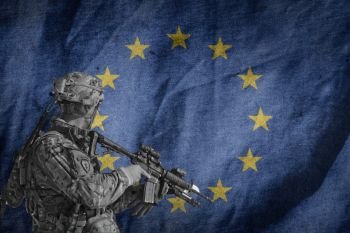
The European Union has faced a significant challenge in balancing security and sovereignty in recent years, particularly regarding its military capabilities and defense strategy. Following the end of the Cold War, Europe shifted its focus from military preparedness to diplomacy and economic integration. The establishment of the European Union emphasized cooperation among member states. However, recent global events have necessitated a reconsideration of defense policies. The rise of new threats, including terrorism and geopolitical tensions, has highlighted vulnerabilities within the EU’s collective security framework. The 2014 annexation of Crimea by Russia was a pivotal moment. It forced EU member states to evaluate their military readiness and prompted a renewed discussion on defense spending and capabilities.
The impact of these geopolitical shifts has been profound. European countries, particularly those in Eastern Europe, have felt an increased need for a robust defense posture. Countries like Poland and the Baltic states have demanded stronger NATO presence and greater investment in their military capacities. This situation has led to a divergence of defense strategies across the EU, causing tension among member states that prioritize national sovereignty over collective security. Nations like France and Germany advocate for a more unified EU defense approach, highlighting the benefits of a collective response to common threats.
Influential individuals have played crucial roles in shaping the EU’s defense narrative. Leaders such as Emmanuel Macron of France have called for a stronger European Defense Union, arguing that Europe must take greater responsibility for its security. His vision includes enhancing the EU’s military capabilities and deepening cooperation among member states. In contrast, leaders from more security-dependent countries often express skepticism over the feasibility of giving up national control over military decisions. This ongoing debate illustrates the complexity of balancing security concerns with sovereignty rights.
There are various perspectives regarding the EU’s rearmament dilemma. Proponents of stronger EU defense capabilities argue that a unified approach will enhance security for all member states. They contend that individual countries might lack the resources necessary to respond effectively to modern threats. Additionally, a collective approach could enable the EU to take a more significant role in global security matters, projecting power and influence.
Conversely, critics express concerns over sovereignty. They argue that rearmament could lead to the centralization of military power in the EU, undermining national autonomy. Countries that are traditionally neutral, such as Sweden and Austria, have voiced apprehensions about committing to greater military cooperation. The fear is that increased reliance on EU defense mechanisms could expose nations to greater risks.
Moreover, funding remains a crucial issue in the rearmament discussion. Establishing a common defense fund has been proposed as a way to streamline spending and enhance military capabilities. However, the challenge lies in convincing member states to allocate budget resources toward a central fund in a landscape where economic priorities vary significantly. The disparity in defense budgets among EU states complicates the negotiation for increased military expenditures.
Recent developments have showcased attempts to balance these competing interests. The Permanent Structured Cooperation, or PESCO, unveiled in 2017 demonstrates a commitment among EU member states to collaborate on defense projects. This initiative allows for a more coordinated approach to military development while still respecting national sovereignty. Furthermore, the EU has established a European Defence Fund to support cooperative military research and development. These efforts reflect an understanding that collaborating on security issues does not have to come at the expense of national autonomy.
Looking ahead, the future of EU rearmament will require delicate navigation. As global threats continue to evolve, member states will need to adapt their policies and strategies. The challenge lies in creating a system that allows for greater collective security without sacrificing individual sovereignty. Future developments may include more robust frameworks for military cooperation, advancements in technology integration for defense systems, and an increased emphasis on joint exercises among EU forces.
In conclusion, the European Union’s rearmament dilemma highlights a critical juncture between security and sovereignty. The historical context shapes the current discourse, with significant influences from political leaders and varying opinions among member states. As the EU continues to confront emerging threats, striking a balance that meets collective security needs while respecting national autonomy will be imperative. Thus, the ongoing dialogue regarding military cooperation will be crucial for the EU’s future security architecture. Ultimately, how the EU navigates this dilemma will play a pivotal role in shaping not only its defense posture but also its global standing in an increasingly complex geopolitical landscape.