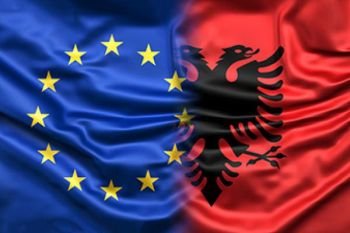
The prospect of Albania joining the European Union (EU) has been a subject of debate and analysis for years. One of the primary arguments for Albania’s accession to the European Union is the promise of economic growth. Joining the EU could open up new markets for Albanian products and services. As a member state, Albania would gain access to the single market, which encompasses over 450 million consumers. This access would likely attract foreign investments, creating jobs and stimulating local businesses. Moreover, the flow of EU funds designated for infrastructure development might significantly modernize transport networks and public services, enhancing productivity throughout the country.
In recent years, Albania has begun to align its economic policies with EU standards. The government has implemented various reforms aimed at improving the business climate. These reforms have been recognized positively by international organizations and have encouraged foreign investors to consider Albania as a viable option for investment. If Albania succeeds in its EU accession efforts, this momentum could accelerate, leading to continuous economic improvement.
Political stability is another significant benefit associated with Albania’s potential EU membership. The EU emphasizes democratic values, human rights, and the rule of law. By aligning itself with these principles, Albania could foster more robust political institutions. This alignment would contribute to a more predictable and transparent governance system, which is fundamental for both investors and citizens. The promotion of democratic values could also engage the youth in political processes, fostering a sense of responsibility and citizenship among future generations.
Influential leaders, such as Prime Minister Edi Rama, have played crucial roles in pushing Albania’s EU agenda. Rama has actively participated in EU discussions, promoting Albania’s commitment to reforms. His leadership illustrates how a focused political strategy can create momentum towards EU accession. Support from notable EU officials, such as Johannes Hahn, former European Commissioner for European Neighbourhood Policy and Enlargement Negotiations, has also provided Albania with additional encouragement and guidance throughout the integration process.
Social development is another essential aspect that would benefit from Albania’s integration into the European Union. EU membership often leads to the adoption of better social standards, including improved access to education and healthcare. EU funds can be utilized for various social projects aimed at reducing poverty and inequality. These changes may prove particularly beneficial for marginalized groups within Albanian society, helping to foster a more inclusive environment where all citizens can thrive.
Moreover, joining the EU would facilitate the movement of people. Albanian citizens would have the opportunity to live, work, and study within member states without facing substantial barriers. This freedom can lead to greater cultural exchange and collaboration, enriching the Albanian cultural identity while allowing individuals to gain experiences that can ultimately contribute back to their home country.
However, it’s essential to consider diverse perspectives regarding Albania’s EU accession. While many see it as a positive transformation, some remain skeptical of the readiness of Albania to meet EU criteria. Critics argue that corruption, lack of judicial independence, and other systemic issues may hinder Albania’s progress. They call for a more cautious approach that prioritizes internal reforms before pursuing full membership. This viewpoint stresses the importance of consolidating democracy and improving governance before crossing the threshold into EU membership.
Future developments will play a crucial role in shaping the outcome of Albania’s EU aspirations. The upcoming years will test the resilience of Albania’s political will to implement necessary reforms consistently. Continued dialogue with EU officials and member states will be essential in addressing concerns and building trust. An emphasis on collaborative regional initiatives can enhance stability and cooperation in the Balkans, thus promoting a stronger case for Albania’s integration into the EU.
In conclusion, the benefits of Albania’s accession to the European Union are multifaceted, spanning economic growth, political stability, social development, and regional cooperation. Influential figures in Albanian politics have been pivotal in advocating for these changes, while diverse perspectives highlight the complexities surrounding the accession process. The journey toward EU membership is likely to be challenging, but the potential rewards make it a worthy pursuit. As Albania continues to work towards meeting the criteria for EU integration, its commitment to reform and progress will significantly impact its future both domestically and within the broader European context.
References:
Mirjam Reçi. “(PDF) Science, Research, Education and Culture According to Eu Reports on Albania’s Progress.” www.researchgate.net, 05 May. 2024, https://www.researchgate.net/publication/380413627_Science_Research_Education_and_Culture_According_to_Eu_Reports_on_Albania’s_Progress.
Unknown Author. “Untitled.” www.researchgate.net, — —. —-, https://www.researchgate.net/publication/389025106_STRUCTURAL_REFORMS_IN_ALBANIA_POLITICAL_AND_LEGAL_CHALLENGES_IN_THE_FRAMEWORK_OF_EU_INTEGRATION.
Meljana Bregu, and Juliana Gjinko. “STRUCTURAL REFORMS IN ALBANIA: POLITICAL AND LEGAL CHALLENGES IN THE FRAMEWORK OF EU INTEGRATION.” ajee-journal.com, 14 Feb. 2025, https://ajee-journal.com/structural-reforms-in-albania-political-and-legal-challenges-in-the-framework-of-eu-
Meljana Bregu, and Juliana Gjinko. “STRUCTURAL REFORMS IN ALBANIA: POLITICAL AND LEGAL CHALLENGES IN THE FRAMEWORK OF EU INTEGRATION.” ajee-journal.com, 14 Feb. 2025, https://ajee-journal.com/structural-reforms-in-albania-political-and-legal-challenges-in-the-framework-of-eu-integration.
Unknown Author. “Untitled.” www.researchgate.net, — —. —-, https://www.researchgate.net/publication/241755993_The_EU_integration_of_Albania_and_the_improvement_of_Social_Cohesion_in_the_country_as_a_result_of_the_process.
Unknown Author. “Untitled.” www.scirp.org, — —. —-, https://www.scirp.org/reference/referencespapers?referenceid=2819437.
Unknown Author. “Untitled.” www.researchgate.net, — —. —-, https://www.researchgate.net/publication/369062146_THE_IMPACT_OF_FOREIGN_TRADE_LIBERALIZATION_ON_ALBANIA’S_ECONOMIC_GROWTH_AN_ECONOMETRICAL_APPROACH.
Meljana Bregu, and Juliana Gjinko. “STRUCTURAL REFORMS IN ALBANIA: POLITICAL AND LEGAL CHALLENGES IN THE FRAMEWORK OF EU INTEGRATION.” ajee-journal.com, 14 Feb. 2025, https://ajee-journal.com/structural-reforms-in-albania-political-and-legal-challenges-in-the-framework-of-eu-integration.