The Documentary – Auschwitz The Forgotten Evidence History
70 years after the liberation of Auschwitz, Holocaust survivors in Israel are trapped in poverty
Holocaust Memorial Day: 70 years since Auschwitz liberation, these are the stories of survivors
World War II and the Holocaust
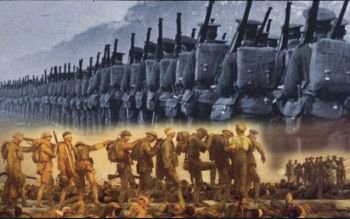
The Paris Peace Settlements of 1919–1920 brought to a close the bitter divisions and seemingly endless conflict of World War I. European participants in the war were devastated and exhausted and yearned for peace, stability, and normality, and many of the European governments (and the United States) retreated into isolationism, neutrality, or pacifism.
The Paris agreements, including the crucial Versailles Treaty affecting Germany, had established national and democratic states in Germany, as well as the new states of Eastern Europe, and had created the League of Nations to protect the peace and ward off future wars. A sense of calm and relief spread through much of the Continent.
There were, however, storm clouds on the horizon even in those first postwar years, with economic distress and inflation, irredentist discontent with the Versailles Treaty (especially in Germany), and the unsettling presence of a new communist state in Russia. By the 1930s, things fell apart as a worldwide economic depression weakened governments everywhere, and many of the newly established European democracies were subverted from within or without. In Germany, Adolf Hitler (1889-1945) capitalized on economic distress and discontent, seized absolute power, and began constructing his Third Reich. His aggressive military moves to reclaim German territory and then to conquer all of Europe led to World War II, which was even more devastating than the previous war, and to the Holocaust. The United States finally intervened to help end the war, as it had in World War I, and the potent alliance of the United States and the Soviet Union finally crushed Nazi Germany. But, with the end of the war, this wartime friendship deteriorated into rivalry, distrust, and a period of political and military tension known as the Cold War.
EUROPE BETWEEN THE WORLD WARS
Woodrow Wilson had brought the United States into World War I pledging to “make the world safe for democracy,” and his Fourteen Points called for national self-determination and democratic politics in central Europe. In large measure, these goals were achieved with the Paris peace agreements, which carved from the old Habsburg Empire the new states of Austria, Hungary, Czechoslovakia, and Yugoslavia, and from the old Russian Empire the states of Poland, Finland, Latvia, Lithuania, and Estonia.
All of them adopted written constitutions with legislatures elected through universal suffrage. In the city of Weimar, a German national assembly also adopted a constitution establishing a democratic republic, the Weimar Republic. In the ruins of the Ottoman Empire, a nationalist revolution led by Mustapha Kemal (later named Kemal Ataturk) abolished the sultanate and the caliphate and established a secular democratic republic of Turkey, the first Muslim country to separate religion from government.
The 1920s saw democratic advances even in established democracies, for example with the extension of voting rights to women in both Britain and the United States.
Germany was reconstituted as a democratic republic, but it was also forced to accept the terms of the Versailles Treaty, despite vigorous and sustained protests from every band of the political spectrum inside the country. The treaty not only assigned Germany responsibility for World War I and imposed reparation payments on the new government but also reduced the size of the country by restoring an independent Austria, returning Alsace-Lorraine to France, placing the Saar territory and the Rhineland under French or Allied occupation, ceding most of West Prussia to Poland, and establishing the port city of Danzig as a free city under the auspices of the League of Nations. In addition, the treaty placed German colonies (e.g., in Africa) under League of Nations control as mandates and limited the German army and armaments.
For Germans, the humiliation of all these provisions was compounded by the reparations payments, which eventually were set at the equivalent of $33 billion. The country simply could not make these payments (and in the long run paid only a fraction of them), so the government began printing more money, which contributed to unprecedented hyperinflation and rendered the German currency (the mark) almost worthless. By 1923, the exchange rate was four trillion marks to the dollar. German families had to cart wheelbarrows full of cash to the store just to purchase a loaf of bread.
The situation was stabilized somewhat the next year when the Dawes Plan, developed by an American board of experts, provided for a reduction in reparations payments, a stabilization of German finances, and the facilitation of German borrowing abroad. The ensuing years saw a period of economic growth and relative stability in both Germany and the rest of Europe. Germany was allowed to enter the League of Nations in 1926. In 1928, the Kellogg-Briand Pact, developed by the American and French foreign ministers and signed by sixty-five countries, renounced war as an instrument of policy. Once again, it seemed a period of peace and stability was at hand.
Then the U.S. stock market crashed, leading quickly to a worldwide depression. By 1929, stock values in the United States had been driven to fantastic heights by excessive speculation. When the crash came in October, stock prices dropped by 40 percent in a month and by 75 percent within three months. Five thousand banks closed, and many companies went bankrupt. U.S. investments abroad virtually ceased, and U.S. trade declined precipitously, undercutting the foundations of the economic revival of Germany and much of Europe. Between 1929 and 1932, world economic production declined by 38 percent and world trade by two thirds.
Germany was particularly hard hit, suffering more from the Depression than any other country in Europe. But all over the Continent, as unemployment skyrocketed and food lines swelled, people began looking for answers and demanding economic security. The situation was ripe for strong leaders and demagogues. Newly formed democracies withered under the strain.
THE RISE OF MILITARISM AND FASCISM
Hitler emerged from this environment, but he was not the first or the only right-wing dictator to rise to power in interwar Europe. He was preceded, most importantly, by Benito Mussolini (1883–1945), who seized power in Italy in 1922 and established the first fascist dictatorship in Europe in a country that had maintained parliamentary government since unification in 1861. Mussolini, born the son of a blacksmith in 1883, had in his youth dabbled in both revolutionary activity and radical journalism. He served in World War I, and after the war, organized a fighting band, made up mostly of ex-soldiers whom he called “fascists.” Fascism emerged as a political ideology that was anticommunist and antisocialist, militantly nationalist, and in favor of economic security and law and order, if necessary through dictatorial rule.
In the years after the war, Italy, like Germany, suffered from wartime debts, economic depression, and unemployment. In 1921 and 1922, when widespread strikes and demonstrations practically paralyzed the country, Mussolini and his fascists, dubbed “Blackshirts,” threatened a takeover of the government and promised to restore order and stability. Under the threat of Mussolini’s ultimatum, the king appointed him prime minister.
The parliament then granted him a year of emergency powers to restore order in the country. Within a few years, Mussolini had emasculated the parliament, put the press under censorship, and abolished all political parties except his fascists. He took the title “Il Duce” (the leader). Adolf Hitler’s early life paralleled that of Mussolini in some ways, and after Mussolini’s seizure of power, Hitler consciously modeled Mussolini’s tactics and success. Hitler was born in Austria, the son of a customs official, but lost both of his parents during his teenage years. He spent his early years in Vienna and Munich, a frustrated artist, mostly unemployed and poor. He welcomed the onset of World War I and served with distinction, becoming a corporal and receiving the Iron Cross for bravery. After the war, he founded the National Socialist German Workers’ Party, which became known as the Nazi Party. In 1923, the year after Mussolini’s March on Rome, Hitler and his Nazis made a similar attempt to seize control of the government in Bavaria, in southern Germany, in what became known as the Munich Beer Hall Putsch. The coup attempt was put down by the army, fourteen Nazis were killed, and Hitler was sentenced to jail.
During his year in jail, Hitler wrote his rambling memoirs, Mein Kampf (My Struggle), which were published in 1925 and became a best seller. The book was a strange conglomeration of autobiography, racism, nationalism, theories of history, and anti-Semitism. In this book, fifteen years before the gassing of the Jews at Auschwitz, Hitler unveils his ideas of racial hierarchy and supremacy. Borrowing some of the language of social Darwinism and eugenics, he inveighs against the “crossing of breeds” in humans, which is “contrary to the will of Nature for a higher breeding of all life.” In a chapter entitled “Nation and Race,” which is mostly an invective against Jews and communists, and which ends with a call for “a German state of the German nation,” he writes, “The stronger must dominate and not blend with the weaker, thus sacrificing his own greatness.
Only the born weakling can view this as cruel . . . for if this law did not prevail, any conceivable higher development of organic living beings would be unthinkable.”
The trial of Hitler for the putsch and the publication of Mein Kampf made him a political figure of national prominence. But the years after his release from jail were ones of relative prosperity and stability in Germany (following the Dawes Plan), and Hitler and his Nazis lost appeal and supporters.
When the economic depression hit Germany in 1930, however, Hitler had new fodder for his charges against Versailles, Jews, communists, foreigners, and the Weimar Republic. As the economy collapsed and unemployment rates rose to 30 percent, Germans began looking for radical solutions from both the Left and the Right, and support grew for both the communists and the Nazis. In legislative elections, votes for the Nazis jumped from 3 percent in 1928 to 18 percent in 1930 to 37 percent in 1932. By that time, the Nazis were by far the largest party in the legislature, the Reichstag, although they did not have a majority of the seats.
No other political party wanted to collaborate with Hitler in forming a coalition government, and the traditional conservative parties, led by President Hindenburg, all thought they could control Hitler by allowing him into the government and hemming him in with their own people in the cabinet. So, in January 1933, President Hindenburg appointed Hitler chancellor (prime minister) of the German Republic.
Hitler’s appointment sparked a wave of brutal Nazi attacks on socialists, communists, Jews, and others who opposed Nazism. Hitler began to consolidate power in much the same way that Mussolini had in Italy a decade earlier. When a fire consumed the Reichstag building a week before elections, Hitler blamed it on the communists, frightening legislators and citizens alike with a Red scare and claiming a national emergency. The legislature voted to give him dictatorial powers. In July, Hitler declared that the Nazis were the only legal party. He initiated a public works program (and rearmament), which soon absorbed almost all of the unemployed in Germany. When President Hindenburg died the next year, Hitler merged the offices of president and chancellor under his control He proclaimed the establishment of the Third Reich. Like Mussolini, he took the title of Führer (leader). The groundwork was laid for a third totalitarian state, along with those of Stalin and Mussolini.
HITLER’S AGGRESSION
Hitler had gained both notoriety and popular support by condemning the Versailles Treaty and calling for a restoration of German honor, pride, and power and the recovery of lost German territories. Within a few months of becoming chancellor, he began to fulfill those promises in a steadily escalating series of aggressive moves. In October 1933, he pulled Germany out of the League of Nations and denounced the disarmament negotiations that were then under way. By 1935, he began rearming Germany, contrary to the provisions of Versailles, and had introduced compulsory military service. The League censured Germany but took no other action.
In 1936, Hitler moved German troops into the Rhineland (on Germany’s western border), an area that had been permanently demilitarized by the Versailles Treaty. The same year, Hitler signed mutual defense and assistance treaties with both Mussolini’s Italy (the Rome-Berlin axis) and with the military government in Japan. And during the Spanish Civil War of 1936–1939, when government forces were pitted against Francisco Franco’s rebel fascists, Hitler and Mussolini cooperated in assisting Franco, providing a testing ground for their troops and weapons.
By 1938, Hitler was prepared to press his demands to bring all Germans into the greater German Reich. In March of that year, he marched German troops into Austria, announced the Anschluss (merger) of Austria with Germany, and drove to Vienna in triumph. Even after this, neither the League nor the Western powers responded, in part due to a growing sentiment that there was some justification to Germany’s nationalist claims.
The annexation of Austria had added about six million Germans to the Reich, and now Hitler began making noises about the supposed intolerable conditions of the three million Germans living in the Sudetenland region of Czechoslovakia. As rumors spread that Germany was about to invade Czechoslovakia, the governments of France, England, and the Soviet Union issued warnings to Hitler. In September 1938, Hitler invited the prime ministers of England and France, Neville Chamberlain and Edouard Daladier, plus Mussolini, to a conference in Munich to discuss the situation. In the resulting agreement, the four powers renounced war on each other, ceded the Sudetenland to Hitler, and guaranteed the territorial integrity of the rest of Czechoslovakia. Prime Minister Chamberlain returned to London asserting he had achieved “peace with honor.” Six months later, Hitler invaded and annexed the rest of Czechoslovakia.
Since that time, the names Chamberlain and Munich have been associated with the appeasement of aggression. But, in 1938, none of the major powers was prepared to confront Hitler militarily. The old balance-of power system of alliances had collapsed in World War I, and in any case, the traditional counterweight to Germany, a flanking alliance of England and/or France with Russia, was impossible because of Western distrust of the communists of the Soviet Union. The replacement for the balance of power, the League of Nations, had already proved ineffectual in countering the military aggression of Japan, Italy, and Germany.
Alarmed at the unchecked militarism of Nazi Germany, the Soviet leader, Joseph Stalin, bought some time by signing a nonaggression and friendship pact of his own with Hitler in August 1939. This agreement was public, but in a secret protocol, the Germans and Soviets agreed to divide Poland between them in the event of war and sanctioned Soviet influence in the Baltic states. One week after the signing of the Nazi-Soviet pact, the Germans invaded Poland with a massive army of over one million troops. Britain and France immediately declared war on Germany. For the second time in a generation, Europe was at war.
THE WAR
By this time, Hitler’s goals went beyond the recovery of “German” territory to the acquisition of lebensraum (living space) in Eastern Europe for his expanding “master race”—thus his interest in Poland. The German attack on Poland, in September 1939, employed the new military tactic of Blitzkrieg, lightning warfare using massive amounts of manpower, airpower, and armor so as to achieve rapid annihilation of the enemy.
Poland fell within a month, and Hitler set about the occupation of the country. Meanwhile, the Soviet Union, invoking the secret protocol, invaded and occupied eastern Poland, the area that they had lost in the Polish-Soviet war of 1919–1920. In the spring of 1940, Nazi troops invaded Norway and Denmark, then launched another blitzkrieg across Holland, Belgium, and Luxembourg and into France, forcing a French surrender within six weeks. With stunning speed and ease, Hitler had taken over most of Europe.
In the summer of 1940, England was the only country that remained at war with Germany. Winston Churchill had replaced Neville Chamberlain as prime minister, promising nothing but “blood, toil, tears, and sweat” in an implacable war against “a monstrous tyranny, never surpassed in the dark, lamentable catalogue of human crime.”1 Hitler launched an air campaign against Britain, with bombing raids on London and other cities, as a prelude to a full-scale invasion. But the British Royal Air Force was able to prevent German supremacy in the air, and with Churchill’s inspiration, civilian morale held up in spite of the death, destruction, and privation.
Unable to subdue Britain, Hitler shifted his attention to his more important objective, the Soviet Union, which from the beginning he had intended to invade and occupy, in spite of the 1939 nonaggression pact. The military assault on the Soviet Union, Operation Barbarossa, was launched on June 22, 1941, with three million men along a two-thousand-mile front.
Within a few months, German troops had encircled Leningrad and got within twenty-five miles of Moscow. For the next three years, until the Allied invasion of the mainland of Italy (September 1943) and France (June 1944), the struggle between Germany and the Soviet Union was the only real fighting in the European theater. The overwhelming majority of all casualties from the war were Soviet, and the Soviet Union sustained some eight million military losses and at least eighteen million civilian deaths.
At the battle of Stalingrad, in the winter of 1942–1943, a turning point victory over the Germans, the Soviet army lost more troops than the United States lost in the whole of World War II in all theaters combined.
After Stalingrad, the Soviets made steady gains, pushing the Germans out of the Soviet republics of Ukraine and Byelorussia, then advancing head-on through Poland toward Berlin. At the same time, Soviet forces moved southwest into Romania, Bulgaria, and Hungary, all of which were allied with Nazi Germany. Meanwhile, the June 1944 Normandy invasion landed 130,000 British, U.S., and Canadian forces onto French beaches in one day and a million within the month. By March 1945, the Allied forces had crossed the Rhine River into German territory, and Soviet forces had taken Budapest and Vienna and would soon occupy Berlin.
Hitler committed suicide, and the German government surrendered in May 1945. The European war was over, although fighting continued in the Pacific theater against Japan until the atomic bombings of Hiroshima and Nagasaki forced a Japanese surrender in August.
THE HOLOCAUST
At the end of the war, as Allied troops liberated Nazi-controlled areas, they stumbled upon the concentration camps of Dachau and Buchenwald and the gas chambers and crematoria of the death camps at Auschwitz, Treblinka, and elsewhere. It was only then that the full extent of the Nazi policy to exterminate the Jews became public and clear.
The anti-Semitism of Hitler and the Nazis, however, was perfectly clear from the beginning and is vividly displayed in Mein Kampf, in which he systematically baits and demeans Jews and refers to them as un-German and subhuman. At first, though, the policy of Hitler’s Nazi government was to encourage or intimidate Germany’s six hundred thousand Jews to leave the country, rather than to kill them. The 1935 Nuremberg Laws identified Jews as subjects but not citizens, banned them from the professions, and placed restrictions on intermarriage and sexual relations between Jews and non-Jews. Official anti-Semitism became violent in November 1938, with Kristallnacht (the night of broken glass), when Nazi storm troopers looted and smashed Jewish shops and synagogues, beat up thousands of Jews, and rounded up tens of thousands to be sent to concentration camps. After this, a campaign of threats and intimidation was carried out to force Jewish emigration.
The actual slaughter of the Jews, what was later to become known as the Holocaust, began with the mass killings of Jews in German occupied Soviet territory in 1941. About the same time, Nazi leadership decided that the “Final Solution of the Jewish Question” was to take the form of annihilation. In early 1942, decisions were taken to accelerate experiments with Zyklon-B gas; to establish dedicated death camps at Treblinka, Auschwitz, and elsewhere; and to organize the systematic transport of Jews from all over Europe to these camps. Over the next three years, some six million Jews perished in these camps, including almost all of Poland’s three million Jews and perhaps two-thirds of all the Jews in Europe.
THE CONSEQUENCES OF WORLD WAR II
If the ten million deaths of World War I had seemed horrifyingly unimaginable, the losses of World War II were far worse: In Europe alone, there were probably fifteen million military casualties and almost twice that many civilian deaths. More than twenty million died in the Soviet Union, more than 10 percent of the entire population. Nobody really knows the exact count, but some estimates place the overall casualties from the war, in both Europe and Asia, at sixty million men, women, and children.
The numbers are so huge in part because this was the first war in which civilians were deliberately and systematically targeted-from the German aerial attacks on London and Coventry, to the Allied firebombing of Dresden and Tokyo, to the Nazis’ systematic “liquidation” of Warsaw in 1944, to the nuclear incineration of Hiroshima and Nagasaki. The scope and scale of warfare had changed forever.
With the war years, much of Europe seemed to have reversed course from the steady evolution that had begun at the end of the eighteenth century. The totalitarian regimes of Hitler, Stalin, and Mussolini rejected the notions of individualism, natural rights, and common humanity that had derived from the Enlightenment. Indeed, as depicted so movingly in Elie Wiesel’s Night and Primo Levi’s Survival in Auschwitz, the Nazi death camps called humanity itself into question. But with the deaths of Hitler and Mussolini in 1945, and of Stalin in 1953, totalitarianism was no longer a force in Europe. At the Allied trials of Nazi leaders held at Nuremberg after the war, the policy of genocide was defined as a “crime against humanity,” thus reestablishing a sense of common values and morality.
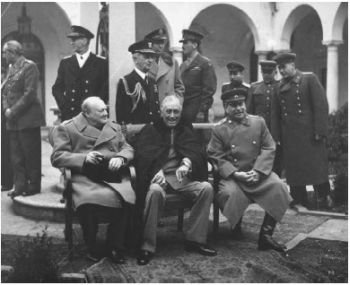
The end of the war also signaled a major geopolitical shift in both Europe and the world, with the emergence of the United States and the Soviet Union as the dominant powers on the Continent. As a result of the end-of-war military operations, the Soviet Union ended up occupying eastern Germany (including East Berlin) and most of eastern Europe. U.S. forces, having moved toward Germany from the south (North Africa, then Italy) and the west (Normandy) controlled western Germany and most of western Europe. It was as if these two geographically peripheral players had been sucked into the vacuum of central Europe created by the collapse of Germany and Italy. And where they met, in the middle of Germany, is where the Cold War began.
Survival in Auschwitz
Auschwitz (in Polish, Os´wie˛cim), located in southern Poland, was the worst of the Nazi death camps and has become a symbol of the Holocaust. Although the numbers are still in dispute, probably 1.5 million men, women, and children were killed at Auschwitz and nearby Birkenau, including about 1 million Jews. The museum there includes a heart-rending children’s barracks that has entire rooms filled with shoes, clothing, eyeglasses, and hair taken from the hundreds of thousands of children who were gassed and cremated on the premises.
Most survivors of Auschwitz were understandably loath to talk or write about their experiences, and many others did not want to hear about it. When an Italian Jew, Primo Levi, first published his Auschwitz memoir If This Is a Man (later appearing in English as Survival in Auschwitz) in 1947, it was barely noticed. A decade later, it was published again, about the same time as another Holocaust memoir, Elie Wiesel’s Night; for the first time, Europe began to confront the Holocaust.
Survival in Auschwitz renders in shattering detail the horror and brutality of the camps and the tenuous nature of humanity in such circumstances. Prisoners compete, and even kill, for a scrap of bread or a piece of clothing in their struggle to survive. Levi explains the thin veneer of civilization: Imagine now a man who is deprived of everyone he loves, and at the same time of his house, his habits, his clothes, in short of everything he possesses: he will be a hollow man, reduced to suffering and needs, forgetful of dignity and restraint, for he who loses all often easily loses himself.
In the end, though, a good-hearted civilian coworker named Lorenzo inspires Levi himself to persevere and survive by convincing him that “there still existed a just world outside our own, something and someone still pure and whole, not corrupt, not savage, extraneous to hatred and terror; something difficult to define, a remote possibility of good, but for which it was worth surviving.” After the war, Primo Levi returned to his hometown, Turin, to become manager of a chemical plant; he retired in 1977 to devote himself to writing. But his life was troubled, and he suffered from depression. In 1987, he toppled over the railing of a stairwell in his home and died from his injuries in an apparent suicide.