The European Union: Europe United and Free?
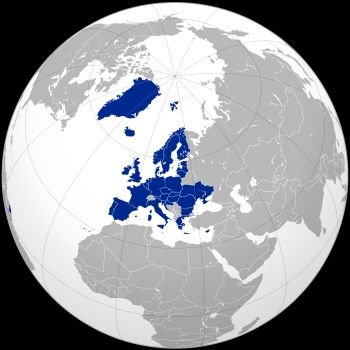
The collapse of communism in Europe brought a flood of new applicants to the European Union (EU) and raised the possibility of a truly integrated, perhaps even united, Europe. The EU is the latest incarnation of what is sometimes called the Common Market, which started out as a customs union of six countries in the 1950s.1 Over the decades, the organization grew in membership and scope, creating a virtual “Europe without borders” with a common currency, the euro, and a common commitment to democratic politics, human rights, and a market economy. Just as the EU was planning for further and deeper integration, communism began to fall apart in Eastern Europe and virtually all of the European post communist states applied for membership. With the entry of twelve new countries since 2004, including ten post communist states, the EU now has twenty-seven members and constitutes a major force in the world economy and international politics.
ORIGINS OF THE COMMON MARKET
The first ideas and plans for the European Common Market came in the aftermath of World War II, although proposals for some kind of united Europe date back to the eighteenth century. Even before the French Revolution, Jean-Jacques Rousseau proclaimed, somewhat prematurely perhaps, that “there are no longer Frenchmen, Germans, and Spaniards, or even English, but only Europeans.”2 So, the idea of a united Europe, at least, is an old one.
The first real impetus for European unification, though, came after the wreckage of World War II. In 1946, in the same year that he delivered his “iron curtain” speech, Winston Churchill appealed for “a kind of United States of Europe,” beginning with a partnership between France and Germany, countries that had fought three wars with each other in the course of seventy-five years. (Churchill, however, saw no place for his own country in such a union.) Delegates from ten European countries met in Strasbourg, France (right on the border with Germany), to discuss something along these lines. Out of this came the Council of Europe, with the hopes that this might eventually become a legislature for a federated Europe. The council relied mostly on debate and diplomacy, had no real powers, and never became an important political force.
A far more ambitious proposal came from two cosmopolitan Frenchmen, Jean Monnet (1888-1979) and Robert Schuman (1886-1963). Monnet was a visionary economist and administrator (if those terms don’t constitute an oxymoron!), who in the 1920s served as deputy secretary general of the League of Nations. Schuman, a disciple of Monnet, was born in the contested region of Alsace-Lorraine and was a diplomat and the French foreign minister from 1948 to 1950. Both of them were looking for ways to change the fateful dynamic of French-German relations and to integrate Germany more closely with the rest of Europe.
Monnet had in mind the economic integration of the two countries. By getting France and Germany to cooperate in the economic sphere, they would build up a web of interdependence that would spill over into the political sphere. Eventually, this cooperation and interdependence would render war between them politically unthinkable and economically impossible. In a process he called functionalism, he envisaged a step-by-step transfer of certain economic or political functions, or “spheres of activity,” from national to supranational control, above the level of the nation-state.
Concentrating first on nonpolitical spheres of cooperation, he thought, would be easier than trying for political rapprochement right away. The French foreign minister, Robert Schuman, took these ideas and, with support from sympathetic political leaders in Germany, Italy, and elsewhere, put them into concrete form in the Schuman Plan of 1950. Its primary goal was to coordinate coal and steel production, much of which was located in the Ruhr valley, the Saarland, and Alsace-Lorraine, the very areas that had been so hotly contested in the wars of the past century. This initial focus on coal and steel was limited; Schuman saw it as “a first step in the federation of Europe.” Out of the Schuman Plan emerged the European Coal and Steel Community (ECSC), which began operation in 1952, with Jean Monnet as the first ECSC president. The ECSC consisted of six states: France, Germany, Italy, and the three “Benelux” countries of Belgium, Netherlands, and Luxembourg, which had already formed their own customs union a few years earlier. By the time of the formation of the ECSC, of course, Europe was already firmly divided by the Iron Curtain and the North Atlantic Treaty Organization (NATO), so there was no question then of extending the plan into Eastern Europe. In any case, for France at that time, the biggest perceived threat was Germany, not communism. And, most of the coal and steel resources of Europe were located in the territory of these six member states.
Although the inspiration for the ECSC was noble and idealistic, the goals and the operation of the organization itself were quite prosaic. The main purpose of the community was to stimulate production and trade in coal and steel, primarily by the elimination of barriers to trade. For those who are not economics majors, this may require a short explanation. Governments often protect industries within their borders by restricting cheaper imports from abroad. They do these primarily through tariffs, which are taxes on imports, and through quotas, which are limits on the quantities of goods imported from particular countries. For example, if U.S. automobile manufacturers (e.g., Ford or General Motors) are losing out to cheaper and/or better imported cars from Japan (e.g., Honda and Toyota), the U.S. government can help protect U.S. industries by imposing tariffs and quotas on Japanese automobiles coming into the United States.
These tariffs will make the retail cost of Japanese cars more expensive in the United States and thus reduce their competitive advantage. Quotas will restrict the number of Toyotas and Hondas that can be imported into the United States, thus preventing them from flooding the U.S. market. For the United States, the main advantage of such restrictions is that it helps U.S. manufacturers avoid declining sales and the possibility of having to lay off workers or declare bankruptcy. The main disadvantage is that, for American consumers, automobiles will be more expensive. The idea behind a customs union or free trade area is to eliminate tariffs and quotas affecting goods exchanged among participating countries so that products will be less expensive for consumers in those countries. Usually, it results in the less efficient producers going out of business because they lose government protection. But, in theory, at least, free trade among those countries should stimulate sales, production, and growth overall.
With the ECSC, the aim was to eliminate such trade barriers and thereby stimulate efficient production of coal and steel, which were backbones of the industrial economies of Europe. It was thought that increased efficiency in these areas could drive overall economic recovery and development. To facilitate this process, the coal and steel industries of the six member states were put under supranational control in an institution called the High Authority, with its headquarters in Luxembourg. The High Authority included representatives from each of the six countries, although decision making was partly by majority vote, which meant that some decisions could go against the interests of one or more countries; this was the supranational element of the ECSC. Besides supervising production, marketing, and prices, the High Authority also assisted weaker manufacturers in modernizing, readapting, or converting.
FROM COMMON MARKET TO EU
The ECSC was so successful in both economic and political terms that its achievements began to spill over, just as Jean Monnet had predicted, into broader areas and into more countries. Within a few years, “the Six” began discussing an expansion of the principles of the ECSC to the whole economy. In 1957, they signed the Treaty of Rome, creating the European Economic Community (EEC), which came to be known as the Common Market. The goal of the EEC was to eliminate tariffs among the six countries on all products, not just coal and steel, and to create a common external tariff for all products coming into the EEC from other countries.
It also aimed at the free movement of capital and labor within the community and a harmonization of the social and economic policies of all six countries. A long-term goal was full economic and political integration. In support of the expanded activities and goals of the new organization, four new institutions were established: the Council of Ministers and the European Commission (with a permanent Secretariat) located in Brussels; the European Court of Justice in Luxembourg; and the European Parliament in Strasbourg. A European bureaucracy was being born, complete with “Eurocrats,” and “Brussels” became shorthand for the institutions of this new Europe.
The EEC was also a roaring success, drawing the Six closer together, especially West Germany and France, and stimulating economic growth. West Germany, France, and Italy all experienced “economic miracles” in the 1950s and early 1960s, growing into solid middle-class welfare states. Their growth fueled development in the rest of the community. Trade among the six member countries grew twice as fast as trade with countries outside the zone. By 1968, the last internal tariffs were removed years ahead of schedule. The institutions of the ECSC, EEC, and Euratom (the European Atomic Energy Agency) were merged into the renamed European Community (EC) in 1967. By this time, the success of the community was attracting interest from other countries besides the original six. At the beginning, Britain had refrained from joining for a number of reasons: its ties to colonies and former colonies in the British Commonwealth, its special relationship with the United States and its commitment to U.S.-dominated NATO, and its reluctance to embrace the supranational elements of the European institutions. By the 1960s, though, the British government was reconsidering: EEC economic growth far exceeded that of the United Kingdom. London sought EEC membership twice in the 1960s, but both times the application was vetoed by the French president, Charles de Gaulle, who was wary of Britain’s close ties to the United States and worried that Britain would try to dominate Europe. It was not until after de Gaulle left office that the United Kingdom finally entered the EC on its third try, in 1973, along with Denmark and Ireland.
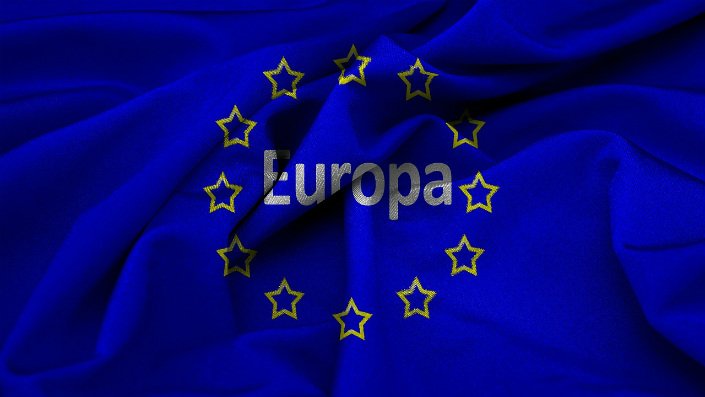
In the 1980s, a tougher challenge for the EC arose with the application for membership by Greece, Spain, and Portugal, all countries that were considerably poorer than the existing members and ones with recent authoritarian pasts as well. As membership expanded from the core countries, the EC set both economic criteria, in terms of a free market economy, and political ones, including democratic politics and respect for human rights. After extended negotiations and preparations, though, these three countries joined as well. In 1995, three additional countries joined: Finland, Sweden, and Austria. These were all countries that had maintained a modicum, at least, of neutrality during the Cold War, and none of them were members of NATO. But they too wanted to climb onto the bandwagon of the expanding European Community. The original six were now fifteen countries with a combined population of 375 million. As membership in the community was growing, so too were plans for even deeper integration of the member states. In an important symbolic step, the EC adopted a flag, twelve gold stars on a deep blue field. In 1986, with the Single Europe Act, they agreed to create a Europe without borders by 1992. At a pivotal meeting at the Dutch city of Maastricht in 1991, leaders of the twelve EC countries confirmed this direction, changing the name of EC to the European Union, adopting the new Treaty of the European Union (also called the Maastricht Treaty), and committing themselves to common production standards, uniform tax rates, common EU citizenship, a common foreign and security policy, and a single European currency.
With the formal birth of the EU in 1993, the countries of Europe became ever more closely tied together. As individual countries moved to synchronize their economic and social policies, EU regulations began to supplement, supersede, and “harmonize” national legislation. In the early 1990s, for example, more laws affecting France were adopted by the community than by the French government itself. Britain, which did not have a formal, written constitution or bill of rights, simply incorporated the European Convention on Human Rights into English law. As well, policymakers and bureaucrats from Lisbon to Helsinki had to wrestle with matters as weighty as agricultural price supports or as minute as the obligatory dimensions of the European condom (the Italians apparently lobbied for smaller)5 or whether British beer could be served in traditional pints rather than European liters. Somehow, this seems to have vindicated Jean Monnet: Countries that bicker over beer and condoms are unlikely soon to engage in armed military conflict.
These developments obviously also involve a ceding of some national autonomy. The biggest challenge for the EU so far, and the one most laden with symbolism, was the introduction of a common European currency, the euro, in 2002. This was a contentious issue from the beginning. Many countries were unwilling to let go of currencies (like the French franc and the British pound) considered part of their national identities, and many governments were worried about losing control over their economies once they lost control over the value, volume, and flow of money. In the end, Britain, Sweden, and Denmark decided not to adopt the euro, but on January 1, 2002, the new currency was introduced in the other twelve countries. In a massive logistical operation, 14.5 billion banknotes and 50 billion coins were distributed across the Continent to some three hundred million people. Despite prophecies of major snafus (e.g., could vending machines handle the new coins?) and economic chaos, the transition was remarkably smooth, and within a year the euro had completely replaced the lira, franc, mark, and peseta. Tourists no longer had to exchange money when traveling from one EU country to another, and banks and businesses did not have to worry about shifting exchange rates between their national currencies. By 2009, sixteen EU countries were in the “euro zone,” and Euros were pervasive even in noneuro countries like England, causing yet another kind of spillover.
Beethoven’s Ode to Joy and the EU
In 1985, the European Council adopted Beethoven’s stirring melody Ode to Joy as the anthem of the European Union (EU). The melody is from the last movement of Beethoven’s Ninth Symphony (composed in 1823), which features four solo voices and a large chorus with the orchestra. Beethoven wrote the music for a 1785 poem, “To Joy” (An die Freude), by the German Friedrich Schiller. The poem expresses an idealistic vision of peace, harmony, and universal brotherhood, which Beethoven accentuates with his addition of the line “alle Menschen werden Brüder” (all men will become brothers). The EU actually adopted the music only, not the lyrics, as the anthem because of the many different languages of the EU, although the idea of common humanity is clearly understood. As the EU’s official website puts it, “Without words, in the universal language of music, this anthem expresses the ideals of freedom, peace, and solidarity for which Europe stands.”