Totalitarianism-Principles and Stalin’s Rule
From the Russian revolution of 1917 to Stalinist totalitarianism – Agustín Guillamón
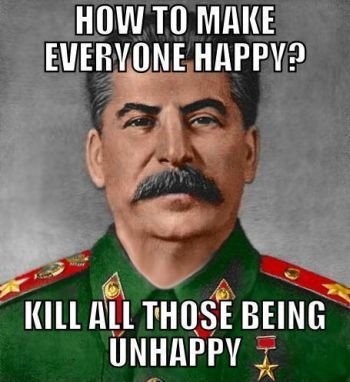
STALIN AND TOTALITARIANISM
The period of relative calm and recovery under the NEP was interrupted, however, by the death of Vladimir Lenin in 1924. His body was embalmed and placed in a glass sarcophagus in a mausoleum in Moscow’s Red Square, where it remains until this day. There was no clear successor to Lenin, and after a sustained power struggle, Joseph Stalin (1879–1953) emerged as the leader of the Communist Party.
Lenin may have laid the groundwork for an authoritarian state, with censorship, a secret police, and the elimination of rival political parties, but Stalin perfected it by attempting to extend party and state control over virtually every aspect of Soviet society. This began with the first five-year plan, launched in 1928, which focused on a rapid industrialization of the Soviet economy and the collectivization of agriculture. The five-year plans, which became a continuing feature of the Soviet economy, entailed lodging virtually all economic decision making-about wages, prices, and the output of every single product-in centralized government ministries. Supply and demand and other rules of the market had no role in the Soviet economy.
Collectivization, the amalgamation of individual peasant holdings into collective farms, was met by much resistance, especially from wealthier farmers, many of whom burned their crops and destroyed their livestock rather than contribute them to the collectives. By 1937, virtually all of the land had been collectivized, but at a tremendous cost: Millions died of starvation or were sent to forced labor camps in Siberia.
Collectivization was primarily an instrument of Stalin’s larger goal, the quick transformation of the Soviet Union from an agricultural country to an industrial power and the closing of the economic gap with the West. The quick development of heavy industry was facilitated by the collectivization campaign, which contributed to the migration of twenty million people from the countryside to the cities in the first decade of the five-year plans. In this goal, too, Stalin was largely successful. Between 1928 and 1939, iron and steel production increased fourfold, and by 1939, the USSR’s gross industrial output was exceeded only by that of the United States and Germany.
By the mid-1930s, the dominance of the Communist Party and Stalin’s leadership of it seemed unassailable. Stalin himself apparently did not feel that way, and from 1936 to 1938, he carried out the Great Purge to root out all potential sources of opposition to him and to the party. This began with a series of politicized show trials in 1936, in which all the old Bolshevik revolutionaries, men who had been Lenin’s closest associates, were put on trial, accused of treason or subversion, found guilty, and executed. The purges then extended downward into the party and the army and through the rest of society; millions of people were executed or sent to Siberian labor camps. Soviet citizens grew afraid to speak openly even to close friends or family members for fear that they would be turned over to the NKVD, the Soviet security police. The Russian Orthodox Church was persecuted and subordinated to the state, and most churches and monasteries were closed or destroyed. By the end of the purges, the Stalin regime had virtually total control over the economy, media, church, culture, education, and even people’s private lives, leading to the designation of Stalin’s Soviet Union as a totalitarian state.
Stalin was to rule, unchallenged, until his death in 1953.
THE LEGACY AND MEANING OF THE RUSSIAN REVOLUTION
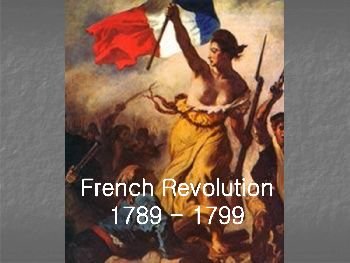
The French Revolution of 1789 was the first in Europe to overthrow a monarchy; the Russian Revolution of 1917 overthrew the last absolutist monarchy in Europe. This in itself marks the event as significant in European history, but the influence of the Russian Revolution was far more widespread, as was that of the French Revolution. Although the French revolutionaries attempted to put into practice some of the principles and ideals of liberalism and the Enlightenment, their Russian counterparts not only built on these principles but also based their state on the nineteenth century ideals of Marxian socialism. In this, they had some successes, but at enormous costs.
On the positive side of the ledger, one can argue that the communists, particularly under Stalin, were able to transform Russia from a rural, economically undeveloped country into a major economic, political, and military power. By the 1960s, in fact, it was one of two global superpowers, along with the United States. If Stalin had not achieved his goal of industrial and military development, the Soviet Union probably would not have been able to sustain the Nazi German onslaught of World War II, when it came in 1941.
Furthermore, the Soviet Union was able to achieve this economic development while simultaneously pursuing the Marxist goals of social welfare and egalitarianism. There was virtually no unemployment in the Soviet Union, and because of that, no hard-core poverty. Health care and education (through the university level) were free, and housing, food, and mass transit were heavily subsidized by the state and inexpensive for consumers. And, although the government never tried to achieve complete equality (and many people complained of the privileged status of the communist elites), the differences between the rich and poor were far fewer than in capitalist countries. Marx would have been pleased with these achievements.
These gains, however, came with substantial costs in both human lives and human rights. The worst came during the Stalin years: Several million lives were lost during the forced collectivization after 1929, and millions more died in the Gulags, the forced labor camps of Siberia and the frozen north. The situation improved after the death of Stalin, but the Soviet political system remained throughout its history a single-party state, brooking no political competition, protest activity, or independent press. All books, periodicals, and mass media were censored. Most churches, synagogues, and mosques were closed or destroyed. People who dared challenge the regime or its policies were subject to arrest and possibly death in the Stalinist era and imprisonment or exile in the years after that. People had little choice about where they worked or lived, were restricted in their travel within the country, and could travel abroad only with difficulty.
Despite all this, the Soviet Union became increasingly powerful and influential on the world stage. Through the Communist International (the Comintern), Moscow helped establish communist parties and encourage revolutionary movements all over the world, including the Communist Party of China, which won power in that country in 1949. The Soviet Union bore the brunt of the losses from Germany during World War II, but it was the Soviet army that managed to liberate Eastern Europe from the Germans and to seize Berlin and force German surrender in 1945.
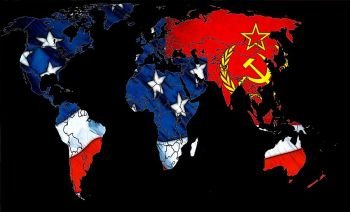
This placed Moscow in a position of unparalleled strength in the center of Europe and brought it into conflict with the other new global power, the United States, in the emerging Cold War. Elsewhere in the world, the Soviet Union and its economic successes became a model for leftists, anti-imperialist’s, and revolutionaries all over the Third World. Indeed, by the 1970s, almost half the world’s population was living under governments inspired or supported by the communists of Russia.