The Necessary War – WWI BBC Documentary
Eye Witness to History – World War I
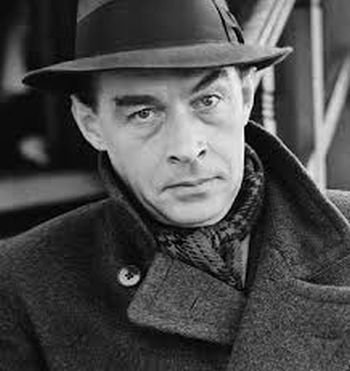
Erich Maria Remarque Biography
The Tinderbox: Nationalism in the Balkans
Ethnic nationalism can work to break up multinational states, as it was doing in Austria-Hungary, but it can also move to create new states made up of people of common ethnicity. The strongest nationalist movement at this time occurred among the Slavic peoples in the Balkan peninsula, who included Bulgarians, Macedonians, Serbs, Croats, Montenegrins, Bosnians, and Slovenes. For many of them, anxious to be out from under the control of Austrians, Hungarians, or Ottoman Turks, the goal was to create a single south-Slavic nation, what was eventually to materialize as Yugoslavia (which means “south Slav”). Serbia, which had gained independence from Ottoman Turkey in 1878, saw itself as the leader of south-Slav nationalism.
At its height, the Ottoman Empire controlled all of the Balkan Peninsula, reaching even to the gates of Vienna. But since the end of the seventeenth century, the empire had been in retreat, gradually shrinking toward its core, in what is now Turkey. As the Ottoman Empire weakened, other European states scrambled to fill the vacuum in southeastern Europe. At the same time, the various nationalities began asserting their own demands for autonomy or independence. Ottoman Turkish defeats at the hands of the Russians in the 1870s, for example, resulted in the creation of the new independent states of Serbia, Bulgaria, and Romania, all carved out of Ottoman lands. In 1908, Austria-Hungary annexed Bosnia, also a remnant of the Ottoman Empire, almost leading to a war with Russia and Serbia, which had its own claims on Bosnia. During 1912 and 1913, three regional wars erupted in the Balkans, all involved with the dismemberment of Turkey or the disposal of its European territory.
The Spark: The Assassination
The European situation in 1914, then, was a tinderbox of growing rivalries among the major powers, huge armies prepared for rapid mobilization, insurgent nationalism, and a collapsing Ottoman Empire. The spark that lit this tinder was the assassination of the Austrian archduke Francis Ferdinand, heir apparent to the Habsburg throne, while he was reviewing troops in Sarajevo, the capital city of recently annexed Bosnia. The man who shot the archduke and his wife was a young Bosnian Serb nationalist named Gavrilo Princip. The Austrian government quickly blamed Serbia for the incident and demanded that the government of Serbia crack down on nationalist and terrorist groups within its borders. The Austrian emperor, Francis Joseph, was horrified at the murder of his nephew, but also concerned that the assassination was, in a way, an attack on all European monarchs and their empires. His military chief of staff was even more concerned about Austria itself:
Austria-Hungary must draw the sword against Serbia. . . . It is not a question of a knightly duel with “poor little” Serbia, as she likes to call herself, nor of punishment for the assassination. It is much more the highly practical importance of the prestige of a Great Power. . . . The Monarchy has been seized by the throat, and has to choose between allowing itself to be strangled and making a last effort to prevent its destruction.
Germany’s Kaiser Wilhelm, a close friend of the murdered archduke and an ally of Austria, saw the situation in a similar light and gave a “blank check” to Austria to make military retribution against Serbia.
Austria issued an ultimatum to Serbia that would have drastically compromised Serbian sovereignty, thus making it almost impossible for the Serbs to comply fully. Even so, Serbia yielded on almost all points of the ultimatum. Austria deemed the concessions insufficient, broke diplomatic relations, declared war on July 28, and the next day, began an artillery bombardment of Belgrade, the Serbian capital.
The Escalation
This probably could have remained a localized war between Austria and Serbia were it not for the web of alliances and military mobilization schedules. Indeed, Austria foolishly expected that support from Germany would keep Russia (and others) out of the conflict. But the Austrian ultimatum against Serbia prompted Russia to mobilize its military, hoping this show of resolution would force Austria to back down. Germany demanded that the Russians halt their mobilization; when Russia did not, Germany began its own mobilization. To make matters worse, the German plan, envisaging a probable two-front war (because of Russia’s alliance with France) called for German troops first to be deployed against France and, after a quick victory there, to be turned toward the Russians.
Increasingly alarmed at the direction events were taking, the German Kaiser initiated an exchange of telegrams with the Russian tsar, his cousin (they addressed each other as “Willy” and “Nicky”), attempting to head off the conflict. But military commanders in both countries asserted that the military mobilization schedules, once put in motion, could not be reversed. On August 1, Germany declared war on Russia; two days later, Germany declared war on France; and, within days of that, German troops advanced toward France through neutral Belgium, thus bringing England into the war. The incident in the Balkans had become a Europe wide war, with the Central powers of Germany and Austria confronting the Allies of England, France, and Russia.
The War
In August 1914, widespread enthusiasm for the war was evident in virtually every capital city. Young men flocked to military recruiting centers to enlist. Almost everyone expected the war to be a short one and that the soldiers would be home by Christmas. Events turned out otherwise, however, and in the end, the war was neither quick nor glorious. Because all sides now possessed new weapons and technology, nobody could quickly prevail, and military campaigns soon bogged down in trench warfare and attrition. The scale of the slaughter was unprecedented and horrific. Some single battles, for example those at Ypres and Verdun, saw tens of thousands of deaths per hour and hundreds of thousands of casualties overall. The battle of the Somme, lasting for four months of 1916, cost the Germans five hundred thousand men, the British four hundred thousand, and the French two hundred thousand, and nothing of value was gained by either side.
New military technology rendered the conflict even more destructive and dramatically widened the scope of warfare, increasingly bringing civilians and noncombatants under fire. The newly perfected machine gun increased firepower on the ground a hundredfold. Poison gas proved so effective that, by the end of the war, half of all German artillery shells carried gas. During the war, over a million casualties were attributed to gas, with almost one hundred thousand fatalities. The German Zeppelin (blimp) raids on London in 1915 were the first deliberate attacks on civilian targets during warfare. And the submarine, first used by the Germans to attack supply ships on their way to Britain, ended up sinking passenger liners as well. The German sinking of the British liner Lusitania in 1915, with the loss of 1,200 lives, including 118 American citizens, inflamed U.S. sentiment against the Germans and helped draw the United States into the war.
The American historian and diplomat George Kennan sums up the brutal and demoralizing nature of the World War I battlefield:
The deadlock was not long in establishing itself on the western front, and it is hard today to visualize the full hideousness and wastefulness of what ensued: those four long years of miserable carnage; that appalling phenomenon of great armies of men facing each other in the muddy trenches day after day, month after month, year after year, destroying each other hopelessly, systematically, with artillery barrages, with the as yet un-answered weapon of the machine gun, with trench mortars and barbed wire and even poison gas, until victory or defeat came to seem less a product of military leadership and skill and spirit than a matter of some grisly mathematics of cannon fodder and slaughter.
In the end, some eight million soldiers were killed in the war, and probably only one in ten saw the man who killed him.
The end of the war came not so much from any particular military successes on the battlefield, but rather from general exhaustion and from two events occurring in 1917: the Russian Revolution, which was soon to take Russia out of the war, and the entry of the United States into the war. Russia had been battered from the start of the war, and Tsar Nicholas II was a bungling and incompetent ruler. At times, Russian soldiers, mostly peasants, were sent into battle without weapons and sometimes without even shoes. The enormous casualties, food shortages, and economic collapse increasingly turned the population against the war-and against the monarchy. In March 1917, in the capital, St. Petersburg, troops mutinied, workers went on strike, and the tsar was forced to abdicate. A provisional government took power but did not take Russia out of the war, thus eroding the new government’s popularity. Meanwhile, the Marxist revolutionary leader Vladimir Lenin returned to Russia from exile, called for “peace, land, and bread,” and in November led his Bolsheviks in an overthrow of the provisional government and a seizure of power in what became known as the October Revolution. The new government signed a treaty with the Germans in March 1918 and withdrew from the war.
The closing of the eastern front allowed the Germans to turn all of their forces toward the West, but by this time, the United States had entered the war, and American troops were landing in France at the rate of 250,000 per month. The American president, Woodrow Wilson, had been reelected in November 1916, pledging to keep the United States out of the European war. The United States had become increasingly enmeshed in the conflict, however, supplying the Allies with both food and weapons. When, in early 1917, the Germans resumed unrestricted submarine warfare, they sank several American ships, leading the United States to declare war on Germany in April “to make the world safe for democracy,” in Wilson’s words. The country mobilized quickly. In 1916, there were only 130,000 men in the U.S. armed forces; by the end of 1917, 3.5 million men had enlisted, and by 1918, they were on their way to Europe. United States intervention in the war tipped the balance and forced the Germans to sue for peace in November 1918, bringing the war to a close.
A Sweet and Honorable Death
At the outbreak of World War I, most people had a romantic image of warfare, and most literary works on warfare romanticized the glory, honor, and adventure of war. In Britain, for example, many schoolboys knew the line from the Latin poet Horace, Dulce et decorum est pro patria mori (It is sweet and honorable to die for your country). These notions were shattered by the grisly massacres and huge casualties of World War I, and this new realism was reflected in poems, novels, and stories that emerged from that war. Erich Maria Remarque, for example, after serving in the German army and being badly wounded, depicted the brutal, grim, and demoralizing experiences of ordinary soldiers in his All Quiet on the Western Front.
Another young writer, Wilfred Owen, enlisted in the British army in 1915, was wounded and sent home to England to recover, and then returned to the front in August 1918. One of his most moving poems, “Dulce et Decorum Est,” depicts the horrors of poison gas, which seized one of his comrades:
In all my dreams, before my helpless sight,
He plunges at me, guttering, choking, and drowning
If in some smothering dreams you too could pace
Behind the wagon that we flung him in,
And watch the white eyes writhing in his face,
His hanging face, like a devil’s sick of sin;
If you could hear, at every jolt, the blood
Come gargling from the froth-corrupted lungs,
Obscene as cancer, bitter as the cud
Of vile, incurable sores on innocent tongues,-
My friend, you would not tell with such high zest
To children ardent for some desperate glory,
The old Lie: Dulce et decorum est
Pro patria mori.
Owen was killed in action exactly one week before the November armistice, at the age of twenty-five.