
“Freud” – Sigmund Freud Biograpical Drama – Full Movie
SOCIAL DARWINISM AND EUROPEAN HISTORY
In the economic realm, social Darwinism probably had more influence in the United States than in Europe. But Spencer’s ideas were also adopted in support of many other movements and philosophies in nineteenth- and twentieth-century Europe, many of them with sinister motives or catastrophic outcomes, including militarism, racism, imperialism, and eugenics.
Both Darwin’s and Spencer’s influential writings coincided with the rapid expansion of European colonialism in the second half of the nineteenth century. In that age of imperialism, European states created colonial empires all over the Southern Hemisphere, especially in Africa, during the closing decades of the century. England was the most active imperialist state during this period, and many people in that country justified their domination of other cultures, especially in Africa, with claims of racial superiority. The British mission in Africa was said to carry “the white man’s burden” to bring European virtues, religion, law, and civilization to lesser, uncivilized races. Much of this claim to racial superiority was couched in the language of social Darwinism. European society was already at a more “evolved,” or developed, stage than society in Africa, and spreading European influence in Africa would facilitate the evolution of those cultures.
It was not a far stretch from the arguments of social Darwinism to notions of racial supremacy to considerations of “cleansing,” or the elimination of racial groups considered inferior. Many of these ideas had been around for a long time, of course, and had antecedents in other trends and philosophies, but they were given a certain scientific validation and respectability by Darwinism. A prominent nineteenth-century German historian, for example, wrote that “brave people alone have an existence, an evolution or a future; the weak and cowardly perish, and perish justly.”
Parallels exist between the thoughts of that historian and the ideas of Adolf Hitler (1889–1945). In his book Mein Kampf (My Struggle), published in 1926, Hitler drew on the ideas of the struggle for existence and the survival of the fittest to provide a quasi-scientific justification for the need for racial purity, which became a core doctrine of the Nazi movement. Hitler argued against the “crossing” of people who were “not at exactly the same level.” Drawing indirectly on ideas from Darwin and Spencer, he wrote:
No more than Nature desires the mating of weaker with stronger individuals, even less does she desire the blending of a higher with a lower race, since, if she did, her whole work of higher breeding over perhaps hundreds of thousands of years, might be ruined with one blow.
Employing these ideas once he gained power in Germany, Hitler called for preserving the purity of the Aryan race by selective breeding and for the elimination of non-Aryans from Germany. This became the basis for his effort to exterminate all Jews-his “final solution” to the problem of racial mixing-and the consequent horrors of the Holocaust. Perhaps it is unfair to attribute these repulsive philosophies and events to Darwinism, as usually they were based on a twisted interpretation of Darwin’s theories, but Darwin did occasionally reveal some racist tendencies of his own, foreseeing, for example, that “at no very distant date . . . an endless number of the lower races will have been eliminated by the higher civilized races throughout the world.” Darwin was not alone in these beliefs, of course, which were pervasive in England and throughout much of Europe at that time. His theories about natural selection and survival of the fittest, though, reinforced and strengthened theories of white, European domination of the world.
THE INFLUENCE OF DARWINISM
Darwinism changed science, religion, society, and the way in which we think about ourselves as human beings. Its most dramatic impact was on the sciences; Darwinian theories of natural selection and evolution constituted a scientific revolution, with an impact equal to those sparked by Galileo, Copernicus, Newton, and, later, Einstein. Darwin’s evidence for his theory of evolution was so persuasive that the theory was eventually accepted by virtually all scientists, and evolution remains the foundation of the biological sciences. Darwin’s influence on science spread beyond biology, though. His work stimulated the idea that scientific methods could be applied to the study of humans, as well as natural phenomena (as did Marx’s work), leading to the emergence of the social sciences: ethnography, economics, sociology, anthropology, psychology, and political science.
Darwin’s work and his theories separated science from faith and religion; science and religion were not necessarily incompatible, but they addressed different issues. Before Darwin, most people, including most scientists, viewed questions of human origins and human nature largely in religious terms. In this sense, Darwinism was another step in the gradual secularization of European society, and for that reason many churches and people of faith resisted it staunchly. Over time, though, most churches and most people, as well, came to accept evolution. Among developed countries, only in the United States did a substantial number of people continue to reject the theory of evolution. In the process, churches and theology also changed, moving away from literalist interpretations of the Old Testament and adapting to or incorporating evolution and other modern scientific findings. A revolution occurred in our understanding of ourselves as human beings, our development as a species, our relationship to our environment and our place in the universe-issues central to all religions. Thus, paradoxically, Darwinism also changed religion. As we have seen, Darwinism also had less benign consequences. The Darwinian spin-off of social Darwinism was employed to justify imperialism, racism, and, ultimately, the Holocaust. Now, social Darwinism is largely discredited, at least in Europe, but continues to live on in some conservative doctrines that flirt with the notion of the survival of the fittest, arguing against any government intervention on behalf of the poor, the weak, or the sick.
Darwinism can be compared to Marxism in that both attempted to develop scientific theories about human development that were comprehensive and universal in their application. Indeed, Friedrich Engels paired the two in his eulogy at Marx’s graveside: “Just as Darwin discovered the law of development of organic nature, so Marx discovered the law of development of human history.” Both men had an enormous impact on the development of European society and on world history. Darwin’s theories, however, have outlived those of Marx in terms of their contemporary influence. But even Darwin’s authority had limits. At the time of his death in 1882, a British parliamentary petition won him a burial in Westminster Abbey, a mark of high honor. At his funeral, his cousin Sir Francis Galton, a professor and pioneer of the eugenics movement, suggested that Westminster Abbey’s magnificent Creation Window be replaced by something more suited to evolution. It was not.
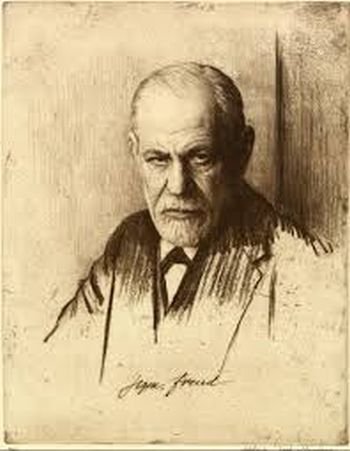
Sigmund Freud: Psychology and Civilization
Karl Marx and Charles Darwin both developed scientific theories about the development and evolution of societies or species, and both rejected religious thought as unscientific. The Viennese doctor Sigmund Freud (1856–1939) continued this tradition, using observation and experimentation to develop a new science of the human mind and a method for treating neuroses, which he dubbed psychoanalysis. Like Darwin, he was a multifaceted genius who drew on many disciplines to develop his ideas and theories. Freud emphasized the influence of the unconscious and the irrational in explaining human behavior, a theory that challenged contemporary emphasis on rational and cognitive processes. His work revolutionized our thinking about the motives and sources of human behavior and gave rise to a new form of treatment of mental illness and anxiety called “talk therapy.” Many of his ideas and concepts have become mainstream in Western thought: the Oedipus complex, dream analysis, sexual repression, the pleasure-unpleasure principle, transference, and the mind’s division into id, ego, and superego.
Freud used the language of both Marx and Darwin in thinking about the development and future of civilization, especially after the catastrophe of World War I. He dismissed religion’s place in man’s evolution “as a counterpart to the neurosis which individual civilized men have to go through in their passage from childhood to maturity.”He accepted Marx’s emphasis on economic factors in shaping individuals and societies, but believed Marx left out the important psychological element. The future of civilization, he argued in Civilization and Its Discontents would be played out in the struggle between Eros (love) and Thanatos (death). The purpose of Eros “is to combine single human individuals, and after that families, then races, peoples and nations, into one great unity, the unity of mankind.” But this was counteracted by the death instinct. So, the evolution of civilization would be a struggle between Eros and Death, between the instinct of life and the instinct of destruction, as it works itself out in the human species. This struggle is what all life essentially consists of, and the evolution of civilization may therefore be simply described as the struggle for life of the human species.