
Thomas Malthus and Population Growth
DARWINISM AND RELIGION
Darwinism posed a major challenge to religion and especially to the conservative and fundamentalist Christianity of Victorian England. But it was also a challenge to natural theology, a popular philosophical current in the eighteenth and nineteenth centuries, which understood God and his creations based on reason rather than Scripture. In this view, the beauty, complexity, and harmony of nature could be explained only by God’s design. Darwinian Theory, on the other hand, had no place for divine intervention in the creation or molding of species, including human beings. An utter incompatibility existed between Darwin’s theory of evolution and a literal interpretation of the Bible, particularly of the creation and Adam and Eve stories in Genesis. But the unpredictability of natural selection was also incompatible with the intelligent-design argument of natural theology.
Well before Darwin, challenges were made to a literalist interpretation of the Bible: The theories of Copernicus and Galileo removed the Earth from the center of the solar system, and evidence from geology (especially by Lyell) and paleontology about the history of the Earth flew in the face of the shortened timetable presented in Genesis. But evolutionary theory was seen as more critical of religion because it focused on the nature of human beings, a central element to all religious doctrines. By the mid nineteenth century in continental Europe, some critical evaluations of the Bible had been made, with a growing tendency to interpret some of the books and passages as allegorical rather than literal.
But in England, where a conservative reaction following the French Revolution had also affected religion, fundamentalism was still dominant among both the clergy and the population. A few years after the publication of Origin of Species, at Oxford University, a bastion of conservative theology, eleven thousand Anglican clergymen signed “The Oxford Declaration,” declaring that if any part of the Bible were admitted to be false, the whole book might be brought into question. They stood, therefore, upon the absolute inerrancy of the Bible. This position, of course, left little room for accommodation or compromise with the new science of Darwinian evolution.
Over the years, people of faith gradually accommodated to the ideas of evolution, but the process was a slow and painful one. Not until the twentieth century did most churches and theologians come to terms with evolution by accepting that faith and science were separate spheres, but not necessarily incompatible ones. Increasingly, the English, like most Europeans, came to regard sections of the Bible, especially Genesis, as stories that contained truth, but were not necessarily literally true. Only late in the twentieth century (1996) did the Roman Catholic Church finally come to terms with evolution when Pope John Paul II formally acknowledged that the theory of evolution was “more than just a hypothesis.” Faith, he said, could coexist with evolution, as long as it was maintained that only God can create the human soul.
Because Darwin said nothing about the human soul, there seemed to be room for peaceful coexistence in those words. By the beginning of the new millennium, the conflict between evolution and creationism was no longer an active one in Europe; only in the United States was there still widespread skepticism about evolution.
SOCIAL DARWINISM
Charles Darwin’s ideas about the struggle for existence and natural selection applied only to the biological evolution of animal and plant species, but these concepts had appeal for certain political thinkers and social scientists as well. Social Darwinism refers to the many and varied sets of ideas that try to apply Darwinian evolutionism to descriptions of the way society is, or should be, constituted. Some social Darwinists focused on the competition between social groups or nations, rather than just among individuals. And, most preached not only that the fittest had survived but that only the fittest had the right to survive, so that the theory became a prescription for policy and not just a description of history and nature.
Many different people and ideologies adopted Darwinian Theory for their purposes. The Irish playwright George Bernard Shaw wrote about Darwin that “he had the luck to please everybody who had an axe to grind.” But the most prominent advocate of social Darwinism was the English philosopher Herbert Spencer (1820–1903). Spencer had actually worked out his own theory of social evolution even before the publication of Darwin’s Origin of Species; in fact, Darwin drew on Spencer’s work in his own writing. In an 1852 essay, Spencer coined the phrase “survival of the fittest,” which Darwin adopted and later added to one of his chapter titles in Origin of Species. Spencer, like Darwin, was influenced by the writing of Thomas Malthus.
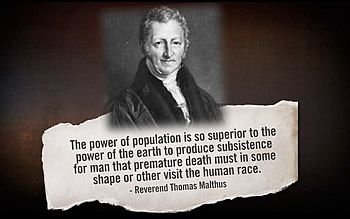
Following Malthus, Spencer argued that population pressure on resources led to a struggle for existence among people, with the most intelligent people surviving this struggle. Spencer felt that this process would lead to increasingly intelligent human beings and increasingly strong societies, with modern capitalism as the pinnacle of human evolution. He therefore argued against any interference with this evolutionary process and the struggle for existence, especially by government. He opposed any government programs that might assist the poor or the weak, including state support for education or health care, antipoverty programs, or state regulation of housing. Without such programs, Spencer felt, the weakest would perish, the strong would survive, and society would improve. He allowed that there would be much suffering in this process but wrote that “the process must be undergone, and the sufferings must be endured.” In his essay “Poor Laws,” published eight years before Darwin’s Origin of Species, he wrote unblinkingly about the necessity for the poor to endure the consequences of this struggle: It seems hard that widows and orphans should be left to struggle for life or death. Nevertheless, when regarded not separately, but in connection with the interests of universal humanity, these harsh fatalities are seen to be full of the highest beneficence-the same beneficence which brings to early graves the children of diseased parents, and singles out the low-spirited, the intemperate,
and the debilitated as the victims of an epidemic.
Spencer was an arch supporter of laissez-faire economics and the ideas of Adam Smith, who also opposed government involvement in the economy. His ideas, then, were often picked up and propagated by advocates of unfettered capitalism. This was especially true in the United States, a country born at about the same time as capitalism, where both individualism and the idea of limited government were strongly ingrained. The American industrialists Andrew Carnegie and John D. Rockefeller were both fans of Herbert Spencer. Rockefeller is quoted as saying in a Sunday school address, the growth of a large business is merely a survival of the fittest. . . . The American Beauty rose can be produced in the splendor and fragrance which bring cheer to its beholder only by sacrificing the early buds which grow up around it. This is not an evil tendency in business. It is merely the working out of a law of nature and a law of God.
Darwin’s Finches and Pigeons
During Darwin’s voyage on the Beagle, he spent five weeks exploring the Galapagos Islands, a wild archipelago near the equator, 650 miles west of Ecuador. He was astonished at the number and variety of plants and animals on these small islands and assiduously cataloged them. Among those was “a most singular group of finches,” consisting of thirteen different species, each with different characteristics. Darwin was particularly intrigued by the variety in shape and size of the beaks of these birds: “Seeing this gradation and diversity of structure in one small, intimately related group of birds, one might really fancy that from an original paucity of birds in this archipelago, one species had been taken and modified for different ends,” he wrote in his diary. Biology textbooks often display pictures of Darwin’s finches in their discussion of evolution. But it was years after these observations on the Galapagos that Darwin began to conceptualize his theory of evolution by natural selection. Back in England, he became interested in the idea of plant and animal breeding and the ways in which breeders could cross different breeds to develop different, sometimes “better,” varieties of orchids, roses, strawberries, dogs, or horses. At his home in Downe, two decades after the voyage of the Beagle, he began collecting and breeding pigeons; soon he had fifteen breeds under his care, including tumblers, trumpeters, laughers, fantails, pouters, polands, runts, dragons, and scandaroons, many of them so different from the others as to appear to be an entirely separate species. Yet all of them bore resemblance to the rock pigeon.
Darwin hypothesized that all of his pigeon breeds descended from the rock pigeon and proceeded, through logic and the process of elimination, to rule out competing hypotheses. For example, if these fifteen breeds had not derived from one common ancestor over a period of time, then one would expect to find them descending from “at least seven or eight aboriginal stocks” because only that number could account for the variety of his existing pigeons. But there was no evidence, historically, in the wild or in captivity, of these seven or eight other kinds of birds. So, in Darwin’s view, they must have descended from one, either by natural selection or by artificial selection through breeding.
Natural selection and evolution are difficult to demonstrate by direct observation, as the changes in species occur over long periods of time, as in the case of the Galapagos finches. But people could understand the breeding of pigeons and even observe, to a certain extent, the results of selective breeding. For this reason, Darwin opened Origin of Species with a discussion of his pigeons.