BREAKING NEWS: Nelson Mandela Dead Aged 95 | OFFICIAL News Announcement President Jacob Zuma
Published on Dec 5, 2013
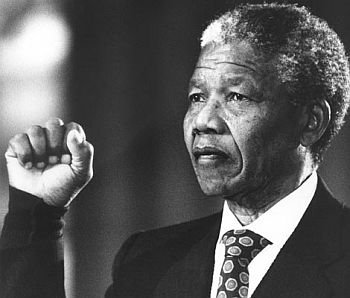
Nelson Mandela, the former South African president whose stubborn defiance survived 27 years in prison and led to the dismantling of the country’s racist and brutal apartheid system, has died. Mandela was 95 years old.
South Africa’s president says Nelson Mandela has died at age 95. Jacob Zuma says “We’ve lost our greatest son,” South African President Jacob Zuma said in announcing Mandela’s death.
Mandela had a number of issues with his health in recent years including repeated hospitalizations with a chronic lung infection. Mandela had been listed in “serious but stable condition” after entering the hospital in June before returning to home to receive continued medical care.
In April, Mandela spent 18 days in the hospital due to a lung infection and was treated for gall stones in December 2012.
Mandela’s public appearances had become increasingly rare as he dealt with his declining health.
His last public appearance was in July of 2010, when he attended the final match and closing ceremonies of the soccer World Cup held in South Africa.
In 2011, Mandela met privately with Michelle Obama when the first lady and her daughters traveled to South Africa.
Mandela and the Legacy He Leaves Behind
One of the giants of the 20th century, Mandela’s career was marked not only by his heroic resistance to racism, but also by his poised and soft spoken demeanor.
After enduring nearly three decades of prison, much of it at hard labor in a lime quarry, Mandela emerged as a gentle leader who became South Africa’s first black president. He was awarded the Nobel Peace Prize for his leadership in ending apartheid without violence, and later became a global statesman who inspired millions people around the world.
Mandela was born in 1918, the son of a tribal leader, in a remote village in South Africa.
His tribal name, Rolihlahla, meant “troublemaker,” a moniker Mandela would more than live up to in his lifetime.
In 1952, he emerged onto the national stage when he helped organize the first country-wide protests called the Defiance Campaign. That same year he opened the country’s first black law firm.
Ruth Mopati, his secretary at the firm, wrote about the way he was then in the book “Mandela,” saying, “He was able to relate to people with respect and therefore he was respected in return.”
While Mandela’s party, the African National Congress, had always been dedicated to non-violence, in 1960 the ANC was banned to prevent further protests after police shot dead 69 black protestors in what became known as the Sharpeville massacre.
The events radicalized the organization and led to the creation of the ANC military wing, for which Mandela became its first commander in 1961.
In 1962, Mandela was sent to prison on a charge of inciting a strike.
“At 1:30 in the morning, on March 30, I was awakened by sharp, unfriendly knocks at my door, the unmistakable signature of the police. ‘The time has come,’ I said to myself as I opened the door to find half a dozen armed security policemen,” Mandela said.
Two years later, Mandela was sentenced to life in prison for sabotage and conspiracy to overthrow the white government. Much of the next 27 years in prison were spent in the infamous Robben Island prison where he did hard labor in a lime quarry.
During his nearly three decades behind bars, Mandela would become a myth. The government even banned any use of Mandela’s image or words, leaving a whole generation to grow up knowing little about the world’s most famous political prisoner.
Nelson Mandela Teamed Up With White Leader F.W. de Klerk
Mandela spoke about his time in his autobiography: “A nation should not be judged by how it treats its highest citizens, but its lowest ones — and South Africa treated its imprisoned African citizens like animals.”
Formal or “bourgeois” liberties
Formal or “bourgeois” liberties formerly condemned now had to be resurrected as providing the legal carapace of the Christian state and even the spiritual interstate order. Arguably, however, these innovations were in the service of keeping personalist communitarianism the same in new circumstances.
It is true, though, that this substantive vision now prompted a less critical attitude toward formal guarantees and political structures or might indeed invest them with considerable signifi cance. One could say something similar of Pius XII who, having adopted the rhetoric of the rights of the person, was by the time of his 1944 Christmas message following Maritain by endorsing democracy on condition of differentiating between its Christian communitarian and reprobate secularist version.
“Defend These Human Rights!” British Catholic John Eppstein wrote in a 1948 pamphlet, explaining that this meant la défense de la personne humaine fi rst discovered by Catholics in the later 1930s. (“This was somewhat different from the familiar enumeration of ‘the Rights of Man and the Citizen’,” he explained, “since by ‘the human person’ the Christian opponents of State absolutism meant particularly man as a spiritual being.”) The work of saving the person from its anti-democratic votaries arguably depended on the deeper commitment to a moral and communitarian ethos, which allowed leaving those old versions behind almost as if they had never been. “To avoid all misunderstanding, I must add,” de Visscher, the international lawyer, put it rather charmingly in 1947, “that the personalist conception must be defended against some of those who claim it and who have sometimes compromised it in the very process of advocating for it.”
Even Mounier, who remained in France, embraced rights after a fashion – albeit very briefl y. After having fl irted with identifying the National Revolution as a personalist one – he criticized Maritain for his treasonous defense of American democracy before being shut down by the Vichy regime – Mounier penned a declaration of “the rights of persons and communities.” This made an importantdifference to his followers, many of whom essentially made Maritain’s move to reconcile personalism with formal democracy while Mounier notoriously moved from non-conformism to the far left in the postwar era. Mounier had, it is clear, a far more serious impact on Belgium and France, whereas Maritain’s message found its most signifi cant hearing in Italy and Latin America. Most important, followers of Mounier in the briefl y if meteorically successful postwar Mouvement républicain populaire were able to be more faithful than Mounier was to his brief rights-based revision of personalism.
A good example of a Mounier disciple who played a major role in the postwar European human rights moment – besides Charles de Visscher – was François de Menthon, who headed the French prosecution team at Nuremberg. In his spectacular opening address, now understandably attacked for developing the juristic novelty of “crimes against humanity” while failing to mention which part of humanity actually suffered the crimes, Menthon identifi ed the German acts as “crimes against the spirit,” a clear reference to interwar and wartime anti-materialism that contemporaries, unlike Nuremberg’s many historians since, would have readily identifi ed as such. “National Socialism,” he thundered, “ends in the absorption of the personality of the citizen into that of the state and in the denial of any intrinsic value to the human person.” Even his glancing reference at the end of his address to “citizens of the occupied countries categorized as Jews” singled out the damage done to “their personal rights and to their human dignity.” No one else, including Robert H. Jackson, used similar language at the time: The originally personalist framing of crimes against humanity, and their deep affront to the rights of the dignifed human person, has quite simply been missed.
As for Maritain, he continued to defend a personalistic conception of human rights wherever he went during the years after the war: in his work for UNESCO on the philosophical grounding of human rights, as French Ambassador to the Holy See for a few years (where he decisively infl uenced later popes who would fi nally overcome institutional resistance within the Church to a full move to human rights language two decades later), or Princeton University. But though Maritain was certainly the most prominentthinker on the postwar scene to defend the new concept, it was political shifts that made its fortune in the Western European polities that would become its early homeland. Still, because Catholicism aspired to be and to some extent was even then a global phenomenon, there should be no surprise in discovering that the personalistic framing of the global human rights “moment” of the era affected the language not simply inside Continental Europe but far beyond it. This included, most obviously, the move to human rights at the level of international organization, essentially rhetorical though it was (as European international lawyers were not wrong to note).
Indeed, the human person became a key figure of thought at the United Nations, thanks to Christians impressed by papal language who injected it into founding documents. In a multiculturalist age, it is tempting to look back at storied fi gures in the origins of human rights at the United Nations and claim them for the third world and alternative values, when in fact they themselves insisted – before the right audiences at least – that they were making a Christian contribution. Charles Malik, the Lebanese Christian who is responsible for the personalistic language of the Universal Declaration of Human Rights proper, is a case in point. “In Christianity, the individual human person possesses an absolute value,” Malik explained in 1951, for instance. “The ultimate ground of all our freedom is the Christian doctrine of the absolute inviolability of the human person.” Carlos Romulo, Philippines delegate to the United Nations and a crucial figure in the GeneralAssembly debates over the Universal Declaration, provides another illuminating example, as his lectures on the implicit foundation of new impulses in public international law make plain. “Of all the acts of the United Nations,” he argued in the period, “the Universal Declaration of Human Rights has demonstrated most clearly the tendency… to work out a system of international law conforming as closely as possible to natural law.… We may yet find ourselves confronted by the seeming paradox of Christianity emerging as the only practical program for lasting peace and equitable order in our troubled world.”
There was, however, very little true international human rights law for decades, and the real story of human rights in the early postwar period, with due allowance for the importance of symbolism, is of its nationalization and regionalization. I do not claim that the resumption of the interwar vogue of declarations of rights in the postwar domestic constitutionalism (at least outside the British sphere until the early 1960s policy change) refl ected anypersonalistic consensus. Early steps in European unifi cation and the – also initially quite unimpressive – European human rights regime, however, very much did. As Wolfram Kaiser has now shown, Christian Democracy, hegemonic starting in this era as the Continent restabilized, made personalist communitarianism the fundamental ideology of its work nationally and construction of Europe regionally. “In the inter-war period Catholicism had been closely linked to nationalism and the League of Nations had been presented as being a dangerous centre of masonic power,” Richard Vinen observes, in a similar vein. “After 1945, this changed. Catholic organizations were enthusiastic proponents of international harmony, within the western bloc at least, and Christian Democrat parties in all European countries were so intimately linked to European integration that some began to feel that Europe was being built under the aegis of the ‘catholic international.’”
It is true that personalism, in both Maritain’s and Mounier’s renditions, could have had left-wing implications, and to some extent did, prompting an evanescent “left Catholicism” that quickly sputtered. This was not, however, because of any dispute about the role of the state in the economy: Though Continental Europeans needed Americans in the 1940s; it was not to learn commitment to an economic New Deal. As de Visscher argued, no one believed that personalism implied a return to “the economic liberalism of the eighteenth or nineteenth centuries.” Rather, Christians on the left and right agreed that some management of the economy was necessary, and diverged from there. Very quickly, as it turned out, left versions of personalism were extinguished, and the ideology underwrote a reinvention of conservatism in power. This “re-recasting of bourgeois Europe,” as one may call it, occurred under the political hegemony of Christian Democracy, even if one wants to see it as redounding to the benefi t of liberal capitalism in the long run. It shouldnot be surprising, therefore, that many of the chief founders of the European project, both in politics generally and in the tradition of European human rights specifi cally, were avowed personalists (for instance, Robert Schuman, Paul-Henri Spaak, and Pierre-Henri Teitgen ).
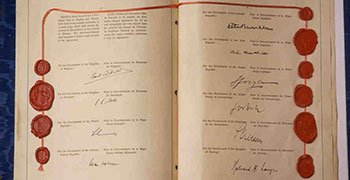
In its regionalized domain, human rights law gained only slightly more traction than on the global scene: The case of the European Convention of Human Rights (1950) involved – in the early decades when there was no right of petition and little serious activity, not least because of its derogability during colonial emergencies – much more ideological signaling about the values on which Western European identity depended than it did legally enforceable guarantees. The common Christian basis for unity mattered a lot here, only now what that meant was the centrality of the human person. The Convention itself, given signal British participation in its origins, is not an exception to this statement but illustrates how powerfully the revolt against materialism as the essence of Europe resonated in these years. As the Convention’s historian Brian Simpson has emphasized, it emerged thanks to Britain’s commitment to “spiritual union” of Western Europeans against communism, in Ernest Bevin’s own phrase. “In the event Bevin’s idea of a spiritual union came to be secularized,” Simpson comments with distinct understatement, “but this was not perhaps how it began.”
That the incipient Cold War would soon come to be widely understood in terms of the defense of religion and “the West” that the Church’s struggle against communism had already been for three decades was no doubt crucial in the larger postwar spiritualist consensus among Western European liberal-conservatives. In this sense, not just British commitment to “spiritual” values in international affairs, which had also antedated the war, could allow new collaborations with Continental religious ideology in the postwar years, of which the Convention is only one example. More generally, there had been important Protestant defenders of third-way personalism all along (perhaps most importantly, Swiss writer Denis de Rougemont, who had been a non-conformist close to both Marc and Mounier before becoming a Europeanist). The larger phenomenon, without which the picture would remain incomplete, is the cross-denominational ratifi cation of human dignityas part of an ecumenical reinvention of Christianity of both Catholic and Protestant varieties. A few notes on the German case – a crucial link in the Catholic international but with decisive Protestant participation – are useful in this regard.
There is no reason to hypothesize the direct impact of the various thinkers in the Francophone orbit on German developments, though the full ramifications of dissident networks across the Rhine in the interwar period are only beginning to be reconstructed. Certainly, the spiritualistic consensus and emphasis on dignitarian personalism – including sometimes human rights – prevalent in the early years after World War II suggest German Christians developed their own versions of the doctrines canvassed so far, based on easily available papal pronouncements. Even if it is true that they had no homegrown Maritain, a cognate spiritualist credo came close to providing the central ideological fulcrum of Christian Democracy in Germany, as Maria Mitchell has shown.
And just as in the case of the Universal Declaration on which it drew, the Federal Republic Basic Law’s opening affi rmation of human dignity has to be read not just retrospectively as a response to the Nazi past but prospectively as an allusion to the kind of moral future that would alone overcome that past. It is a mistake, in other words, to think about the “recivilization” of West Germany in the absence of the religious ideology that provided its justifi cation and explained the specifi c, nonsecular, moralized form it was supposed to take. Premier historian and Protestant conservative Gerhard Ritter thus spoke for many when, in 1948, he rallied to human rights, declaring that on the concept “depends nothing less than the survival of Western culture.… Despite all that has divided us for centuries, [there still exists] among the great nations of the one-time Christian West a community of moral-religious convictions which is broad and firm enough to serve as the foundation for a new solid structure of a Christian oriented social ethics.” Everything depended on human rights – but only so long (Ritter insisted) as they were treated as a reformulation of those ethics, and were clearly distinguished from “the mechanical principle of equality” of secular culture, which had given rise to atomistic capitalism and totalitarian collectivism alike.
The transformation of the political meaning of Christianity works far better than the continuation of fascism proper to explain the centrality of dignitarian rights not just in postwar politics, but also in postwar law – most famously, of course, postwar German constitutional law. Catholic jurists such as Willi Geiger and Josef Wintrich, although at times quite compromised during the Nazi regime, could come to draw directly on new papal traditions in the postwar years, to give a strongly communitarian view of the Basic Law. As a judge on the Bundesverfassungsgericht, Geiger, for instance, championed the centrality of dignitarian rights in public and private law in the early Federal Republic, which he saw as totally different in basis now that they had been reassigned from being Weimar-era products of the sovereign will to being rooted in the pre-constitutional nature of persons. But others found relatively independent routes to similar conceptions.
Protestant Gerhard Leibholz, an émigré in Britain during the war (and Dietrich Bonhoeffer’s brother-in-law), early established contact with the crucial intermediary fi gure between British and resisting German Protestants George Bell, bishop of Chichester. DevelopingProtestant versions of anti-totalitarianism emphasizing spiritual freedom, both worked together with Anglican Alec Vidler and Continental Catholic refugees to argue for a return of natural law based on the person. “Must not theonomic thinking demand that the State ought to abandon the idea of being a self-contained sovereign entity with only rights of its own, and acknowledge that it is a member of a community of nations each and all of which are bound to serve the rights of the human person?” Leibholz asked in 1946. In the postwar era, he returned to Germany, and as a judge on the nation’s highest constitutional court, he tirelessly promoted the centrality of the human personality (Persönlichkeit ) as the foundation stone of democratic order.
The intellectual and cultural sources for such a conservative rapprochement with the rights of man were not individualist in general or Kantian in particular, certainly not in the early going. In a fi rst moment, in fact, the dominant view was to connect the human dignity affi rmed at the outset of the Basic Law with naturalistic premises, and indeed “the dominant Catholic natural law teaching possessed in the fi rst postwar years such a powerful radiance amongst constitutional experts that Protestants themselves could not withdraw from it.” In a second moment, Catholic personalist and author of the leading commentary on the Basic Law Günter Dürig moved away from natural law to a theory of human dignity, and rights generally, as “objective values” (here Scheler’s old critique of Kant’s putatively subjectivist proceduralism in the name of material values provided the main inspiration). In both moments, personalist conceptions of dignity purporting to leave behind thechoice between individual and collective provided the dominant framework and affected many aspects of what human rights meant within the postwar constitutional framework. It may be true, then, that (as Mark Mazower has argued) there was a conceptual shift from group to individual in diplomatic and legal circles that set the stage for the post-World War II human rights moment. But there was also a shift afoot from the individual to the person, and in terms of its cultural meaning at the time; and the embedding of its ideas in postwar European politics, the Universal Declaration is a profoundly communitarian document – precisely a moral repudiation of dangerous individualism, albeit one equally intended to steer equally clear of communism. Indeed, in my view this is the key to placing the document – along with the human rights idea in general more securely in the ambiance of the war’s aftermath, as part of the moral reconstruction of Europe perceived to be necessary to stave off future world crises and conflicts.
One significant irony of this history is that the availability of a now far more familiar paradigm of the moral value of the person – one with roots in Roman law, and embedded in Immanuel Kant’s political thought – may easily promote oblivion of the primacy of a very different human person in the years when the Universal Declaration was framed and the concept was embedded in early postwar European law and common sense. Kantians were few and far between in the 1940s. In a later era, communitarianism could come to seem a major challenge to rights-talk, but few in that debate are even aware that rights-talk in immediate postwar Europe did not exclude communitarianism but instead presupposed it.
In short, the original context of the European embrace of human rights – in which they were linked to the conservative defense of human dignity and attached to the fi gure of the human person – was in Christianity’s last golden age on the Continent, which lasted for two decades before the shocking reversal for the fortunes of religion after the mid-1960s. The “death of Christian Europe,” as one might call it, forced – along with many other developments – a complete reinvention of the meaning of the human rights embedded in European identity both formally and really since the war. The only serious thread of persistence was, ironically, in Eastern Europe, and especially in Poland, not coincidentally the main exception to Christian collapse. There Maritain, Mounier, and Scheler enjoyed huge discipleships, not least in the personalism of Karol Wojtyla, eventually Pope John Paul II . But by the time of the explosion of human rights in the later 1970s, when the concept gained a currency out of all proportion to any other moment in history, Christian personalism, while not absent, was decidedly peripheral. Human rights had become a secular doctrine of the left; how that happened is another story.