Marx, Marxism, and Socialism
The year 1848 saw not only the tide of revolutionary ferment during the Peoples’ Spring but also the appearance of The Communist Manifesto. Written by two German exiles, Karl Marx and Friedrich Engels, the Manifesto called for a worldwide workers’ revolution that would overthrow capitalism and establish a society in which all property would be publicly owned. As discussed in the previous chapter, the revolutions of 1848 soon failed, and socialist or communist ideology was barely a factor in the events of that year. Nevertheless, the Manifesto marked the emergence of socialism as a powerful new force for political and economic change in Europe. By the time of Marx’s death in 1883, Marxist-based socialist parties were challenging governments all over the Continent. In 1917, communist revolutionaries seized power in Russia, establishing the world’s first government based on Marxist ideology, the Union of Soviet Socialist Republics (USSR), or the Soviet Union.
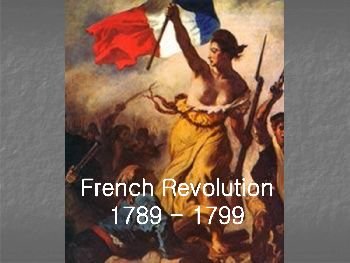
The ideas of Marx and the communist ideology, however, were not creatures of 1848; they were tied to the Enlightenment, the French Revolution, and the Industrial Revolution. They reflected Enlightenment beliefs in science, historical progress, and the improvement of the human condition. They were inspired by the ideas, symbols, and events of the French Revolution, including the red flag and the slogan “liberty, equality, and fraternity.” And the Industrial Revolution, in creating both great wealth and grinding poverty, established the preconditions for a revolution that aspired to create a new society based on material abundance and full equality.
KARL MARX
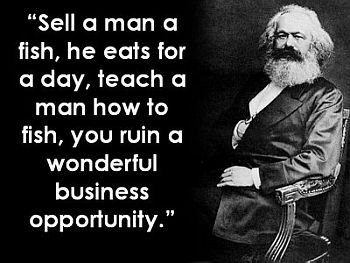
Karl Marx was born in 1818, to a middle-class family in Prussia (which is now part of Germany). Both parents were Jewish, although his father converted to Christianity just before Karl was born, and Karl himself was baptized when he was six. His father was a successful lawyer, a man of the Enlightenment, devoted to Kant and Voltaire, and an advocate for constitutionalism in Prussia. The young Marx was educated in Trier, Bonn, and Berlin and received a doctoral degree in philosophy at Jena in 1841. At the university, and especially in Berlin, he was exposed to the ideas of the philosopher G. W. F. Hegel and to radical political thought, both of which influenced him greatly. In 1842, Marx became the editor of the Rheinische Zeitung, which soon became the leading journal in Prussia. But, Prussian authorities soon closed down the publication for being too outspoken. The next year, Marx moved to Paris with his new wife, Jenny, to work for another liberal publication. At that time, Paris was the center of socialist thought and radicalism-and of the more extreme new sect that went by the name of communism. In Paris, Marx met Friedrich Engels, the Germanborn Manchester industrialist who was writing The Condition of the Working Class in England, and began collaboration with him that was to last for forty years. The Prussian government prevailed on the French (both conservative monarchies, remember), however, and after only a year and a half in the country, Marx was expelled from France and moved to Brussels.
THE COMMUNIST MANIFESTO
In 1847, Marx and Engels joined a secret society called the Communist League, whose aim was “the abolition of the old bourgeois society based on class antagonisms, and the establishment of a new society without classes and without private property.” They agreed to write the program for this fledgling organization, which was published in January 1848 as The Communist Manifesto, a twenty-three-page pamphlet meant for a mass audience. Although Marx and Engels later wrote thousands of pages in books and articles, The Communist Manifesto remains the best short presentation of the ideas of Marx and the communist vision.
The Manifesto opens and closes with dramatic, even frightening, proclamations. The opening lines were particularly prescient, given the events that followed in the months after the document’s publication: “A specter is haunting Europe-the specter of communism. All the powers of old Europe have entered into a holy alliance to exorcise the specter: Pope and Tsar, Metternich and Guizot, French Radicals and German police-spies.” Here, Marx and Engels invoke the bastions of conservatism and the old order in Europe-the Holy Alliance, the pope, the Russian tsar, and the conservative prime ministers of Austria and France-as well as their noncommunist rivals on the Left, the French radicals. However, in 1848, it was revolution, rather than communism, that haunted Europe, and French statesman François Guizot and the Habsburg dynasty’s Metternich were among the first to be swept out of office in that year. The first section of the Manifesto opens with the assertion that “the history of all hitherto existing human society is the history of class struggle.”
It goes on to develop in summary fashion the principal notions of historical materialism, class conflict, and proletarian revolution at the core of Marxist theory. Marx and Engels argued that history should not be understood as a story of great individuals or of conflict among states but of social classes and their struggles with each other. Each stage in a society’s development, according to Marxist theory, was characterized by conflict between the dominant class and the subordinate class. In capitalism, these classes were the bourgeoisie, consisting of the owners of factories and capital, and the proletariat, who worked in the factories. Over time, conflict between these classes would erupt in a revolution in which the proletariat would overthrow the bourgeoisie and establish a classless, egalitarian society. The Manifesto concludes with a call to action for the working classes: “Let the ruling classes tremble at a communist revolution. The proletarians have nothing to lose but their chains. They have a world to win. Proletarians of all countries, unite!” The Communist Manifesto was first published in London, in German, just a few weeks before the revolutions in Paris and Vienna forced the abdication of King Louis Philippe in France and Emperor Ferdinand in Austria. As the revolutionary movement gained momentum in Austria and Germany, Marx returned to Prussia and began writing again for a newly established liberal journal, advocating constitutional democracy.
The June Days in Paris were seen by Marx and Engels as a confirmation of the imminence of revolution. But in Prussia, Marx took a more moderate line. He agreed with Engels to shelve the ideas of the Manifesto temporarily and to work instead on behalf of independent workers’ candidates to the Frankfurt assembly, which was to draw up a constitution for a liberal, unified, and democratic Germany. When the conservative reaction set in during the summer of 1848, and the king of Prussia moved against some of the new democratic assemblies, Marx returned to a more radical line, calling for armed resistance against the government. As the revolutionary tide ebbed, Marx was banished once again. He returned to Paris, was duly expelled, and then returned to London. His involvement in the Peoples’ Spring was the only real revolutionary activism of his life; for the next fifteen years, Marx spent most of his days in research and writing at the British Library in London, where a desk in the reading room is still inscribed with his name. Marx lived in poverty for most of these years, crowded into two small rooms with his wife and four small children. They often subsisted only on bread and potatoes and were once thrown onto the street for nonpayment of rent. Two of his children died. His main source of income was a subsidy from his friend Engels. But he made steady progress on his magnum opus, which was eventually published in German as Das Kapital (meaning “capital,” in the sense of money).
In 1864, Marx became politically active again with the London-based International Working Men’s Association, which is usually referred to as the First International (and an early antecedent of what would become the Communist Party of the Soviet Union in the next century). The International grew in prestige and membership, with about eight hundred thousand adherents by 1869. A number of factors, however, brought about its decline and dissolution. First, the International was split by yet another revolution in Paris, in 1870 that resulted in the establishment in that capital of a short-lived radical revolutionary government called the Paris Commune. Savage fighting between the Communards and troops of the Versailles government prompted the Communards to execute the archbishop of Paris, who was their hostage. With the defeat of the Commune, the government put to death some twenty-five thousand Parisians.
Marx and Engels saw this as the first manifestation of a “dictatorship of the proletariat,” the preliminary step toward full communism, and they supported the Paris Commune. But many in the International did not see it that way, and the appalling violence of the experience led others to turn away from the idea of violent revolution.
Another factor that weakened the appeal of the International was increasing possibility of evolutionary reform. The English Reform Bill of 1867, for example, enfranchised part of the (male) urban working class and opened up broad new political opportunities for trade unions. At about the same time, in Germany, a new German Social Democratic Party was established, committed to socialist goals through cooperation with the state, not its overthrow. These evolutionary and reformist trends drew workers away from the more radical orientation of the International. In the last decade of his life, Marx was beset by what he called “chronic mental depression.” He saw little hope for proletarian revolution in Western Europe. He increasingly looked to a European war to overthrow the Russian autocracy, the mainstay of conservatism and reaction, hoping that this would revive the political energies of the working class. (Something like this did occur long after his death, with World War I leading to the collapse of the Russian autocracy and the accession to power of the Russian communists.) Marx died in 1883 and was buried in High gate Cemetery in London. At the graveside funeral, Friedrich Engels spoke of Marx’s theoretical contributions, but added that Marx was “before all else a revolutionist.” He was, Engels said, “the best-hated and most calumniated man of his time,” but also “beloved, revered, and mourned by millions of revolutionary fellow-workers.” The inscription on his tomb reads, “Philosophers have so far explained the world in various ways: the point, however, is to change it